
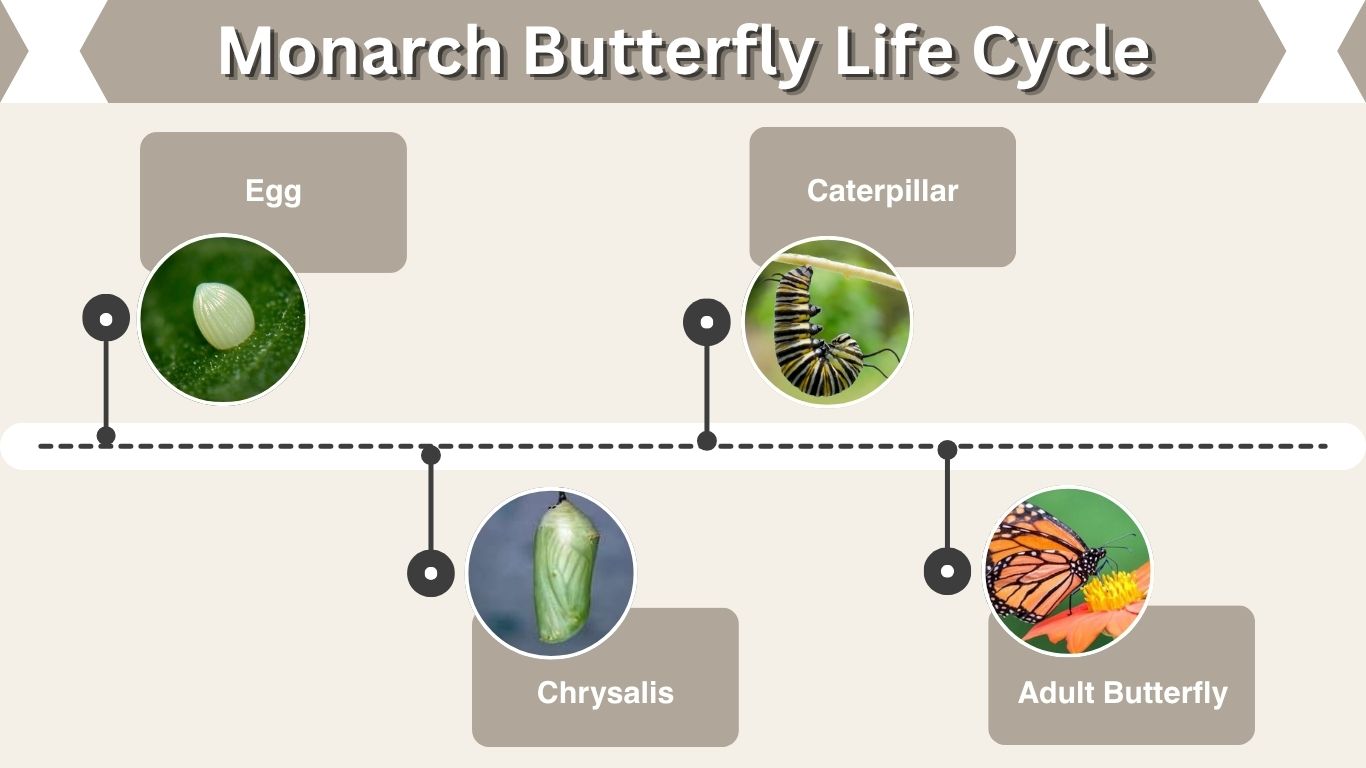
The monarch butterfly life cycle is a remarkable transformation that begins with a tiny egg and ends with a familiar orange-and-black butterfly. Monarchs undergo complete metamorphosis through four stages: egg, caterpillar, chrysalis, and adult. Under warm conditions, development from egg to adult often takes about three to five weeks, although temperature and food availability can change the timing. Milkweed is essential during the caterpillar stage, while adults rely mainly on flower nectar. Understanding each stage also helps explain the monarch’s extraordinary seasonal migration.
4 Stages of the Monarch Butterfly Life Cycle
Monarch butterflies (Danaus plexippus) experience complete metamorphosis, meaning the immature stages look completely different from the adult butterfly. Each stage has a specific purpose. The egg protects the developing embryo, the caterpillar concentrates on feeding, the chrysalis allows transformation, and the adult reproduces and may migrate.
The Four Life Cycle Stages
The monarch butterfly life cycle consists of:
- Egg: A female places a tiny egg, usually on milkweed.
- Caterpillar: The larva hatches and feeds heavily on milkweed.
- Chrysalis: The caterpillar transforms inside a green pupa.
- Adult butterfly: The mature monarch emerges, feeds, mates, and reproduces.
During summer, these stages may be completed in roughly one month. Cooler temperatures can significantly extend development.
Stage 1: Monarch Butterfly Egg
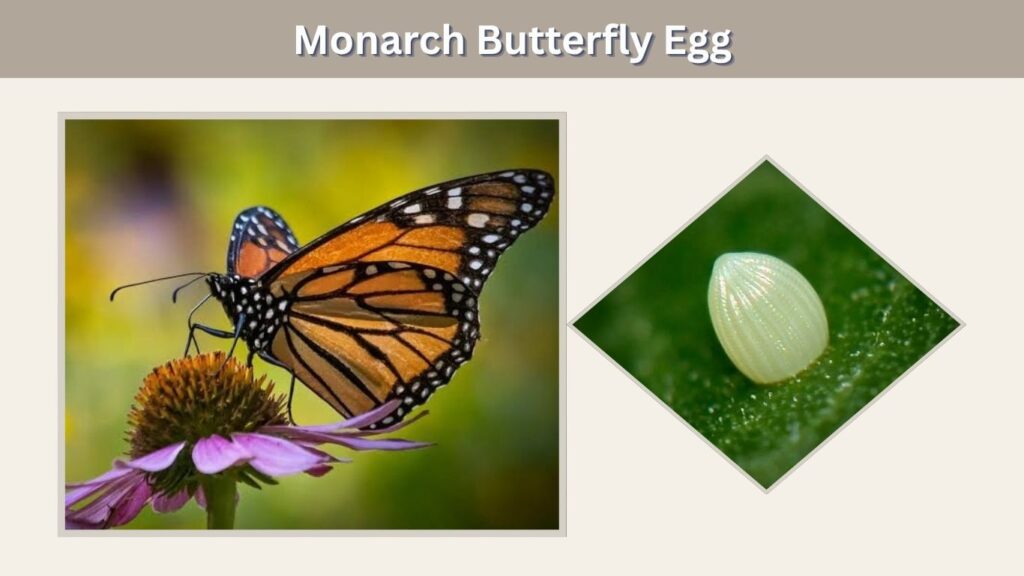
The life cycle begins when a female monarch searches for milkweed. Milkweed is critical because newly hatched caterpillars depend on it for food. Females usually place eggs individually rather than creating large egg clusters, which helps distribute their offspring among different leaves and plants.
What Do Monarch Eggs Look Like?
A monarch egg is extremely small, usually around 1 millimeter across. Identification features include:
- Creamy white or pale yellow color
- Rounded dome-like shape
- Vertical ridges along the surface
- Usually attached to a milkweed leaf
- Often found on the underside of leaves
- Typically laid singly rather than in clusters
As the embryo develops, the egg may appear darker before hatching.
How Long Does the Egg Stage Last?
Monarch eggs generally hatch after approximately 3 to 5 days in favorable warm conditions.
Before emerging, the developing caterpillar becomes visible through the thin eggshell. The tiny larva then chews its way out.
After hatching, it frequently consumes part or all of the empty eggshell before beginning to feed on milkweed. This provides a small initial source of nutrients.
Stage 2: Monarch Butterfly Caterpillar
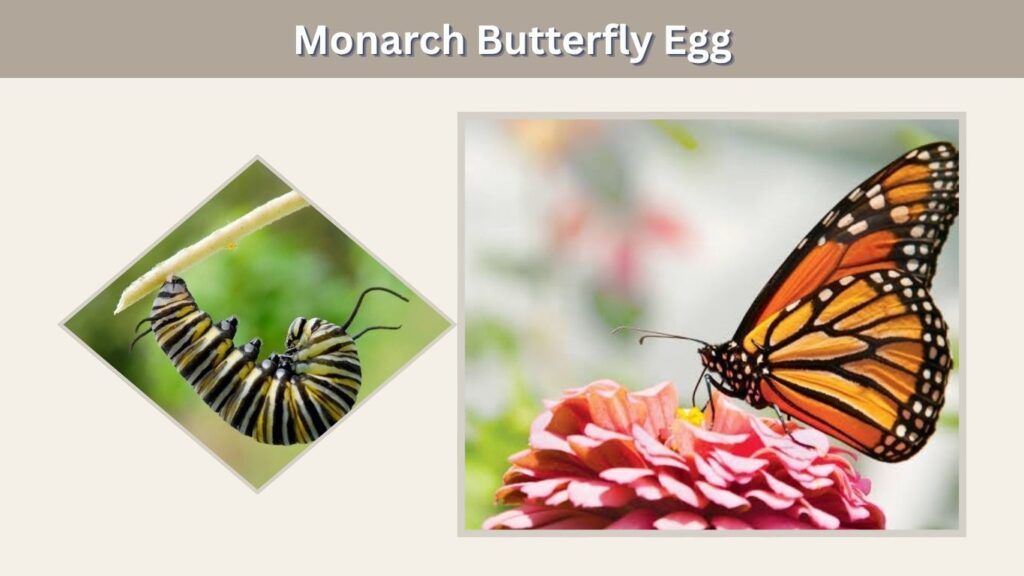
The caterpillar, or larval stage, is devoted almost entirely to eating and growing. Monarch caterpillars feed primarily on milkweed leaves and increase enormously in size during this stage. They shed their skin repeatedly because their outer covering cannot expand indefinitely as the body grows.
Monarch Caterpillar Life Cycle
The caterpillar passes through five instars, or growth stages:
- First instar: tiny and relatively pale
- Second instar: stronger dark and light bands appear
- Third instar: body stripes become distinct
- Fourth instar: caterpillar becomes noticeably larger
- Fifth instar: mature larva feeds heavily before pupation
Between each instar, the caterpillar molts and develops a larger outer skin.
What Do Monarch Caterpillars Eat?
Monarch caterpillars depend mainly on plants in the milkweed family.
They consume leaves rapidly as they grow. Milkweed also contains defensive chemicals called cardenolides. Monarch caterpillars can tolerate and store some of these compounds, which can make them distasteful to certain predators.
A mature caterpillar may consume much more foliage than a newly hatched larva, especially during its final instar.
How Long Is the Caterpillar Stage?
The larval stage often lasts about 9 to 14 days, although development varies with temperature and growing conditions.
When fully grown, the caterpillar stops eating and searches for a protected place. It attaches itself using a small silk pad and hangs upside down in a characteristic J-shape.
Soon afterward, it sheds its final larval skin and becomes a chrysalis.
Stage 3: Monarch Butterfly Chrysalis
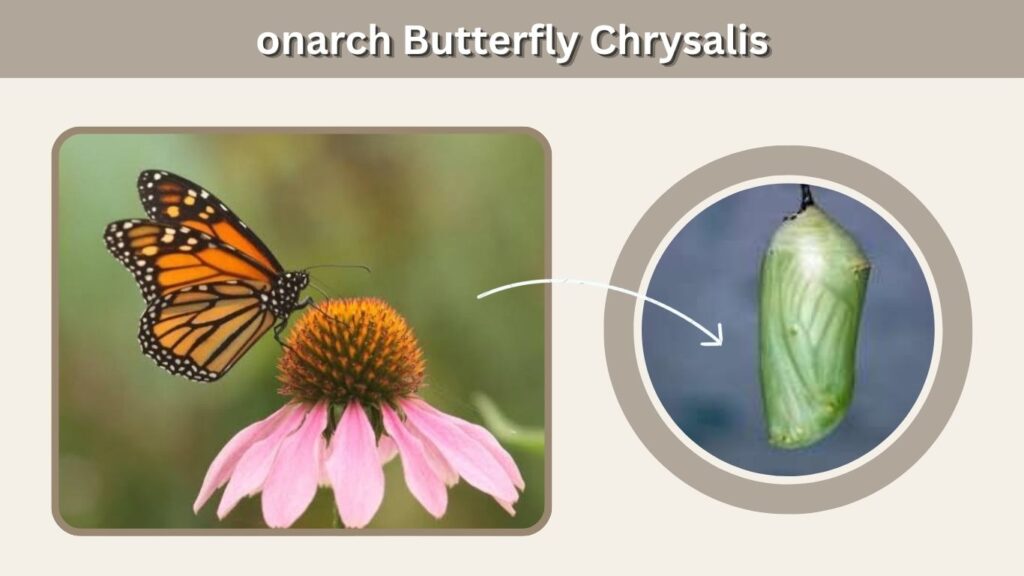
The chrysalis is one of the most dramatic stages of the monarch butterfly life cycle. Although it may appear inactive from the outside, extensive biological restructuring occurs within. Larval tissues are reorganized as the insect develops adult wings, legs, antennae, eyes, and reproductive structures.
What Does a Monarch Chrysalis Look Like?
A healthy monarch chrysalis typically has:
- Bright jade-green coloration
- Smooth rounded shape
- Small metallic-looking gold spots
- Gold and black markings near the upper portion
- Length of roughly 2.5–3 centimeters
The chrysalis hangs from a silk attachment called a cremaster connection.
It is not technically a cocoon. A chrysalis is the exposed pupa of a butterfly, whereas many moth pupae are surrounded by silk cocoons.
How Long Does the Chrysalis Stage Last?
A monarch commonly remains in the chrysalis for approximately 8 to 15 days.
As adult development nears completion, the chrysalis becomes darker and increasingly transparent. Eventually, the monarch’s orange-and-black wing pattern becomes visible through the pupal covering.
The butterfly then breaks free and begins expanding its wings.
Stage 4: Adult Monarch Butterfly
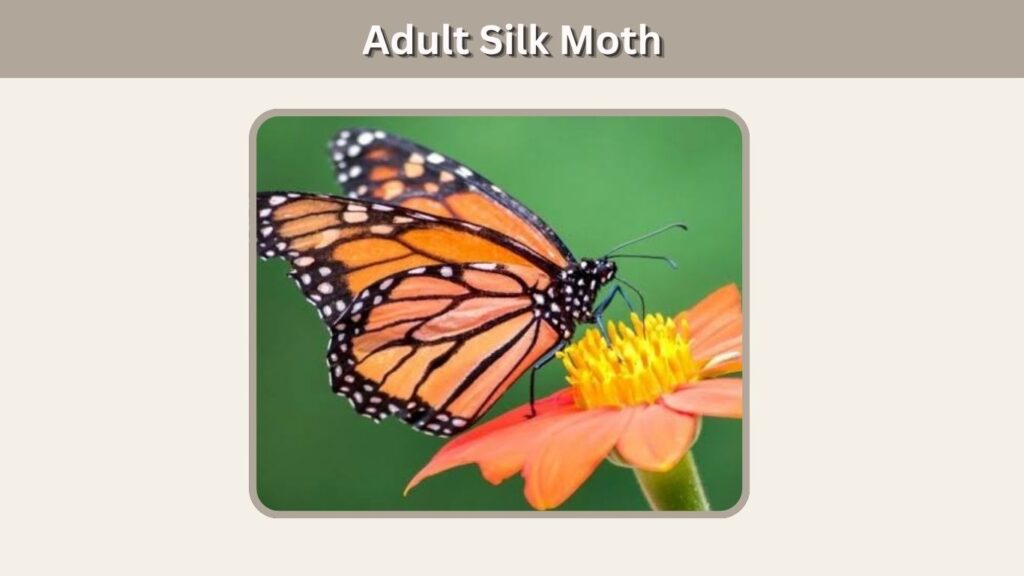
A newly emerged monarch cannot immediately fly. Its wings are initially small, soft, and wrinkled. The butterfly pumps fluid through the wing veins until the wings expand to their normal size, then waits while they harden sufficiently for flight.
What Happens After a Monarch Emerges?
After emergence, a monarch will:
- Expand and dry its wings
- Begin flying once the wings harden
- Drink nectar from flowers
- Search for suitable habitat
- Find a mate when reproductively mature
- Reproduce during breeding generations
- Potentially migrate if part of the migratory generation
Adult monarchs use their long proboscis to drink nectar from numerous flowering plants.
How Long Do Adult Monarchs Live?
Summer breeding monarchs commonly live for approximately 2 to 6 weeks.
However, the generation that emerges near the end of summer or early fall is very different. These migratory monarchs delay reproduction and can survive for many months.
In North America, some migratory individuals may live roughly 8 or 9 months, allowing them to migrate, overwinter, and begin the journey northward the following spring.
Monarch Butterfly Life Cycle Timeline
The timeline varies with temperature, geographic location, and season. Warm conditions generally accelerate development, while cooler weather slows it. A monarch developing during summer can often progress from egg to adult within roughly three to five weeks.
Approximate Life Cycle in Days
A typical timeline is:
- Days 1–5: Egg
- Days 4–18: Caterpillar development
- Days 14–30: Chrysalis
- Around weeks 3–5: Adult emerges
These periods overlap as ranges because individual monarchs develop at different speeds.
Weather has a major influence. Development may take considerably longer during cooler conditions.
Monarch Butterfly Life Cycle and Migration
The monarch’s life cycle becomes especially unusual when combined with migration. North American monarch populations can produce several generations during their seasonal movement. No single short-lived summer generation normally completes the entire round-trip migration.
Multiple Generations During Migration
The annual cycle generally involves:
- Overwintering monarchs eventually begin moving north.
- Females lay eggs on emerging milkweed.
- New generations continue moving northward.
- Several breeding generations develop during spring and summer.
- A special late-season generation begins the southward migration.
- Migratory butterflies overwinter before reproduction resumes.
This multigenerational system allows monarch populations to travel enormous distances despite the relatively short lifespan of most individual adults.
The Migratory Generation
Late-season monarchs enter a state called reproductive diapause, temporarily delaying reproduction.
Instead of immediately mating and laying eggs, they concentrate on migration and survival.
They feed intensively on flower nectar to build energy reserves and can live far longer than summer generations. After overwintering, these butterflies become reproductively active and begin moving north again, starting another annual cycle.
What Monarch Butterflies Need at Each Stage
Successful development depends on suitable habitat throughout the monarch’s entire life cycle. Caterpillars and adults have different food requirements, so healthy monarch habitat must provide both milkweed and nectar-producing flowers.
Essential Resources
Monarchs require:
- Milkweed: Essential food for caterpillars
- Nectar flowers: Energy source for adults
- Suitable leaves: Sites for females to lay eggs
- Sheltered vegetation: Protection from harsh weather
- Seasonal flowers: Important fuel during migration
- Low pesticide exposure: Helps protect eggs and caterpillars
Planting native milkweed alongside diverse nectar plants can support multiple monarch life stages.
Monarch Butterfly Life Cycle Facts
Monarch development contains several remarkable biological adaptations. From rapid caterpillar growth to long-distance adult migration, every stage contributes to the species’ survival.
Interesting Life Cycle Facts
- Monarch females usually lay eggs individually on milkweed.
- Caterpillars pass through five larval instars.
- The caterpillar stage lasts roughly two weeks in warm weather.
- Monarch butterflies form a chrysalis rather than a cocoon.
- The chrysalis is green with distinctive gold markings.
- Most summer adults live only several weeks.
- Migratory monarchs can survive many months.
- Several generations participate in the annual migration cycle.
- Adult monarchs drink nectar rather than eating milkweed leaves.
- Complete development from egg to adult often requires three to five weeks.
FAQs
1. How long is the monarch butterfly life cycle?
Development from egg to adult typically takes about three to five weeks under favorable warm conditions. Eggs usually hatch within several days, the caterpillar stage lasts roughly two weeks, and the chrysalis stage commonly lasts another one to two weeks. Cooler temperatures can extend the timeline.
2. What are the four stages of a monarch butterfly?
The four stages are egg, caterpillar, chrysalis, and adult butterfly. This process is called complete metamorphosis. Each stage serves a different purpose, with caterpillars concentrating on growth while adults primarily feed on nectar, reproduce, disperse, and sometimes participate in migration.
3. How long does a monarch stay in its chrysalis?
A monarch generally remains inside its chrysalis for around 8 to 15 days. Temperature strongly influences the exact duration. Shortly before emergence, the chrysalis becomes transparent enough to reveal the adult butterfly’s dark body and orange-and-black wings.
4. How many generations of monarch butterflies occur each year?
The number varies according to population and location, but North American migratory monarchs typically produce several generations throughout spring and summer. Most generations live for only a few weeks, while the late-season migratory generation survives for many months and overwinters before reproducing.
5. Why is milkweed important to the monarch life cycle?
Milkweed is essential because monarch caterpillars rely on it as their primary food. Females specifically search for milkweed when laying eggs so newly hatched larvae have immediate access to suitable foliage. Adult monarchs, however, obtain energy mainly from nectar produced by many different flowering plants.