
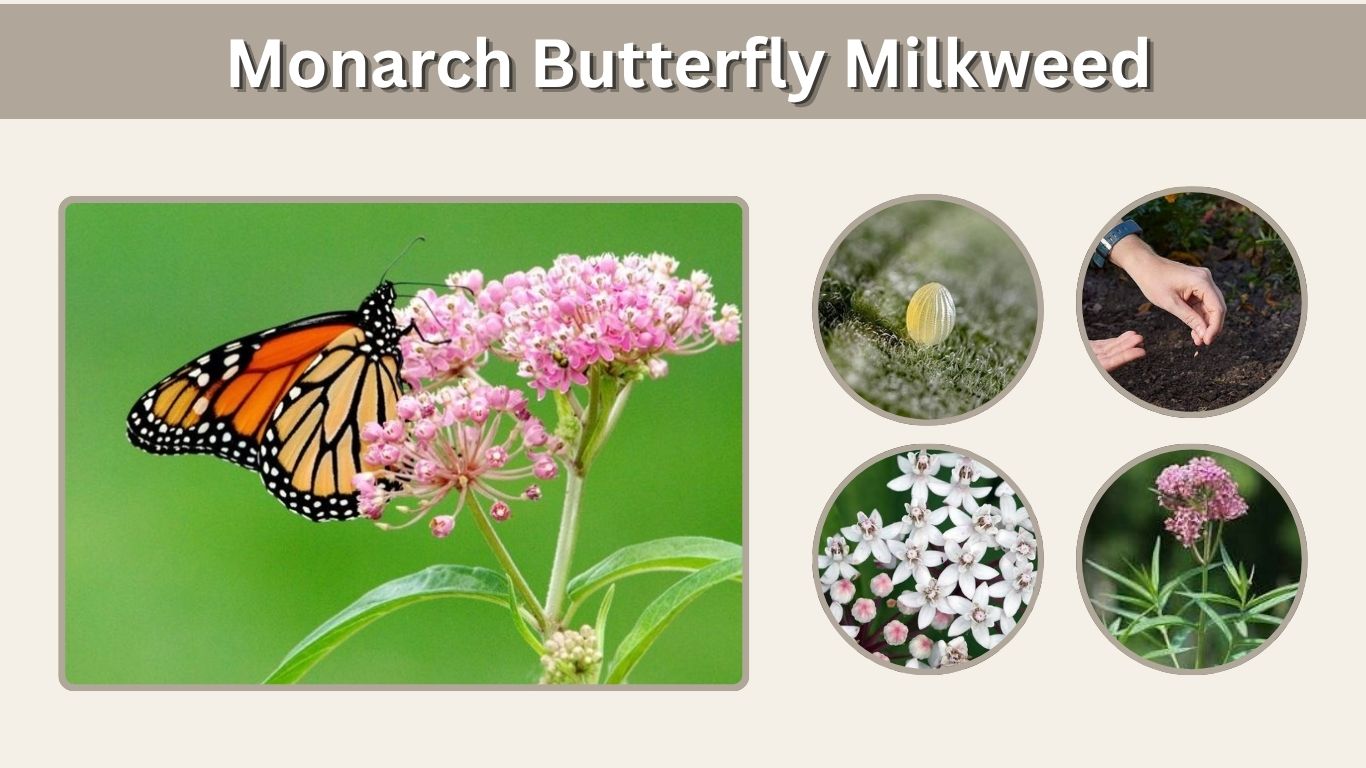
Monarch butterflies and milkweed share one of the best-known relationships in the insect world. Female monarchs rely on milkweed as the host plant for their eggs, and newly hatched caterpillars depend on its leaves for food. Adult monarchs, however, drink nectar from many different flowers rather than eating only milkweed. Growing suitable native milkweed can therefore provide an essential breeding resource for monarchs. Understanding their relationship, preferred milkweed species, egg-laying behavior, and caterpillar feeding habits can help create a more monarch-friendly garden.
Why Is Milkweed Important to Monarch Butterflies?
Milkweed is essential because monarch caterpillars cannot simply develop on ordinary garden plants. Female monarchs specifically seek plants in the milkweed group for egg laying. After hatching, caterpillars begin eating the leaves and continue relying on milkweed throughout their larval development. Without enough suitable host plants, monarchs have fewer places to reproduce successfully.
How Monarchs Use Milkweed
Milkweed provides monarchs with several important benefits:
- A host plant for egg laying
- Food for newly hatched caterpillars
- Leaves for growing larvae
- Chemical compounds used in monarch defense
- Flowers that can provide nectar to adults
- Suitable breeding habitat during the growing season
The plant is most critical during the egg and caterpillar stages.
Why Do Monarch Caterpillars Need Milkweed?
Milkweed contains naturally occurring compounds called cardenolides. Monarch caterpillars can tolerate these chemicals and store some of them in their bodies.
This contributes to the caterpillar’s and adult butterfly’s chemical defenses against certain predators. Their bright coloration also serves as a warning signal that they may be unpleasant to eat.
Is Milkweed the Only Food for Monarchs?
It depends on the life stage. Monarch caterpillars feed primarily on milkweed plants and require them as their host plants.
Adult monarch butterflies have a much broader diet. They drink nectar from milkweed flowers as well as asters, goldenrods, blazing stars, coneflowers, and many other flowering plants.
Monarch Butterfly Eggs on Milkweed
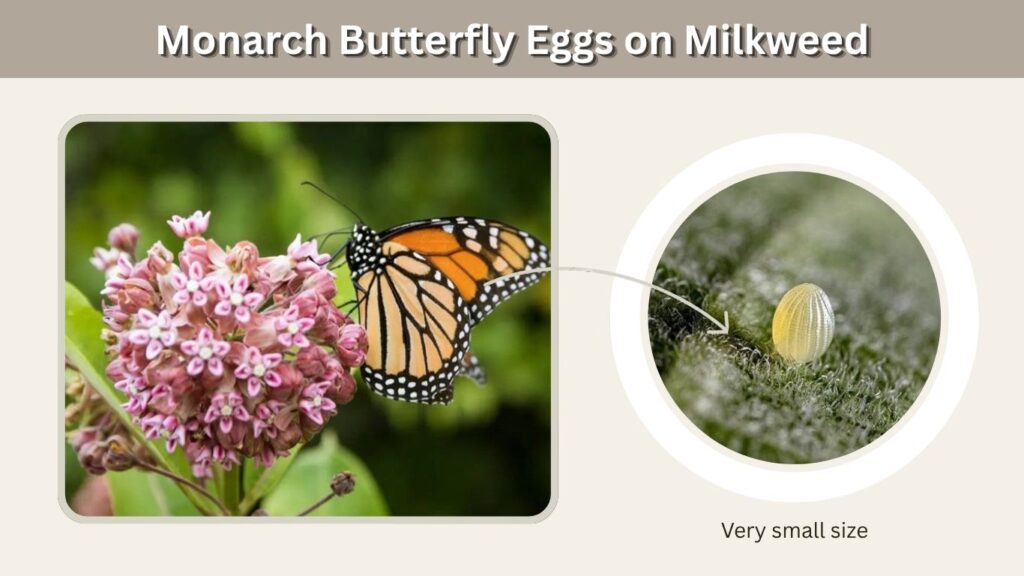
Female monarch butterflies carefully inspect milkweed while searching for suitable places to reproduce. They frequently land on leaves and use sensory cues to determine whether a plant is appropriate. Eggs are normally deposited individually rather than in large clusters, reducing competition among newly hatched caterpillars.
What Do Monarch Eggs Look Like on Milkweed?
Monarch eggs have several recognizable features:
- Very small size
- Creamy white or pale yellow color
- Rounded or dome-like shape
- Fine vertical ridges
- Usually placed singly
- Frequently attached beneath a leaf
- Sometimes found on flower buds or stems
An egg can easily be confused with plant material or another tiny insect structure, so close inspection is helpful.
Where Do Monarchs Lay Their Eggs?
Female monarchs usually choose tender parts of healthy milkweed plants. The underside of a leaf provides some protection from direct sunlight and weather.
After laying one egg, the butterfly normally continues searching for other suitable plants. Spreading eggs across multiple plants can prevent too many caterpillars from competing for the same leaves.
When Do Monarchs Lay Eggs on Milkweed?
Egg-laying time depends on geography, temperature, seasonal migration, and when milkweed is actively growing. Monarchs reproduce during the warmer months as successive generations move through their breeding range.
Where monarchs arrive earlier, egg laying may begin in spring and continue during summer while suitable milkweed remains available.
Monarch Caterpillars and Milkweed
A newly hatched monarch caterpillar is extremely small, but its appetite increases dramatically as it grows. The caterpillar passes through several larval stages called instars. During this period, milkweed becomes its primary food source, supplying the energy and nutrients necessary for growth before pupation.
How Monarch Caterpillars Eat Milkweed
Their feeding behavior changes as they grow:
- A caterpillar hatches close to its food source.
- It begins feeding on the milkweed leaf.
- It molts as its body becomes larger.
- Larger caterpillars consume increasingly more foliage.
- The mature caterpillar eventually stops feeding.
- It leaves or moves around the plant to find a pupation site.
- It forms a chrysalis and begins metamorphosis.
A mature monarch caterpillar can consume considerably more foliage than it did shortly after hatching.
Will Caterpillars Kill the Milkweed?
Several caterpillars may strip many leaves from a small plant, making it look severely damaged. Established milkweed can sometimes produce new leaves after being eaten.
Gardeners supporting monarchs may therefore benefit from growing multiple milkweed plants rather than relying on one plant to provide enough foliage for every caterpillar.
Best Milkweed for Monarch Butterflies
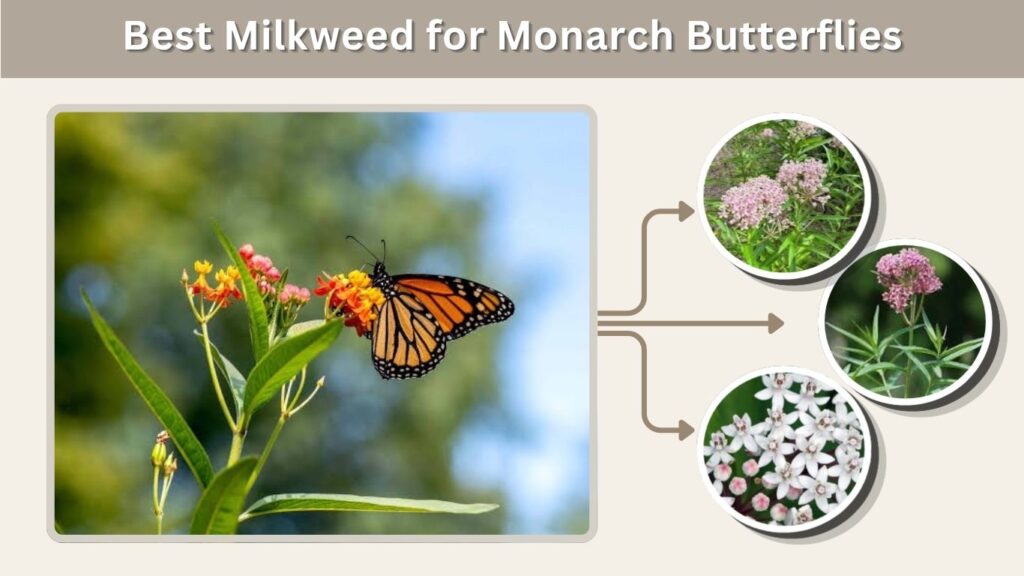
The most suitable milkweed generally depends on where the garden is located. Numerous milkweed species occur naturally across North America, and different regions support different native varieties. Choosing locally native species can provide appropriate growing conditions while supporting monarchs and other native insects.
Milkweed Plants Monarchs Commonly Use
Depending on region, useful species can include:
- Common milkweed (Asclepias syriaca) – A widespread host plant with clusters of fragrant flowers.
- Swamp milkweed (Asclepias incarnata) – Performs well in moist soils and produces attractive pink flowers.
- Butterfly weed (Asclepias tuberosa) – Known for bright orange flowers and tolerance of relatively dry conditions.
- Showy milkweed (Asclepias speciosa) – An important western species with large pinkish flower clusters.
- Whorled milkweed (Asclepias verticillata) – A slender species adapted to various open habitats.
Choosing a species naturally occurring in your region is generally preferable.
Do Monarchs Like Swamp Milkweed?
Yes. Swamp milkweed is a recognized monarch host plant, and females can use it for egg laying. Caterpillars feed on its foliage while adults may visit its flowers for nectar.
Despite the name, swamp milkweed can also grow successfully in many gardens when given sufficient moisture and sunlight.
What About Tropical Milkweed?
Tropical milkweed is widely grown in warm climates because it flowers for long periods. However, where it remains green throughout winter, persistent plants can potentially encourage monarchs to stay and can contribute to conditions that favor disease transmission.
Gardeners should follow regional conservation guidance when deciding which milkweed species to grow.
How to Grow Milkweed for Monarch Butterflies
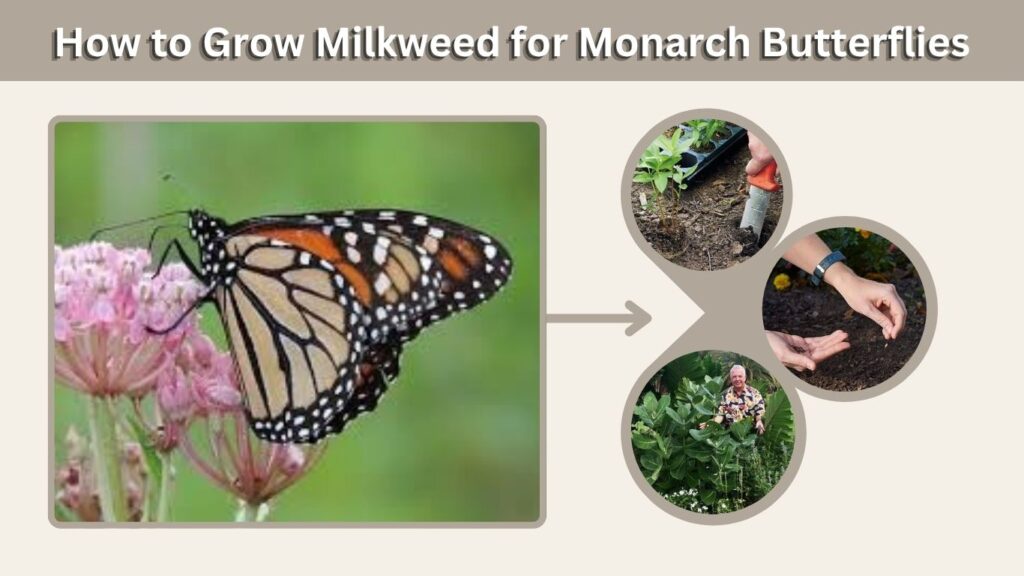
A successful monarch garden needs more than simply planting one milkweed plant. Providing several healthy host plants, avoiding harmful pesticide exposure, and including nectar-rich flowers can create a more complete habitat for adults and caterpillars. Growing requirements differ among milkweed species, so plant selection should match local soil, rainfall, and sunlight conditions.
How to Plant Milkweed
For better results:
- Select milkweed native to your region.
- Choose a sunny planting location.
- Follow the soil requirements of the species.
- Plant multiple milkweed plants when space allows.
- Provide adequate water while young plants establish.
- Avoid treating plants with systemic insecticides.
- Add nectar-producing flowers nearby.
- Leave enough foliage for caterpillars to feed.
Some milkweed seeds require a period of cold, moist conditions before they germinate successfully.
How to Attract Monarchs to Milkweed
Milkweed provides the host plant, but flowering diversity can make a garden more attractive to adult monarchs. Plant flowers that bloom during different parts of the season so nectar remains available for longer.
Sunny, relatively sheltered gardens can also provide convenient places for butterflies to feed, rest, and search for host plants.
Monarch and Milkweed Relationship
The relationship between monarch butterflies and milkweed extends beyond simple feeding. Monarch reproduction is tied to the presence of milkweed, while their specialized biology enables caterpillars to tolerate plant chemicals that discourage many other herbivores. This close association has developed over a long evolutionary history.
How Do Monarch Butterflies Find Milkweed?
Female monarchs use several sensory cues when searching for host plants. Visual appearance and plant chemicals both contribute to recognition.
After landing, a female may examine the plant using sensory receptors on her legs and other body parts before deciding whether it is appropriate for an egg. This helps ensure that her caterpillar hatches beside suitable food.
Does Milkweed Attract Monarch Butterflies?
Milkweed can attract reproductive female monarchs searching for host plants, and its flowers may attract adults seeking nectar.
However, a garden containing milkweed alongside several nectar-rich flowering species provides more resources than milkweed alone. The combination supports both breeding monarchs and adults simply passing through during migration.
FAQs
1. Do monarch butterflies eat milkweed?
Monarch caterpillars eat milkweed leaves as their primary food. Adult monarch butterflies do not eat the leaves. Instead, they drink nectar from milkweed flowers and many other flowering plants using their long, tube-like proboscis.
2. Why do monarch butterflies need milkweed?
Monarchs need milkweed primarily for reproduction. Females lay their eggs on milkweed, and the caterpillars depend on the plant for food. Without suitable milkweed in breeding areas, monarch caterpillars cannot complete normal development.
3. What is the best milkweed for monarch butterflies?
The best choice is usually a milkweed species native to your particular region. Common milkweed, swamp milkweed, butterfly weed, showy milkweed, and other native species can serve as host plants depending on climate and geographic location.
4. Do monarch butterflies only lay eggs on milkweed?
Monarch females normally select milkweed species as host plants for their eggs because their caterpillars require milkweed after hatching. An egg occasionally placed elsewhere would leave the caterpillar without its appropriate food unless suitable milkweed were nearby.
5. How can I attract monarch butterflies to my garden?
Grow several locally native milkweed plants together with nectar-producing flowers that bloom across the season. Provide sunny areas, limit pesticide use, and maintain healthy plants. Milkweed attracts females looking for egg-laying sites, while diverse flowers provide food for adult monarchs.