
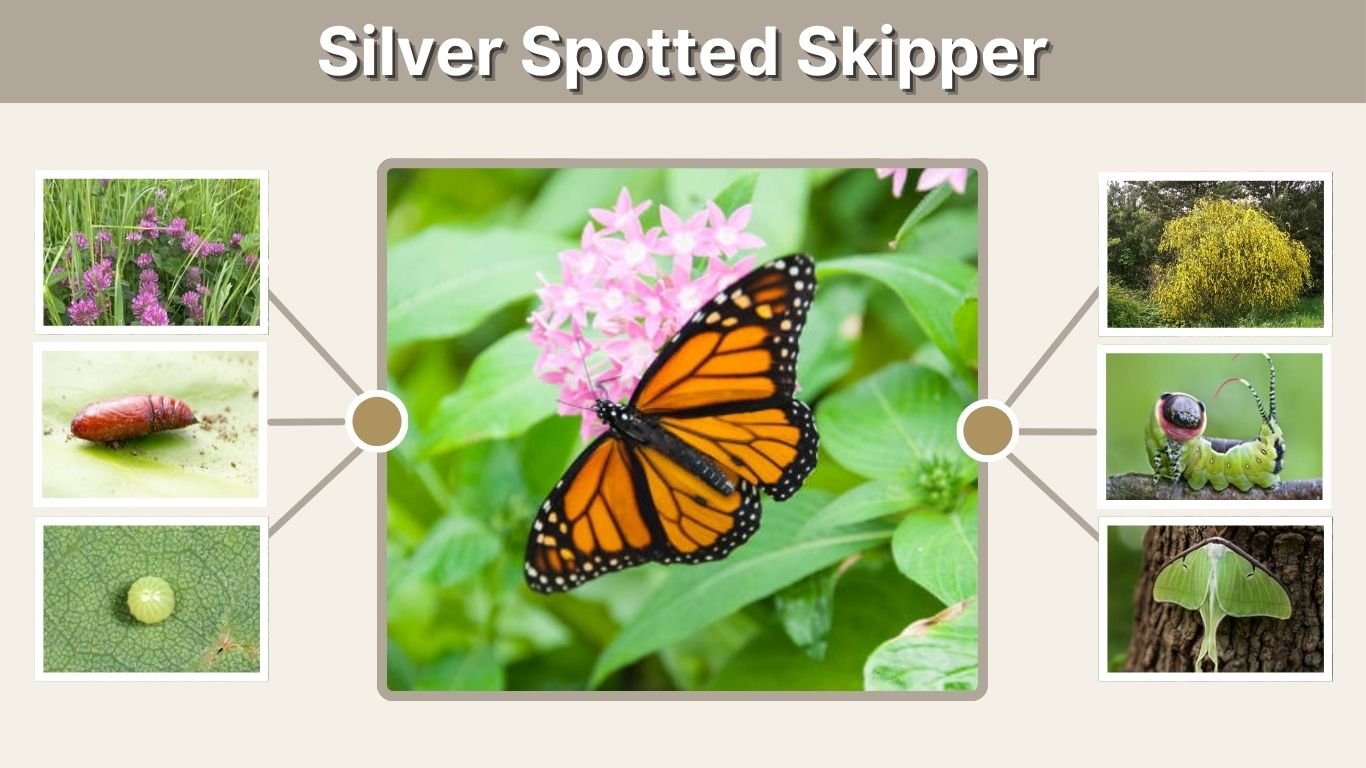
The silver spotted skipper is one of the easiest skipper butterflies to recognize in North America. Its fast, darting flight, brown wings, golden markings, and bright silver-white patch make it stand out in gardens, fields, woodland edges, and wildflower areas. Although many people search for “silver spotted skipper moth,” this insect is a butterfly, not a moth. It belongs to the skipper family and plays an important role as both a pollinator and a food source for wildlife.
What Is a Silver Spotted Skipper?
The silver spotted skipper, also written as silver-spotted skipper, is a medium-sized butterfly with the scientific name Epargyreus clarus. It belongs to the family Hesperiidae, the skipper butterflies. Skippers are often described as a bridge between typical butterflies and moths because they have thick bodies, strong wing muscles, and quick flight. However, they are true butterflies.
The name “silver spotted” comes from the bold pale silver or white patch on the underside of the hindwing. This mark is usually the easiest way to identify the species. When the butterfly rests with its wings partly open or angled, the silver spot can flash clearly against the dark brown wing.
Silver Spotted Skipper Identification
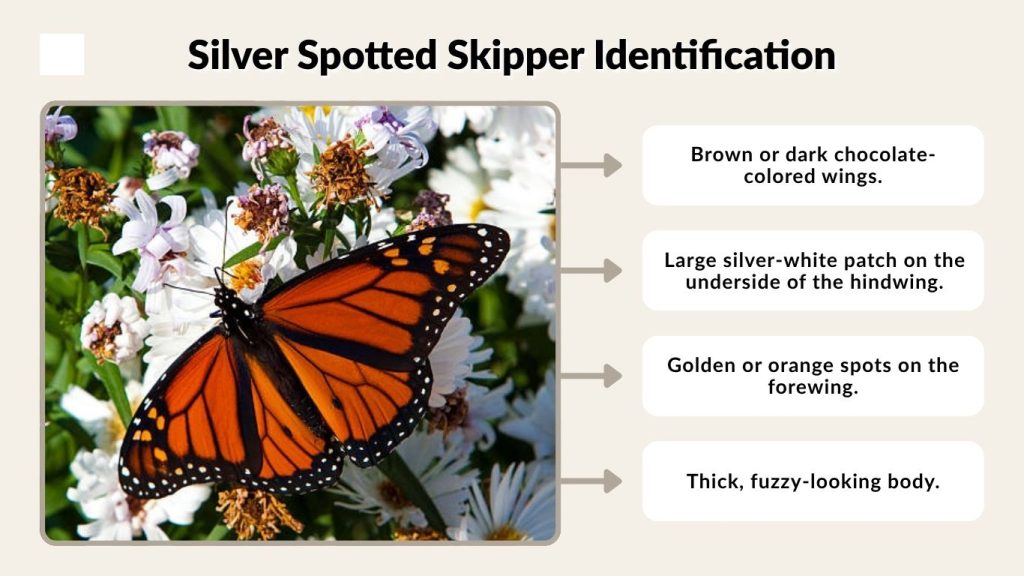
Silver spotted skippers are usually brown to dark brown with golden or orange patches on the forewings. The underside of the hindwing has a large metallic-looking silver-white band or spot. The body is stout, and the head appears broad compared with many delicate butterflies.
Key Identification Features
Look for these signs when identifying a silver spotted skipper:
- Brown or dark chocolate-colored wings
- Large silver-white patch on the underside of the hindwing
- Golden or orange spots on the forewing
- Thick, fuzzy-looking body
- Hooked or curved antenna tips
- Fast, skipping flight pattern
- Frequent visits to nectar flowers
- Habit of resting under leaves during heat, clouds, or night
The silver spot is the most important field mark. Many other skippers are small and difficult to separate, but the silver spotted skipper is larger and more boldly marked than many related species.
Is the Silver Spotted Skipper a Butterfly or Moth?
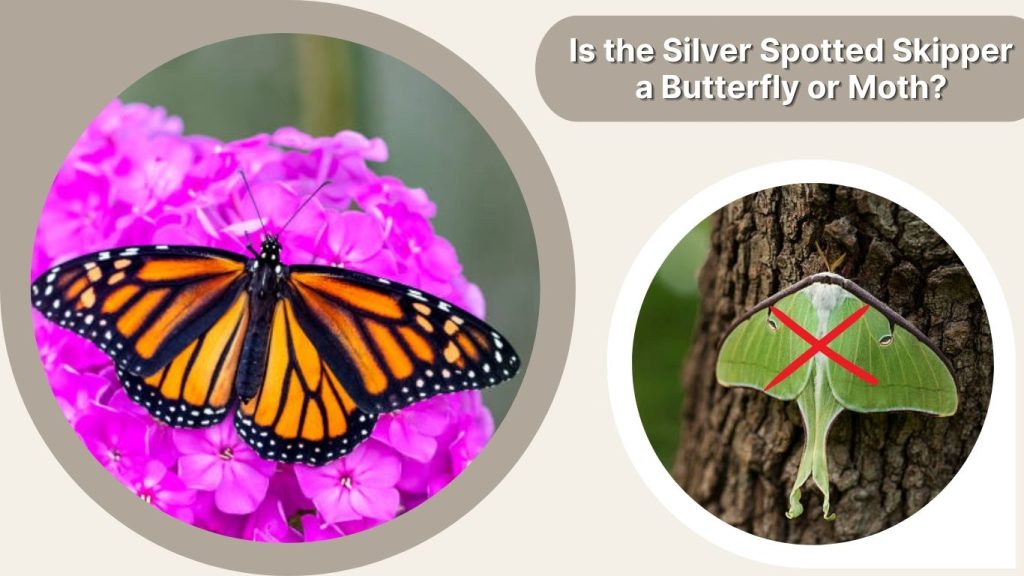
The silver spotted skipper is a butterfly. Confusion happens because skippers have thick bodies, rapid flight, and wing positions that can look different from typical butterflies. Some people also mistake them for moths because they may appear sturdy and less delicate than swallowtails, monarchs, or sulphurs.
Skippers are still butterflies because they have butterfly-like antennae with clubbed or hooked tips, daytime activity, and a life cycle that includes egg, caterpillar, chrysalis, and adult butterfly stages.
Silver Spotted Skipper Size and Appearance
Adult silver spotted skippers are considered large for skippers. Their wingspan is usually around 1.75 to 2.5 inches. The body is strong and compact, which helps explain their quick flight.
| Feature | Description |
|---|---|
| Common name | Silver spotted skipper or silver-spotted skipper |
| Scientific name | Epargyreus clarus |
| Insect type | Butterfly, not a moth |
| Family | Hesperiidae |
| Wingspan | About 1.75 to 2.5 inches |
| Main marking | Silver-white patch on hindwing underside |
| Caterpillar host plants | Legumes such as black locust, false indigo, wisteria, and related plants |
| Habitat | Gardens, fields, woodland edges, roadsides, and open areas |
| Risk to humans | Harmless |
Silver Spotted Skipper Habitat and Range
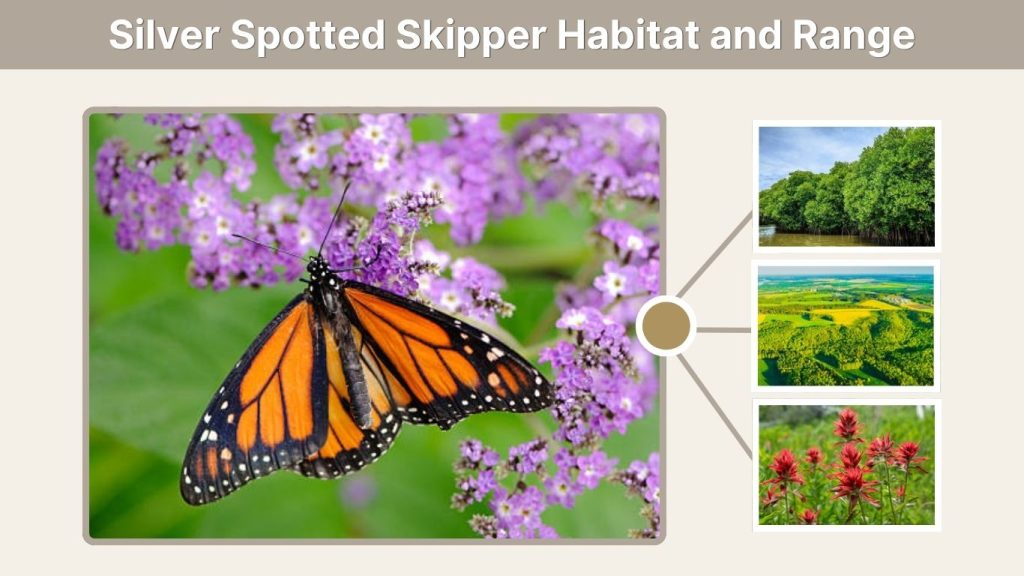
Silver spotted skippers are widespread across much of North America. They are found in many parts of the United States and southern Canada, although their abundance can vary by region. People commonly report them in states such as Pennsylvania, Michigan, Wisconsin, Illinois, New Jersey, Texas, Virginia, Colorado, and other areas with suitable habitat.
They prefer open areas where nectar flowers and host plants are available. You may see them in gardens, meadows, forest edges, roadsides, fields, parks, and along streams or woodland borders. They often visit flowers during the day and rest beneath leaves when conditions are too hot, cloudy, or dark.
Silver Spotted Skipper Host Plants
Host plants are the plants caterpillars eat. For the silver spotted skipper, host plants are usually legumes. This makes the species common in areas where native or naturalized legume plants grow.
Common Host Plants
Silver spotted skipper caterpillars may use:
- Black locust
- Honey locust
- False indigo
- Wisteria
- Tick trefoil
- Hog peanut
- Other woody or herbaceous legumes
Black locust is one of the most frequently mentioned host plants. In gardens and restoration areas, adding native legumes can support caterpillars. Adult butterflies also need nectar plants, so the best habitat includes both caterpillar food plants and blooming flowers.
Silver Spotted Skipper Caterpillar
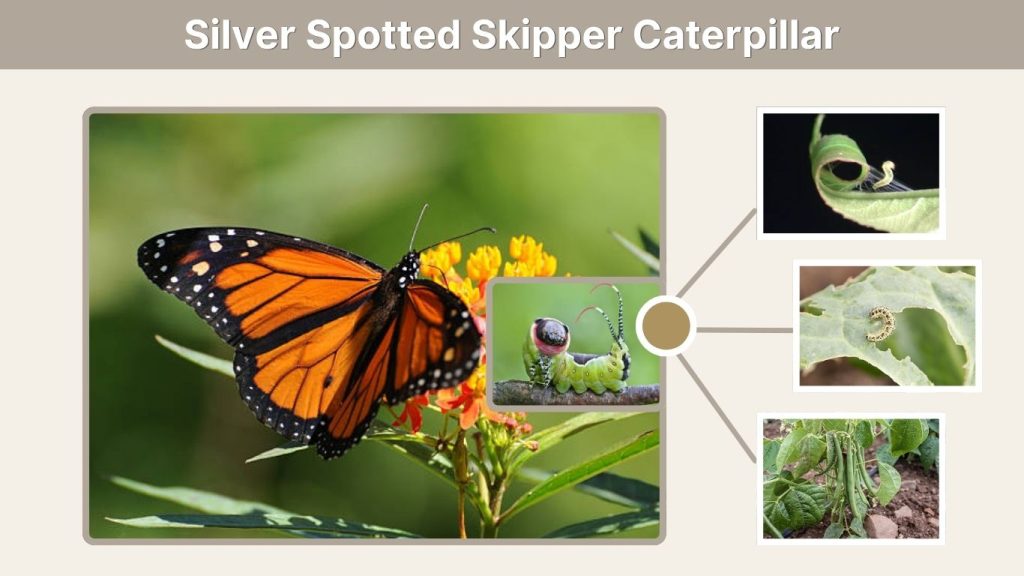
The silver spotted skipper caterpillar looks very different from the adult butterfly. It is usually greenish to yellow-green with a darker head and noticeable markings. Many caterpillars have a rounded brown or reddish-brown head with orange or yellow patches, giving them a distinctive appearance.
Caterpillar Behavior
Silver spotted skipper caterpillars are known for building shelters from leaves. Young caterpillars may fold part of a leaf and tie it with silk. Older caterpillars may pull leaves together into a larger shelter. These leaf shelters help hide them from predators and weather.
Caterpillars feed on the host plant leaves, but they usually do not cause serious damage in natural settings. In some cases, they may feed on cultivated legumes, but they are generally not considered a major pest.
Are Silver Spotted Skipper Caterpillars Poisonous?
Silver spotted skipper caterpillars are not known to be poisonous to people. They do not sting, and they are not considered dangerous. However, it is still best not to handle caterpillars unnecessarily. Their bodies are delicate, and handling can injure them.
If you find one in a folded leaf shelter, leave it in place if possible. The shelter is part of its normal development. Removing or opening it may expose the caterpillar to predators, heat, or dryness.
Silver Spotted Skipper Eggs
Female silver spotted skippers lay eggs singly on or near host plants. The eggs are small, rounded, and often greenish when fresh. After hatching, the tiny caterpillar must find suitable leaves and begin feeding.
Egg-laying near host plants is important because the young caterpillar has limited mobility. If the egg is too far from the correct plant, the caterpillar may not survive. This is why planting host plants is the most useful way to support silver spotted skipper reproduction.
Silver Spotted Skipper Life Cycle
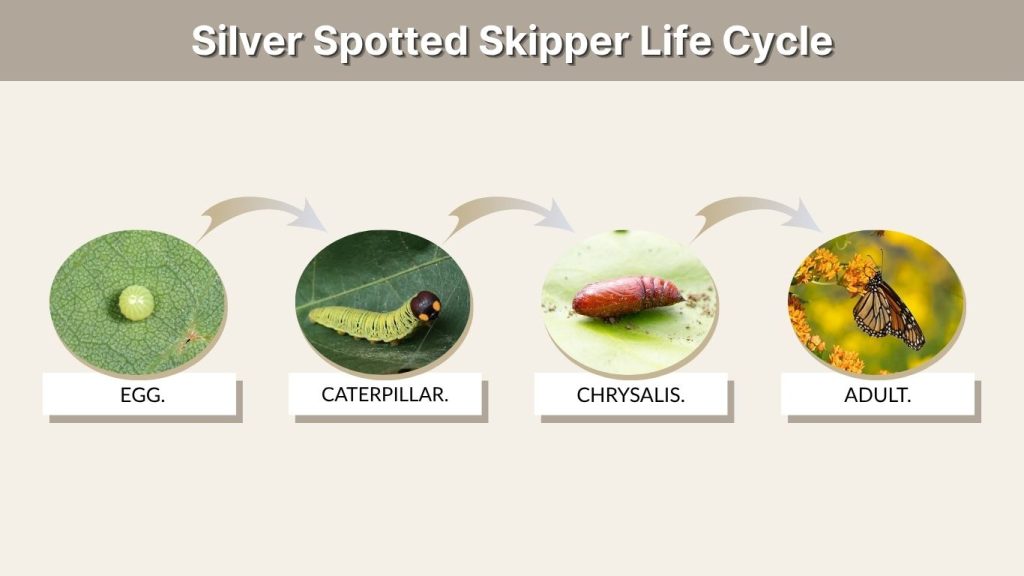
The silver spotted skipper has a complete butterfly life cycle: egg, caterpillar, chrysalis, and adult. The number of generations per year depends on climate. Warmer regions may have multiple broods, while cooler northern areas may have fewer.
Main Life Cycle Stages
The life cycle includes:
- Egg: Laid singly on or near host plants
- Caterpillar: Feeds on legume leaves and hides in silk-tied leaf shelters
- Chrysalis: Forms inside a shelter or protected area
- Adult: Visits flowers, mates, and lays eggs for the next generation
Overwintering usually happens in the chrysalis stage. The final generation of the year may pupate and remain protected through winter before adults emerge in warmer months.
Silver Spotted Skipper Chrysalis and Pupa
The chrysalis, or pupa, is the resting transformation stage between caterpillar and adult butterfly. During this stage, the caterpillar changes into the adult skipper. A silver spotted skipper chrysalis may be hidden inside leaf litter, a silked leaf shelter, or another protected place.
Because the pupa is often hidden, many people never see this stage. Gardeners may accidentally disturb overwintering pupae when clearing leaves too aggressively. Leaving some leaf litter and natural garden edges can help protect butterflies and other beneficial insects.
What Do Silver Spotted Skippers Eat?
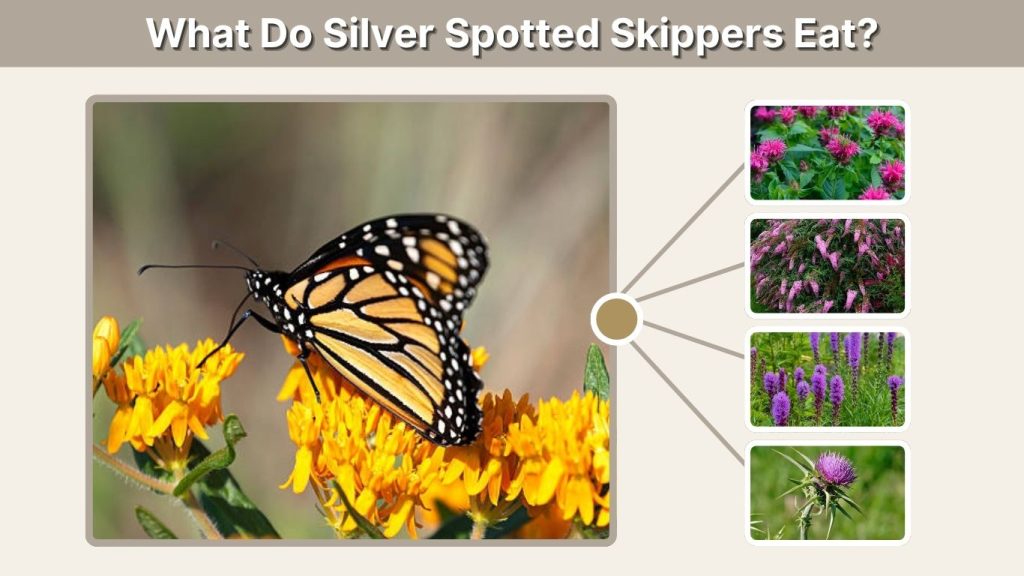
Adult silver spotted skippers feed on nectar. Their long proboscis works like a flexible drinking tube that reaches into flowers. This behavior explains searches such as “silver spotted skipper uses its proboscis” and “silver spotted skipper sucking nectar.”
Nectar Plants They May Visit
Adults may visit:
- Milkweed
- Thistle
- Bee balm
- Joe Pye weed
- Red clover
- Buttonbush
- Blazing star
- Butterfly bush
- Purple, pink, red, blue, white, or cream flowers
They are often seen on nectar-rich blooms in sunny gardens. They tend to be strong flyers and may move quickly from flower to flower.
Silver Spotted Skipper Male vs Female
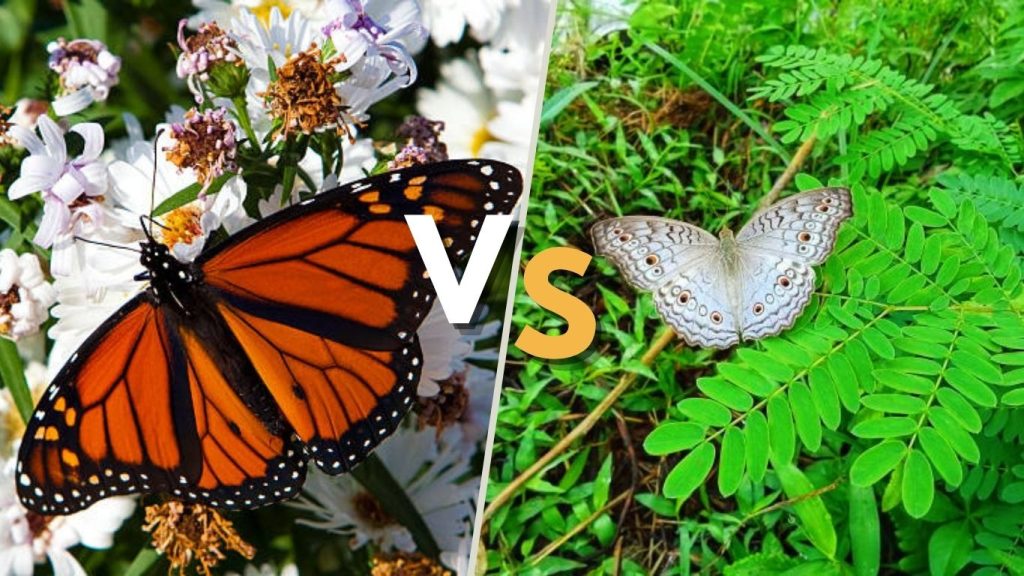
Male and female silver spotted skippers look similar, which makes field identification difficult. Unlike some butterflies where males and females have very different colors, silver spotted skipper sex differences are subtle.
Males may be more likely to perch in sunny areas, on branches, or on tall weeds while watching for females. Females are more focused on finding host plants for egg-laying. In casual observation, behavior may be more helpful than appearance, but even behavior is not always enough for certainty.
Silver Spotted Skipper Behavior
Silver spotted skippers are active, quick, and alert. Their flight is fast and bouncing, which is why they are called skippers. They may dart between flowers, perch under leaves, or disappear quickly when approached.
Adults often rest upside down under leaves during the night, on cloudy days, or in hot weather. This behavior protects them from predators and harsh conditions. Males may defend or monitor perching areas while looking for females.
Silver Spotted Skipper Predators and Adaptations
Silver spotted skippers face many predators during every life stage. Eggs may be eaten by small insects. Caterpillars may be attacked by wasps, ants, spiders, birds, and parasitoids. Adults may be taken by birds, dragonflies, robber flies, or spiders.
Their adaptations include fast flight, hidden caterpillar shelters, cryptic resting behavior, and the bold wing pattern that may help with recognition or predator avoidance. The caterpillar’s leaf shelter is one of its most important defenses.
Silver Spotted Skipper in Gardens
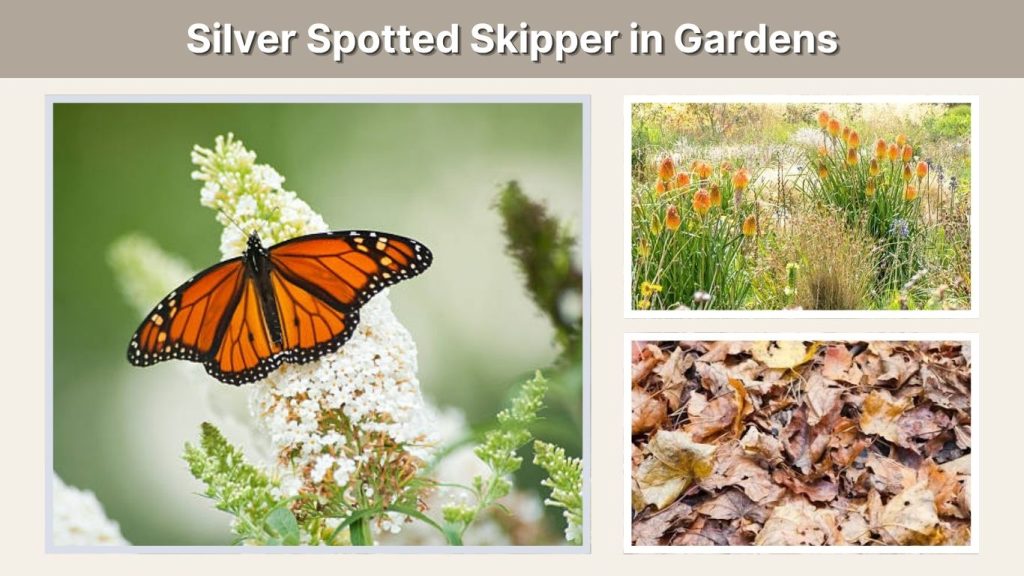
Silver spotted skippers are welcome visitors in pollinator gardens. They are harmless to people, pets, and homes. They do not bite, sting, infest houses, or damage structures. Adults help pollinate flowers as they feed, while caterpillars support the food web by feeding birds, wasps, and other wildlife.
How to Attract Them
To attract silver spotted skippers:
- Plant native or suitable legume host plants
- Grow nectar flowers that bloom through the season
- Avoid broad insecticide use
- Leave some natural leaf litter for overwintering insects
- Provide sunny garden edges and mixed plantings
- Keep some shrubs, vines, or woodland-edge habitat
A garden with both nectar plants and host plants is much more useful than a garden with flowers only. Adult butterflies may visit for nectar, but they need host plants nearby to reproduce.
Silver Spotted Skipper Meaning and Symbolism
Some people search for silver spotted skipper meaning or spiritual meaning. Scientifically, this butterfly represents transformation, pollination, and seasonal life cycles. Symbolically, people may connect it with movement, resilience, quick change, and small moments of beauty.
Because skippers move quickly and often appear suddenly on flowers, they can feel like a reminder to notice brief natural moments. However, spiritual meanings are personal interpretations, not biological facts.
Fun Facts About the Silver Spotted Skipper
The silver spotted skipper has several interesting traits that make it a favorite among butterfly watchers:
- It is one of the most recognizable skipper butterflies in North America.
- The big silver-white hindwing patch is visible even from a distance.
- Caterpillars build leaf shelters using silk.
- Adults often rest upside down under leaves.
- It is a butterfly, even though many people mistake it for a moth.
- The caterpillar’s head can look unusually large and colorful.
- Adults are strong, fast flyers.
- Host plants are usually legumes.
Is the Silver Spotted Skipper Safe?
Yes, the silver spotted skipper is safe. Adults do not bite or sting. Caterpillars are not known to be poisonous. The species is beneficial in gardens because adults visit flowers and larvae support wildlife. If you find one, the best response is to observe it and leave it alone.
FAQs
Is the silver spotted skipper a butterfly or moth?
The silver spotted skipper is a butterfly, not a moth. It belongs to the skipper family, Hesperiidae. Skippers can look moth-like because they have stout bodies and fast flight, but their antenna shape, daytime activity, and life cycle identify them as butterflies.
What do silver spotted skipper caterpillars eat?
Silver spotted skipper caterpillars eat the leaves of host plants, especially legumes. Common host plants include black locust, honey locust, false indigo, wisteria, tick trefoil, and related plants. The caterpillars often hide in leaf shelters tied together with silk.
Are silver spotted skipper caterpillars poisonous?
Silver spotted skipper caterpillars are not known to be poisonous or dangerous to people. They do not sting. Still, it is best to avoid handling them because caterpillars are delicate and can be harmed easily. Leave their leaf shelters undisturbed when possible.
What is the silver spotted skipper’s lifespan?
The adult butterfly stage is relatively short, often lasting only weeks. The full life cycle is longer because it includes egg, caterpillar, chrysalis, and adult stages. In many regions, the species survives winter as a chrysalis before emerging the next season.
How can I attract silver spotted skippers?
Plant legume host plants for caterpillars and nectar-rich flowers for adults. Good garden support includes black locust or other suitable legumes, plus flowers such as milkweed, bee balm, thistle, clover, blazing star, and Joe Pye weed. Avoid pesticides and leave some natural garden edges.