
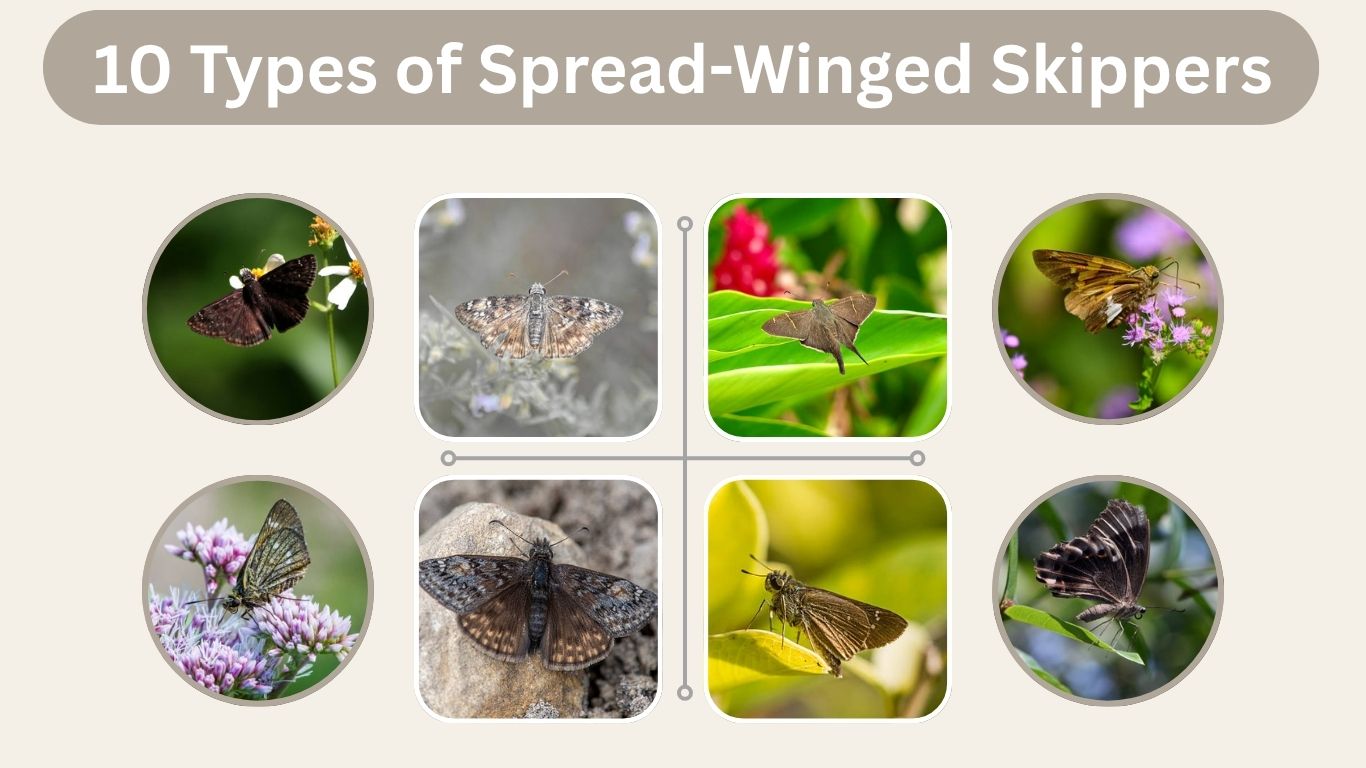
Spread-winged skippers are small, fast-flying butterflies known for resting with their wings held open. They are often found in gardens, meadows, roadsides, woodland edges, and open fields. Although many look brown or dark at first, each type has special markings, wing shapes, colors, and habitat preferences that make identification easier.
1. Silver-spotted Skipper
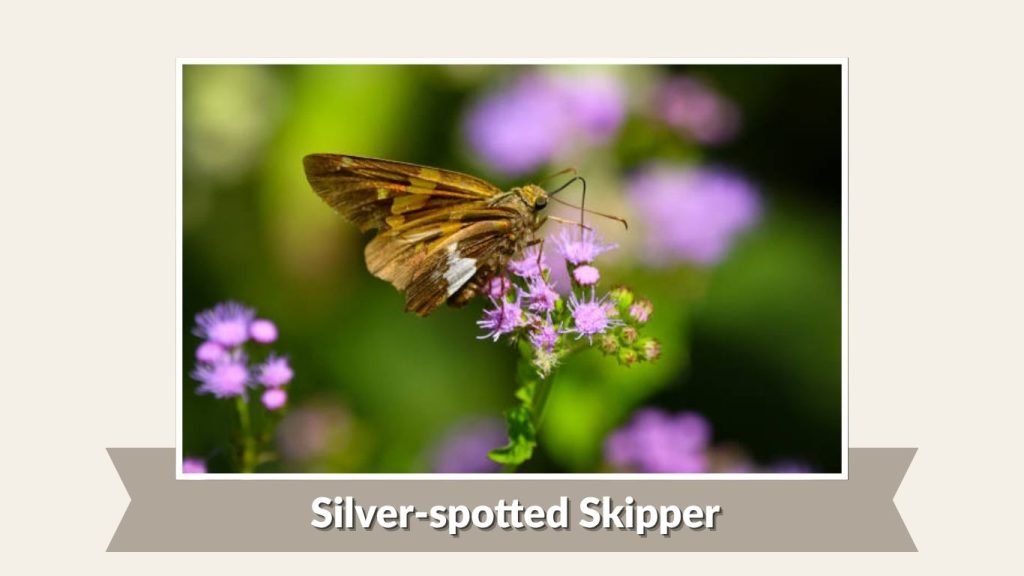
The Silver-spotted Skipper is one of the most familiar spread-winged skippers in North America. It is often seen in gardens, meadows, forest edges, roadsides, and open fields. This butterfly is easy to recognize because of the bright silver-white patch on the underside of its hindwing. It is a strong, fast flyer and often rests with its wings spread open.
Characteristics
- Medium to large spread-winged skipper
- Dark brown wings with golden-orange markings
- Bright silver-white spot on the hindwing underside
- Strong and fast flying ability
- Often visits flowers for nectar
- Common in gardens, fields, and woodland edges
Size
The Silver-spotted Skipper usually has a wingspan of about 1.75 to 2.5 inches. It is larger than many other skippers, which makes it easier to notice when it flies between flowers. Its broad wings and strong body help it move quickly and powerfully.
Color
This skipper has dark brown wings with orange or golden patches near the front wings. The most important identification feature is the large silver-white spot on the underside of the hindwing. Its body is also brown and sturdy, giving it a moth-like appearance at first glance.
Habitat and ID
Silver-spotted Skippers live in open woods, meadows, gardens, roadsides, fields, and areas near streams. They are often seen feeding on nectar from flowers such as milkweed, thistle, clover, and butterfly bush. To identify them, look for a fast-flying brown skipper with orange wing markings and a clear silver-white patch on the hindwing.
2. Long-tailed Skipper
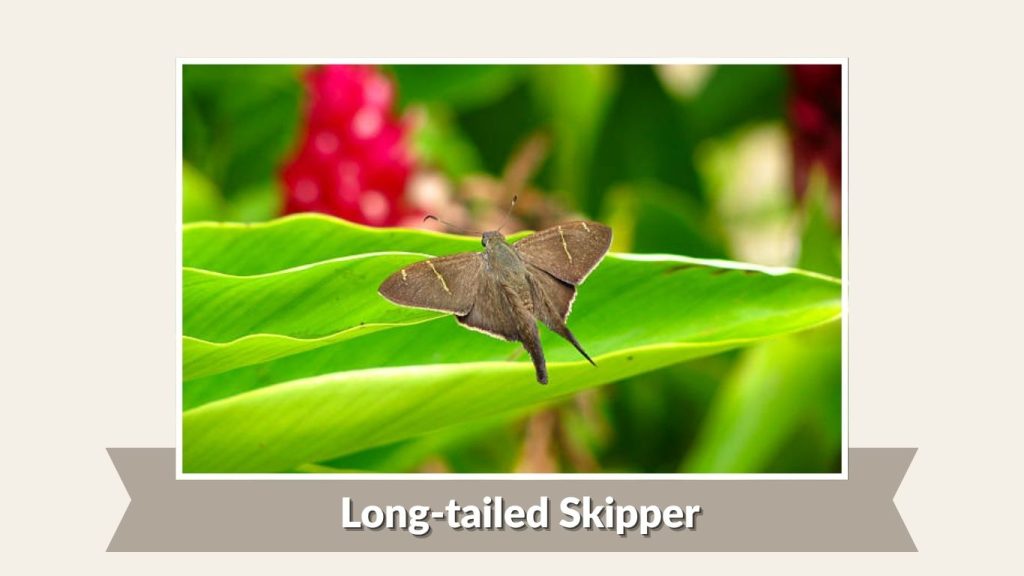
The Long-tailed Skipper is a beautiful spread-winged skipper known for the long tails on its hindwings. It is commonly found in gardens, fields, roadsides, and warm open areas. This skipper is a fast flyer and often visits flowers for nectar. Its unique tail-like wing extensions make it easier to identify than many other skippers.
Characteristics
- Medium-sized spread-winged skipper
- Long tail-like extensions on hindwings
- Brown wings with blue-green body tones
- Fast and active flyer
- Common around gardens and open fields
- Often visits flowers for nectar
Size
The Long-tailed Skipper usually has a wingspan of about 1.5 to 2 inches. Its body is slim and strong, helping it fly quickly between flowers. The long tails on the hindwings make it appear slightly larger and more elegant in flight.
Color
This skipper has brown wings with lighter markings and a bluish-green shine on parts of the body. The underside may show pale spots and soft brown tones. Its long hindwing tails are one of the clearest features for identification.
Habitat and ID
Long-tailed Skippers live in gardens, fields, woodland edges, roadsides, and warm open areas. They often feed on nectar from flowers such as lantana, clover, verbena, and butterfly bush. To identify them, look for a brown skipper with long hindwing tails and a bluish-green body shine.
3. Hoary Edge

The Hoary Edge is a spread-winged skipper known for the pale, frosted edge on its hindwing. It is often seen in open woods, fields, meadows, and roadsides. This skipper can be confused with similar dark skippers, but its light wing edging and strong flight help with identification.
Characteristics
- Medium-sized spread-winged skipper
- Dark brown wings with pale markings
- Frosty or whitish edge on the hindwing
- Strong, low-flying movement
- Visits flowers for nectar
- Common in open woods and fields
Size
The Hoary Edge usually has a wingspan of about 1.4 to 1.8 inches. It is not as large as the Silver-spotted Skipper but is still noticeable when feeding on flowers. Its compact body and broad wings give it a strong flying style.
Color
This skipper has dark brown wings with small pale spots and a whitish or grayish edge on the hindwing. The pale edging gives it the “hoary” look that inspired its name. Its body is mostly brown and blends well with dry leaves and grasses.
Habitat and ID
Hoary Edge skippers live in open woodlands, meadows, fields, powerline cuts, and roadsides. They often visit flowers such as milkweed, thistle, clover, and dogbane. To identify them, look for a dark brown skipper with pale wing spots and a frosted-looking hindwing edge.
4. Southern Cloudywing
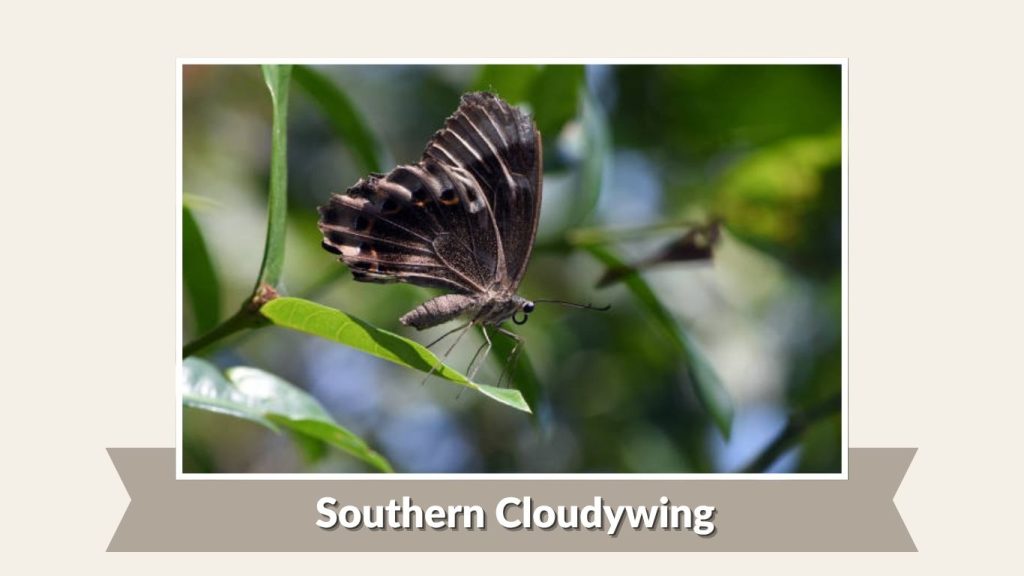
The Southern Cloudywing is a dark spread-winged skipper found in open habitats, especially in warm regions. It is often seen flying close to the ground in fields, roadsides, meadows, and woodland edges. Its cloudy wing markings and dark brown color help it blend into natural surroundings.
Characteristics
- Small to medium spread-winged skipper
- Dark brown wings with cloudy pale spots
- Quick, low flight near vegetation
- Often rests with wings spread open
- Visits small flowers for nectar
- Common in fields and open woodlands
Size
The Southern Cloudywing usually has a wingspan of about 1.1 to 1.5 inches. It is smaller than many large skippers but still easy to notice when active around flowers. Its short, quick flight helps it move between low plants and sunny openings.
Color
This skipper has dark brown wings with small pale or grayish spots. The markings may look cloudy or uneven, which gives the group its name. Its body is also brown and compact, helping it blend with soil, bark, and dry leaves.
Habitat and ID
Southern Cloudywings live in fields, meadows, roadsides, open woods, and sunny grassy areas. They often visit flowers such as clover, dogbane, milkweed, and wildflowers. To identify them, look for a small dark skipper with cloudy pale spots and a fast, low flight.
5. Northern Cloudywing
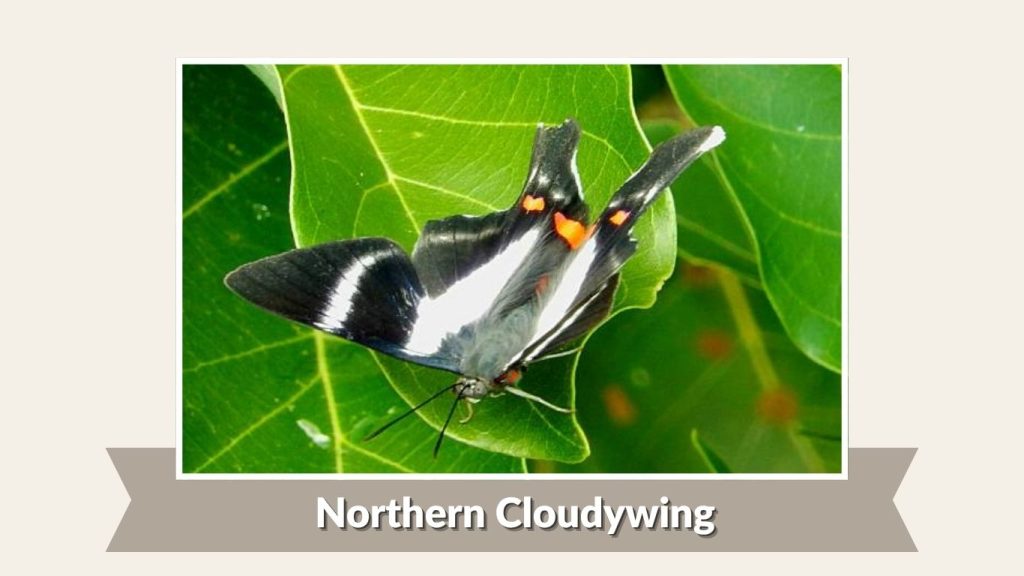
The Northern Cloudywing is a small dark skipper that often rests with its wings spread wide. It is found in meadows, fields, roadsides, open woods, and sunny clearings. This skipper can look similar to the Southern Cloudywing, but careful attention to its wing spots and habitat can help with identification.
Characteristics
- Small to medium spread-winged skipper
- Dark brown wings with pale spots
- Fast and low flying style
- Often found near open sunny areas
- Visits wildflowers for nectar
- Rests with wings spread flat
Size
The Northern Cloudywing usually has a wingspan of about 1.1 to 1.5 inches. Its compact size and quick movements can make it difficult to follow in flight. When resting, its spread-wing posture makes the wing pattern easier to see.
Color
This skipper is mostly dark brown with small pale spots on the forewings. The markings are usually subtle and may appear grayish or whitish. Its plain dark body and wings help it blend into shaded soil, bark, and dry vegetation.
Habitat and ID
Northern Cloudywings live in fields, meadows, open forests, woodland edges, and roadsides. They often feed on nectar from milkweed, clover, dogbane, and other wildflowers. To identify them, look for a small dark skipper with pale forewing spots and a spread-winged resting posture.
6. Hayhurst’s Scallopwing
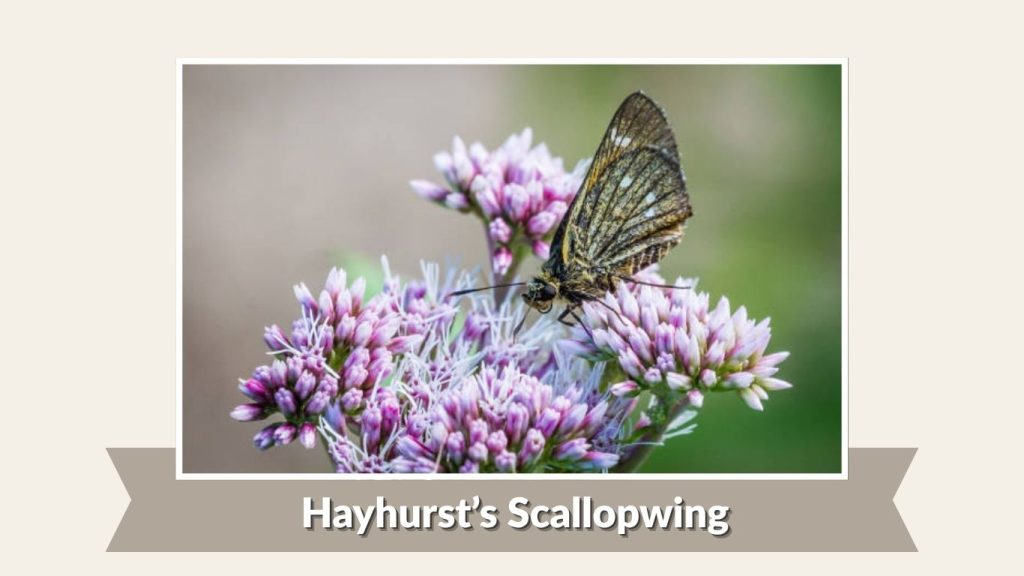
Hayhurst’s Scallopwing is a small spread-winged skipper known for its scalloped wing edges. It is often found in dry fields, roadsides, prairies, open woods, and weedy areas. Because of its small size and brown color, it may be overlooked unless it is resting or feeding on low flowers.
Characteristics
- Small spread-winged skipper
- Brown wings with scalloped edges
- Pale markings on the wings
- Often flies low near the ground
- Common in dry open habitats
- Visits small wildflowers for nectar
Size
Hayhurst’s Scallopwing is a small skipper, usually with a wingspan of about 0.9 to 1.2 inches. Its small size makes it less noticeable than larger skippers. It often stays close to low plants, where it can quickly hide among grasses and weeds.
Color
This skipper has brown wings with lighter bands or patches. The wing edges are slightly scalloped, giving the butterfly a delicate uneven outline. Its muted brown color helps it blend well with dry leaves, stems, and soil.
Habitat and ID
Hayhurst’s Scallopwings live in dry fields, prairies, roadsides, open woods, vacant lots, and weedy places. They often visit small flowers for nectar. To identify them, look for a tiny brown skipper with scalloped wing edges and a low, quick flight near vegetation.
7. Dreamy Duskywing
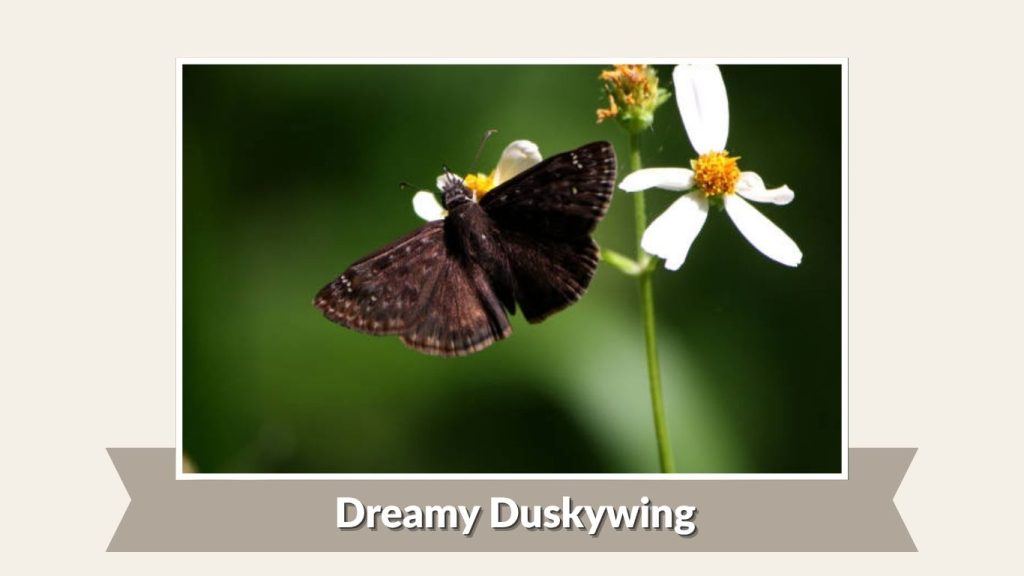
The Dreamy Duskywing is a small spread-winged skipper often found in open woods, forest edges, clearings, and sunny trails. It has a dark, subtle wing pattern that helps it blend with bark, soil, and dry leaves. This skipper is usually active in spring and early summer, when it visits flowers and rests on the ground or low vegetation.
Characteristics
- Small spread-winged skipper
- Dark brown wings with soft markings
- Usually active in spring and early summer
- Often rests on soil, leaves, or low plants
- Fast, low-flying movement
- Common near open woods and forest edges
Size
The Dreamy Duskywing usually has a wingspan of about 1 to 1.4 inches. Its small size and quick flight can make it hard to follow. When it lands with wings spread open, its dark wing pattern becomes easier to observe.
Color
This skipper is mostly dark brown or grayish-brown with faint lighter markings. Its wings may show soft bands or pale spots, but the pattern is usually not very bold. The muted color helps it stay hidden against tree bark, dry leaves, and bare ground.
Habitat and ID
Dreamy Duskywings live in open woodlands, forest paths, edges, clearings, and dry sunny areas. They often visit spring flowers for nectar. To identify them, look for a small dark duskywing with subtle markings, spread wings, and a low flight near wooded habitats.
8. Sleepy Duskywing
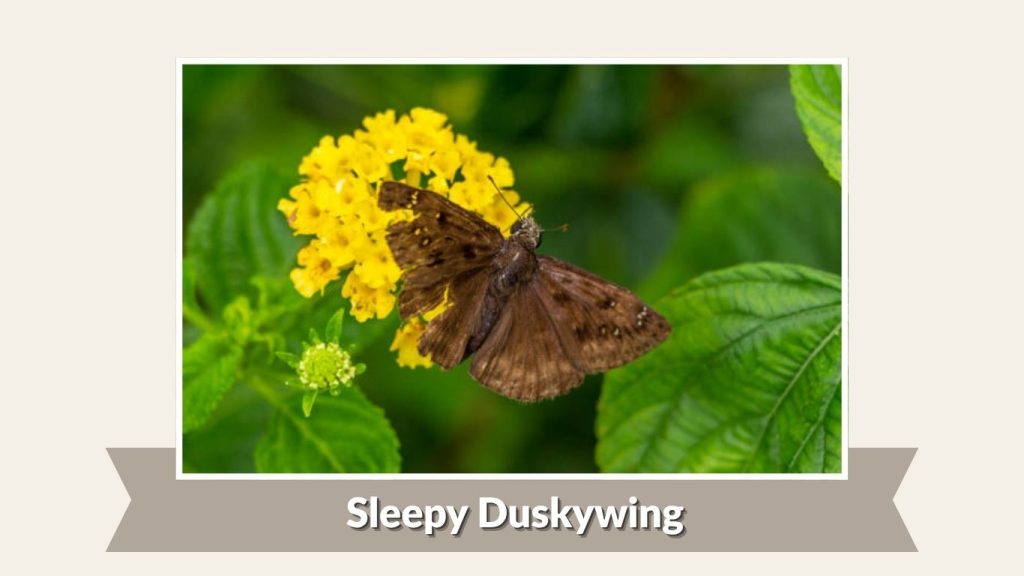
The Sleepy Duskywing is a dark spread-winged skipper often seen in open woods, fields, roadsides, and woodland edges. It has a plain brown appearance with small markings, which can make it difficult to separate from other duskywings. This skipper usually flies low and rests with its wings spread wide.
Characteristics
- Small to medium spread-winged skipper
- Dark brown wings with pale spots
- Rests with wings open and flat
- Quick, low flight near plants
- Common in open woods and edges
- Visits flowers for nectar
Size
The Sleepy Duskywing usually has a wingspan of about 1.1 to 1.5 inches. It is compact and fast, often flying close to the ground. Its small size and dark color make it easy to miss unless it lands in an open sunny spot.
Color
This skipper is mostly dark brown with small pale or grayish spots on the forewings. The markings are usually simple and not very bright. Its overall color helps it blend with dry leaves, bark, and shaded ground.
Habitat and ID
Sleepy Duskywings live in open woodlands, roadsides, fields, forest edges, and sunny clearings. They may visit flowers such as clover, dogbane, milkweed, and other wildflowers. To identify them, look for a dark brown skipper with spread wings, pale forewing spots, and a quick low flight.
9. Juvenal’s Duskywing
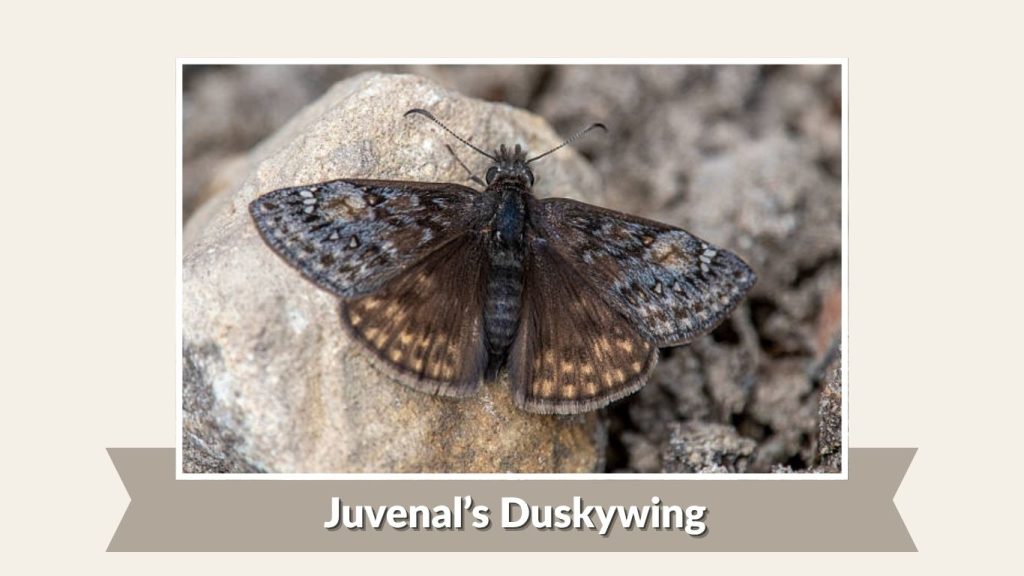
Juvenal’s Duskywing is a common spread-winged skipper found in open woods, fields, trails, and woodland edges. It is one of the larger duskywings and is often seen flying in spring. Its dark brown wings, pale spots, and spread-wing resting position help with identification.
Characteristics
- Medium-sized spread-winged skipper
- Dark brown wings with pale markings
- Often active in spring
- Rests with wings spread flat
- Strong, quick flying style
- Common near oaks and wooded edges
Size
Juvenal’s Duskywing usually has a wingspan of about 1.25 to 1.6 inches. It is larger than some similar duskywings, which can help with identification. Its strong body and broad wings allow it to fly quickly through sunny openings.
Color
This skipper has dark brown wings with pale spots and soft bands. The forewings may show several light markings, while the hindwings are usually darker and less patterned. Its overall color allows it to blend into bark, soil, and dry leaves.
Habitat and ID
Juvenal’s Duskywings live in open forests, woodland edges, fields, roadsides, and trails, especially near oak trees. They often visit flowers for nectar and may rest on bare ground. To identify them, look for a medium duskywing with pale forewing spots and a strong spring flight.
10. Horace’s Duskywing
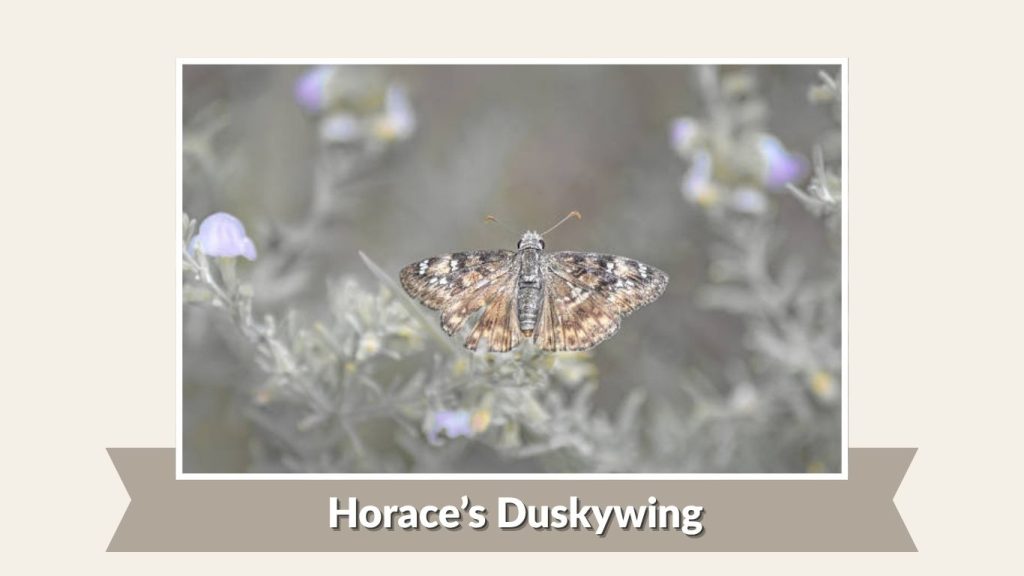
Horace’s Duskywing is a dark spread-winged skipper often found in fields, open woods, roadsides, and sunny woodland edges. It is similar to Juvenal’s Duskywing, but it is more often seen later in the season. This skipper rests with its wings open and blends well with bark, leaves, and soil.
Characteristics
- Medium-sized spread-winged skipper
- Dark brown wings with pale spots
- Often active from spring into late summer
- Fast and low flying movement
- Rests with wings spread open
- Common near oak trees and open habitats
Size
Horace’s Duskywing usually has a wingspan of about 1.25 to 1.6 inches. Its size is similar to Juvenal’s Duskywing, making close observation important. It flies quickly and often lands on low plants, soil, or leaves in sunny areas.
Color
This skipper is dark brown with pale spots on the forewings and subtle markings across the wings. Females may show more noticeable pale patches than males. Its brown coloring helps it blend into woodland floors and dry vegetation.
Habitat and ID
Horace’s Duskywings live in open woods, fields, roadsides, forest edges, and clearings, often near oak trees. They visit flowers for nectar and rest with wings flat. To identify them, look for a dark brown spread-winged skipper with pale forewing spots and late-season activity.
FAQs
What are spread-winged skippers?
Spread-winged skippers are a group of skipper butterflies that often rest with their wings held open or spread flat. They usually have strong bodies, quick flight, and brown or dark wing colors. Many species are found in fields, gardens, roadsides, and woodland edges.
Are spread-winged skippers butterflies or moths?
Spread-winged skippers are butterflies, not moths. However, they can sometimes look moth-like because of their thick bodies, fast flight, and dull brown colors. They belong to the skipper family, which is known for quick movements and unique resting postures.
Where do spread-winged skippers live?
Spread-winged skippers live in many open and semi-open habitats, including meadows, gardens, fields, roadsides, prairies, and forest edges. Some species prefer wooded areas, while others are more common in grassy places with wildflowers and host plants.
What do spread-winged skippers eat?
Adult spread-winged skippers mainly drink nectar from flowers such as clover, milkweed, thistle, dogbane, lantana, and other wildflowers. Their caterpillars feed on specific host plants, which vary by species. These food plants are important for their survival and reproduction.
How can you identify spread-winged skippers?
You can identify spread-winged skippers by looking at their wing posture, size, color, markings, and habitat. Many have brown wings with pale spots, bands, or special marks. For example, the Silver-spotted Skipper has a clear silver-white patch on the underside of its hindwing.