
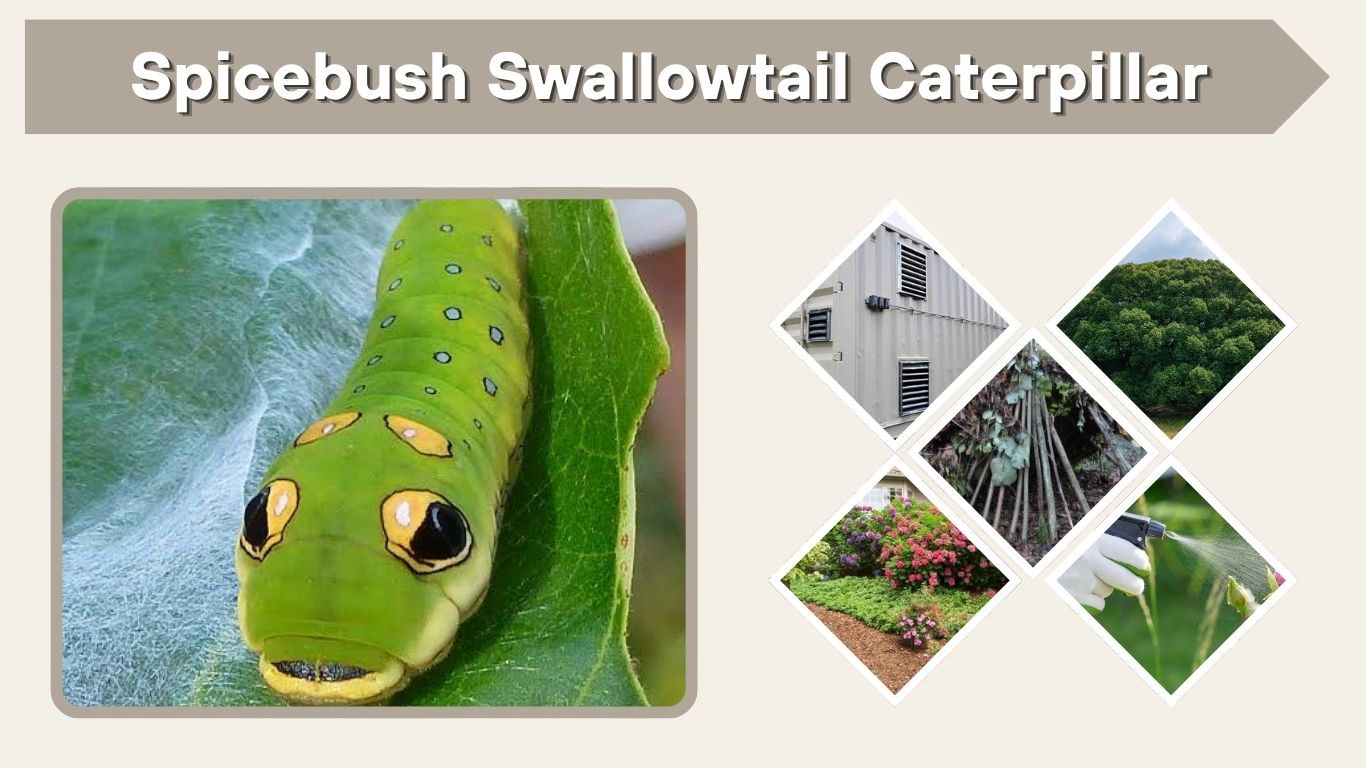
The spicebush swallowtail caterpillar is one of the most eye-catching caterpillars in North America. It starts life disguised like bird droppings, then grows into a green or orange caterpillar with large false eyespots. Although it may look strange or even threatening, it is harmless to people. This guide explains its stages, host plants, food, chrysalis, care, and safety.
What Is a Spicebush Swallowtail Caterpillar?
A spicebush swallowtail caterpillar is the larval stage of the spicebush swallowtail butterfly, known scientifically as Papilio troilus. This butterfly is mostly associated with eastern North America and is commonly found around woodlands, gardens, forest edges, wetlands, and areas where its host plants grow.
The caterpillar is famous for its “cute” eyespots, snake-like appearance, and leaf-folding behavior. It does not stay exposed on leaves like some caterpillars. Instead, it often pulls a leaf around itself with silk, creating a small shelter where it hides between feeding periods.
Why People Notice This Caterpillar
People often find spicebush swallowtail caterpillars while checking leaves on spicebush, sassafras, sweet bay, or related plants. The caterpillar’s appearance changes dramatically as it grows, which explains why searches include brown, yellow, orange, black, and green spicebush swallowtail caterpillars.
Common reasons people search for it include:
- Identifying a caterpillar with big eyespots
- Learning what it eats
- Checking whether it is poisonous
- Understanding caterpillar stages
- Raising one safely
- Finding the right host plant
- Knowing what the chrysalis looks like
- Figuring out what butterfly it becomes
Although it may look like a cartoon creature, the spicebush swallowtail caterpillar is a real and highly adapted insect.
What Does a Spicebush Swallowtail Caterpillar Look Like?
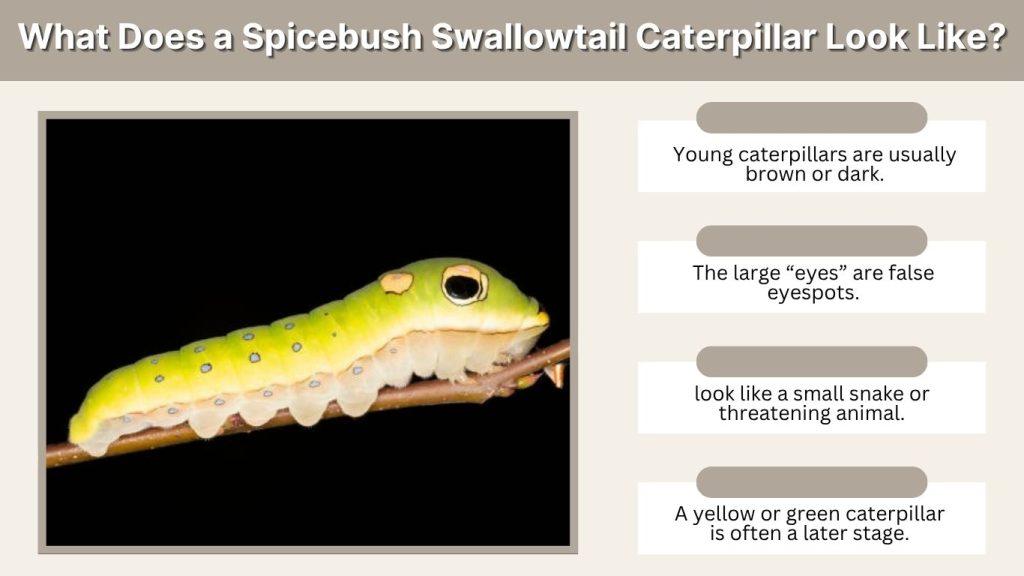
The spicebush swallowtail caterpillar changes appearance as it grows. Young caterpillars are usually brown or dark with pale markings, making them look like bird droppings. This camouflage helps protect them from birds and other predators.
Older caterpillars often become bright green, yellow-green, or orange before pupation. They develop large false eyespots near the front of the body. These are not real eyes. The real head is smaller and less obvious.
Spicebush Swallowtail Caterpillar Eyes
The large “eyes” are false eyespots. They make the caterpillar look like a small snake or threatening animal. This mimicry may scare away predators long enough for the caterpillar to survive.
The eyespots are one of the most searched features because they look expressive and almost cartoon-like. Some people compare the caterpillar to a Pokémon character or a toy-like creature because of this appearance.
Brown, Yellow, Green, and Orange Forms
A brown spicebush swallowtail caterpillar is usually an earlier stage. A yellow or green caterpillar is often a later stage. An orange spicebush swallowtail caterpillar may be close to pupating, especially if it has stopped eating and is wandering away from the host plant.
Color alone does not always mean the caterpillar is sick. It may simply be moving through its normal growth stages.
Spicebush Swallowtail Caterpillar Stages
The spicebush swallowtail life cycle includes egg, caterpillar, chrysalis, and adult butterfly. The caterpillar stage has several growth phases called instars. Each instar ends when the caterpillar molts and grows larger.
Egg Stage
The female butterfly lays small eggs on suitable host plants. Eggs are often placed on the underside of leaves where newly hatched caterpillars can begin feeding. The eggs are small, rounded, and easy to miss.
After hatching, the tiny caterpillar begins eating the host leaf and soon starts using silk to create a protected leaf shelter.
Caterpillar Instars
During the caterpillar stage, the spicebush swallowtail grows through multiple instars. Early instars use bird-dropping camouflage. Later instars become larger, smoother, and more snake-like.
Important stage changes include:
- Tiny young caterpillar hatches from the egg.
- Early caterpillar looks dark and bird-dropping-like.
- Middle stages grow larger and hide in folded leaves.
- Later stages become green, yellow-green, or orange.
- Large false eyespots become more visible.
- Fully grown caterpillar stops eating before pupation.
The caterpillar feeds, hides, molts, and repeats this pattern until it is ready to form a chrysalis.
Chrysalis Stage
Many people search for “spicebush swallowtail caterpillar cocoon,” but chrysalis is the more accurate word. Butterflies form chrysalises, while many moths form cocoons.
The chrysalis may be green or brown, depending on season, light conditions, and environment. Brown chrysalises can blend with dead leaves or twigs, while green ones may blend with living stems and leaves.
Adult Butterfly
The caterpillar eventually turns into a spicebush swallowtail butterfly. The adult butterfly is dark with pale spots and bluish or greenish shading on the hindwings. Adults feed on nectar and help continue the life cycle by mating and laying eggs on host plants.
Spicebush Swallowtail Caterpillar Host Plants
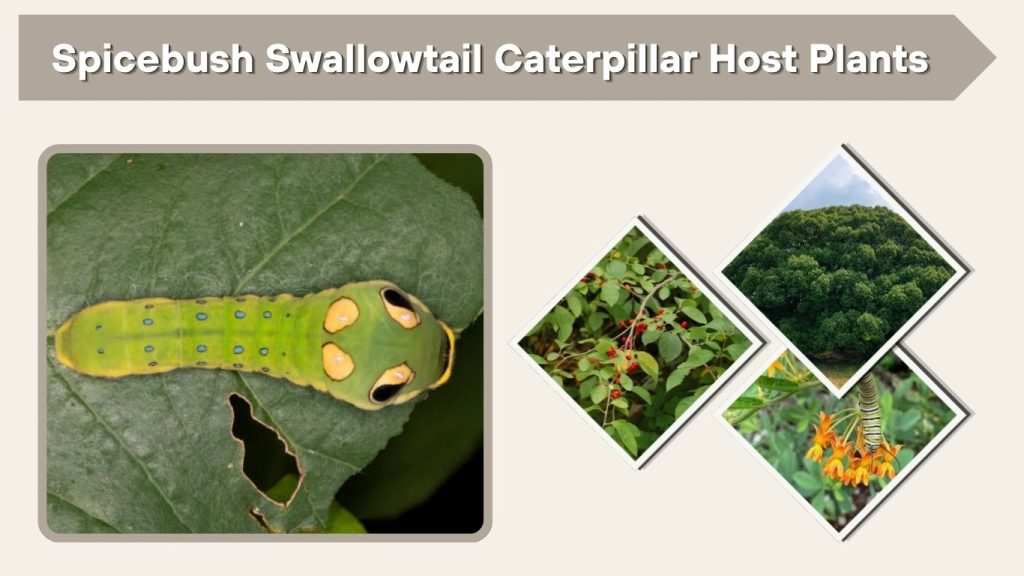
Host plants are the plants caterpillars must eat to survive. A spicebush swallowtail caterpillar cannot live on just any leaf. It needs specific plants, mostly from the laurel family and a few related choices.
Common Host Plants
Spicebush swallowtail caterpillar host plants include:
- Spicebush
- Sassafras
- Sweet bay
- Red bay
- Camphor tree
- Tulip tree
- Pondspice
- Other suitable regional host plants
Spicebush and sassafras are among the most familiar host plants for gardeners trying to support this butterfly. If you want spicebush swallowtails in your yard, planting host plants is more important than buying caterpillars.
What Does a Spicebush Swallowtail Caterpillar Eat?
The caterpillar eats leaves from its host plant. It does not eat milkweed, tomato leaves, lettuce, grass, or random garden plants. If you move it to the wrong plant, it may starve even if fresh leaves are available.
| Life Stage | Appearance | Main Need |
|---|---|---|
| Egg | Small, round, often on leaf underside | Safe host plant leaf |
| Young caterpillar | Brown or dark, bird-dropping-like | Fresh host leaves |
| Older caterpillar | Green, yellow, or orange with eyespots | More host foliage |
| Chrysalis | Green or brown, twig-like | Undisturbed shelter |
| Adult butterfly | Dark wings with pale spots and blue-green shading | Nectar and host plants for eggs |
Spicebush Swallowtail Caterpillar Habitat
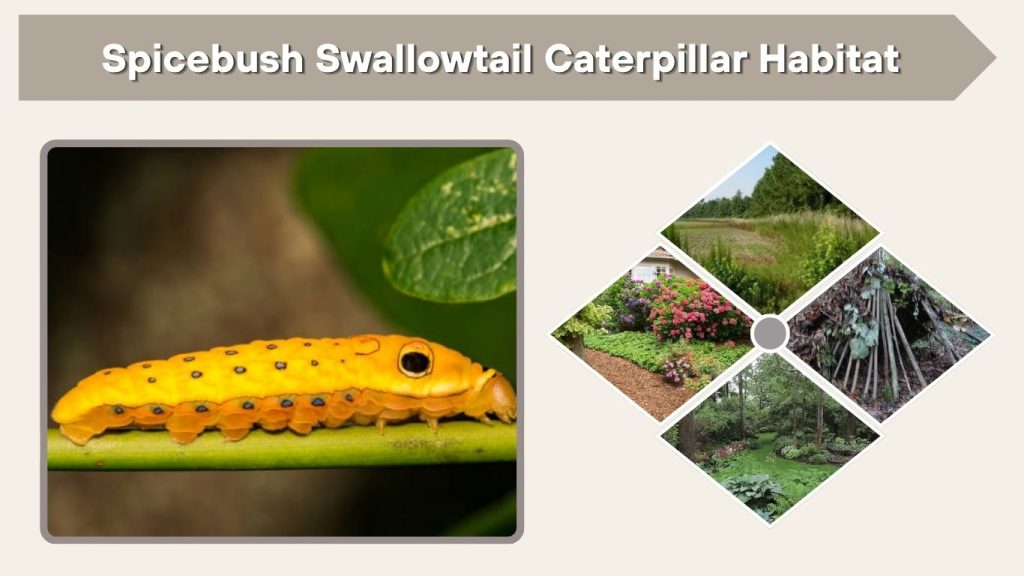
The caterpillar’s habitat depends on where host plants grow. Because spicebush and sassafras often grow in woodland edges, moist woods, and naturalized areas, caterpillars are frequently found in these habitats.
Where to Find Them
You may find spicebush swallowtail caterpillars in:
- Woodland gardens
- Forest edges
- Native plant gardens
- Wetland margins
- Shaded yards
- Areas with spicebush or sassafras
- Leaves folded into small shelters
- Native plant restoration areas
Instead of looking for exposed caterpillars, inspect folded leaves. The caterpillar may be hiding inside a silk-lined leaf shelter during the day.
Is the Spicebush Swallowtail Caterpillar Poisonous?
The spicebush swallowtail caterpillar is not considered poisonous or dangerous to touch. It does not have stinging hairs like some venomous caterpillars. The large eyespots and snake-like look are defensive mimicry, not a sign that it can harm people.
Can You Touch It?
It is better to avoid unnecessary handling. The caterpillar is soft and can be injured easily. If you need to move one, use the leaf it is on or a soft brush. Wash your hands afterward, especially if you touched plant sap.
Does It Bite?
Spicebush swallowtail caterpillars are not known for biting people. Their mouthparts are built for chewing leaves, not attacking humans. If disturbed, they are more likely to hide, curl, or display defensive behavior than bite.
Spicebush Swallowtail Caterpillar Defense
The caterpillar has several clever defenses. Its early bird-dropping disguise helps it avoid being noticed. Its later snake mimicry may scare predators away. Its leaf shelter gives it a hidden place to rest when it is not feeding.
Osmeterium or “Snake Tongue”
Like many swallowtail caterpillars, the spicebush swallowtail has a defensive organ called an osmeterium. When threatened, it can push out a forked, fleshy structure from behind the head. Some people describe this as a tongue, horn, or snake tongue.
This organ may release a smell that helps discourage predators. It is normal and does not mean the caterpillar is dangerous to people.
How to Raise a Spicebush Swallowtail Caterpillar
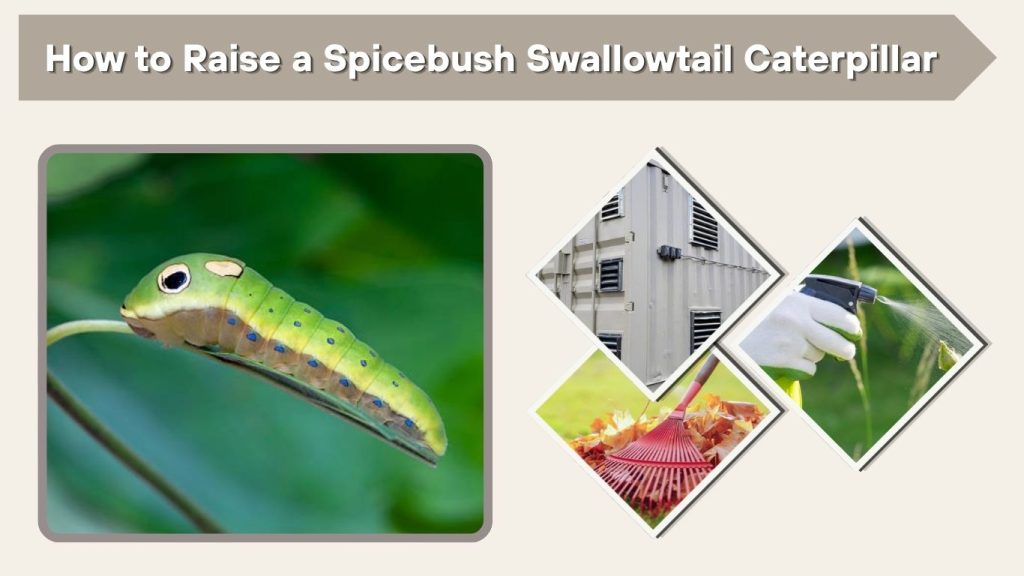
Raising a spicebush swallowtail caterpillar can be rewarding if you have the right host plant and clean conditions. The goal should be to help it complete its life cycle and release the adult butterfly, not keep it permanently.
Basic Care Steps
To raise one safely:
- Use a clean, ventilated container.
- Provide fresh host plant leaves daily.
- Keep leaves from pesticide-free plants only.
- Keep the container out of direct hot sun.
- Remove droppings and old leaves regularly.
- Avoid handling the caterpillar.
- Provide stems or sticks for chrysalis formation.
- Keep the chrysalis undisturbed.
- Release the butterfly after its wings fully dry.
The most important rule is fresh host plant food. Without the correct leaves, the caterpillar will not thrive.
Can You Keep One in Captivity?
You can temporarily raise one in captivity, but it should be released as an adult butterfly. A caterpillar is not a pet in the usual sense. It needs the correct plant, proper ventilation, cleanliness, and a safe place to form a chrysalis.
If it stops eating and begins wandering, it may be looking for a pupation site. Do not assume it is sick right away.
Spicebush Swallowtail Chrysalis Problems
A caterpillar preparing to pupate may behave differently. It may stop eating, change color, leave its leaf shelter, or attach itself to a stem, container wall, or branch.
Is It Dying or Pupating?
Signs of pupation include:
- Stopping food intake
- Wandering away from leaves
- Becoming orange or duller in color
- Attaching with silk
- Resting in a fixed position
- Slowly changing body shape
Avoid moving it during this time. The pre-pupa and chrysalis stages are delicate. Rough handling can prevent successful butterfly emergence.
Green vs Brown Chrysalis
A green chrysalis usually blends with living plant material, while a brown chrysalis blends with bark, twigs, and dead leaves. Brown pupae may also be associated with overwintering in some conditions.
A chrysalis may remain unchanged for longer than expected, especially if it is entering a dormant period. Do not throw it away unless you are sure it is dead.
Spicebush Swallowtail Caterpillar for Sale
Some people search for spicebush swallowtail caterpillars for sale. Buying caterpillars may seem convenient, but it is usually better to plant host plants and attract local butterflies naturally.
Moving caterpillars between regions can spread parasites, diseases, or non-local genetics. It may also violate local rules. A native plant garden with spicebush, sassafras, and nectar flowers is a safer and more sustainable way to support this butterfly.
Spicebush Swallowtail Caterpillar in Australia or the UK
The spicebush swallowtail is primarily a North American species. If you are in Australia or the UK and find a similar caterpillar with eyespots, it may be a different swallowtail species. Many swallowtail caterpillars use eyespots, leaf shelters, and osmeterium defenses.
Use local butterfly guides or local extension resources for accurate identification outside North America.
FAQs
What does a spicebush swallowtail caterpillar turn into?
A spicebush swallowtail caterpillar turns into a spicebush swallowtail butterfly, scientifically known as Papilio troilus. The adult is a dark swallowtail with pale spots and blue-green shading on the hindwings. It feeds on nectar and lays eggs on suitable host plants.
What does a spicebush swallowtail caterpillar eat?
It eats leaves from specific host plants, especially spicebush and sassafras. It may also use sweet bay, red bay, camphor tree, tulip tree, and other suitable regional hosts. It should not be moved to milkweed, lettuce, grass, or random garden plants.
Is a spicebush swallowtail caterpillar poisonous to touch?
No, it is not considered poisonous or dangerous to touch. It does not have stinging hairs. Still, it is best not to handle it because caterpillars are delicate. Move it with the leaf it is resting on if relocation is necessary.
Why does the spicebush swallowtail caterpillar have eyes?
The large eyes are false eyespots, not real eyes. They help the caterpillar mimic a small snake or larger animal, which may scare away predators. Its real head is much smaller and less obvious near the front of the body.
How do you raise a spicebush swallowtail caterpillar?
Keep it in a clean, ventilated container with fresh pesticide-free host leaves every day. Remove droppings and old leaves, avoid handling it, and provide stems for pupation. Once the butterfly emerges and its wings dry, release it near host and nectar plants.