
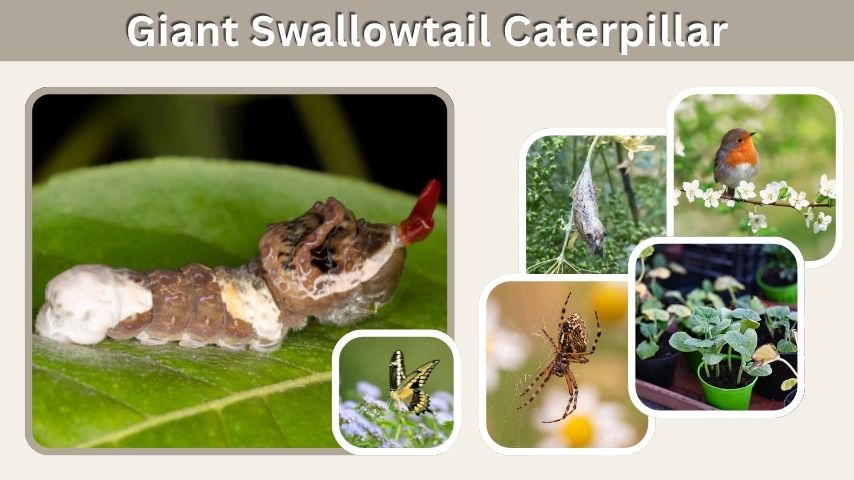
The giant swallowtail caterpillar is one of the strangest-looking caterpillars found on citrus trees. Often called the orangedog caterpillar, it looks like a bird dropping when young and later becomes the giant swallowtail butterfly. Gardeners may worry when they find one on a lemon, lime, or orange tree, but this caterpillar is also part of a beautiful native butterfly life cycle.
What Is a Giant Swallowtail Caterpillar?
A giant swallowtail caterpillar is the larval stage of the giant swallowtail butterfly, known scientifically as Papilio cresphontes. The caterpillar is commonly called an orangedog because it often feeds on citrus leaves, especially in gardens and orchards.
The adult butterfly is large, dark, and marked with bold yellow bands. It is admired by butterfly gardeners, but the caterpillar can be viewed differently by citrus growers because it eats leaves. A few caterpillars on a healthy mature tree are usually not a major problem, but several caterpillars on a small citrus plant can remove leaves quickly.
Why Is It Called an Orangedog?
The name orangedog comes from its connection with orange and citrus trees. The caterpillar feeds on plants in the Rutaceae family, which includes citrus and several native host plants. In citrus-growing areas, people often notice the caterpillar on orange, lemon, lime, grapefruit, and related trees.
Although the name sounds unusual, it is widely used for the caterpillar stage of the giant swallowtail butterfly.
What Does a Giant Swallowtail Caterpillar Look Like?
The caterpillar has one of the best camouflage strategies in the insect world. Young giant swallowtail caterpillars are mottled brown, white, gray, and black, making them look like bird droppings. This helps discourage predators from eating them.
Older caterpillars may still look like droppings, but they become larger, thicker, and more textured. Some people describe them as ugly, strange, or snake-like. This odd appearance is a defense, not a sign of disease.
Giant Swallowtail Caterpillar Stages
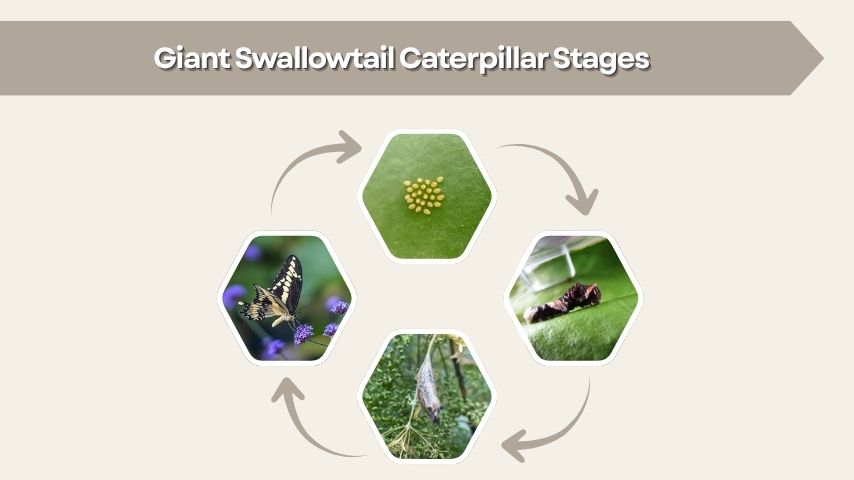
The giant swallowtail life cycle includes four main stages: egg, caterpillar, chrysalis, and adult butterfly. The caterpillar stage itself is divided into several growth stages called instars. As the caterpillar grows, it molts and changes size and appearance.
Egg Stage
A female giant swallowtail butterfly lays eggs on suitable host plants. Eggs are usually placed on leaves or tender growth where the young caterpillar can begin feeding after hatching.
The egg is small and easy to miss. Gardeners often notice the caterpillar only after leaf damage appears.
Caterpillar Instars
The caterpillar grows through several instars. Early instars are tiny and strongly resemble bird droppings. Later instars become larger and more noticeable. During these stages, the caterpillar feeds heavily on leaves to store energy for pupation.
Common signs of caterpillar activity include chewed citrus leaves, missing leaf edges, and small dark droppings called frass on leaves or below the plant.
Chrysalis Stage
When the caterpillar is fully grown, it stops feeding and looks for a safe place to pupate. It attaches itself with silk and forms a chrysalis. People often search for “giant swallowtail caterpillar cocoon,” but chrysalis is the more accurate term. Butterflies form chrysalises, while many moths form cocoons.
The giant swallowtail chrysalis is usually brown, tan, gray, or greenish and looks like a broken twig or piece of bark. This camouflage helps protect it while the butterfly develops.
Adult Butterfly
After development is complete, the adult giant swallowtail emerges from the chrysalis. The butterfly expands and dries its wings before flying. Adults feed on nectar and may visit many garden flowers.
Giant Swallowtail Caterpillar Host Plants
The most important thing to know about giant swallowtail caterpillar care is that it needs the right host plant. Caterpillars cannot simply eat any leaf. They are specialized feeders and need plants from the citrus family or close relatives.
Common Host Plants
Giant swallowtail caterpillar host plants include:
- Orange trees
- Lemon trees
- Lime trees
- Grapefruit trees
- Kumquat
- Rue
- Prickly ash
- Common hoptree
- Wafer ash
- Wild lime
- Other plants in the Rutaceae family
If you find a caterpillar on a citrus tree, do not move it to milkweed, tomato, lettuce, or random garden plants. It will not survive on the wrong food.
Giant Swallowtail Caterpillar on Citrus Trees
A giant swallowtail caterpillar on citrus trees is common in many areas. Mature citrus trees can usually tolerate some feeding. The issue is more serious for young potted citrus, newly planted trees, or already stressed plants.
If your lemon tree or orange tree is small, inspect it regularly. One or two caterpillars may be manageable, but several large caterpillars can remove a lot of foliage.
What Does a Giant Swallowtail Caterpillar Eat?
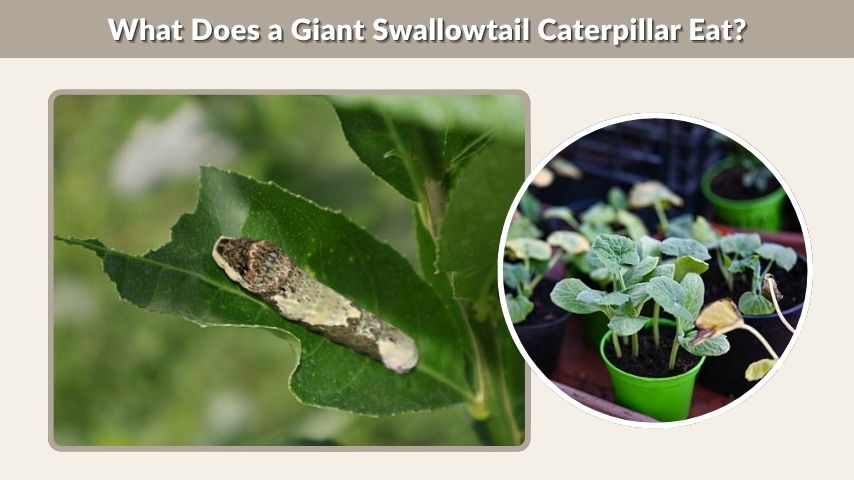
A giant swallowtail caterpillar eats leaves from its host plants. Citrus leaves are the most familiar food source for many gardeners. The caterpillar may chew from leaf edges, consume tender shoots, or hide along stems during the day.
Does It Eat Milkweed?
No, giant swallowtail caterpillars do not eat milkweed. Milkweed is a host plant for monarch caterpillars, not giant swallowtails. If a caterpillar found on citrus is moved to milkweed, it will likely starve.
Feeding Damage on Citrus
Feeding damage may look like uneven leaf edges, missing young leaves, or stripped small branches. On a mature tree, this is often only cosmetic. On a young tree, heavy feeding can slow growth.
Healthy citrus trees usually recover from light caterpillar feeding. Avoid unnecessary pesticide use if the tree is strong and the caterpillar numbers are low.
Is the Giant Swallowtail Caterpillar Poisonous?
The giant swallowtail caterpillar is not considered dangerous to people in the way that some stinging caterpillars are. It does not have painful spines like saddleback or puss caterpillars. However, it has chemical defenses and should not be eaten or handled roughly.
Is It Dangerous to Touch?
Most people can observe the caterpillar safely without touching it. Handling is not recommended because it can stress or injure the caterpillar. Some people may also have skin sensitivity to insects or plant oils.
If you need to move one, use a leaf or small soft brush rather than bare fingers. Wash your hands afterward, especially if it was on citrus or rue.
Giant Swallowtail Caterpillar Defense
When threatened, the caterpillar may extend a bright orange, forked organ from behind its head. This is called an osmeterium. It can look like a tiny snake tongue or horns. It also releases a strong odor that helps deter predators.
This defense is one reason people search for “giant swallowtail caterpillar horns,” “snake tongue,” or “smell.” The orange structure is normal and does not mean the caterpillar is attacking you.
Should You Kill Giant Swallowtail Caterpillars?
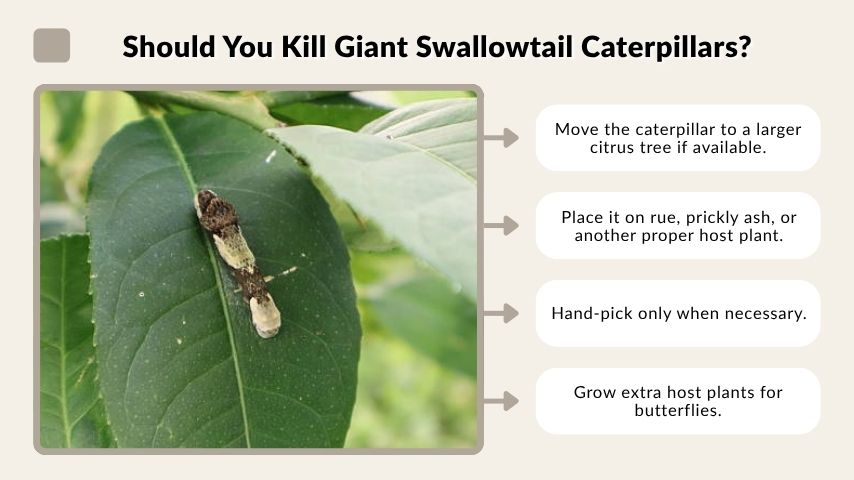
In most home gardens, you do not need to kill giant swallowtail caterpillars. They become large, beautiful butterflies and are part of the local ecosystem. If the caterpillars are on a mature citrus tree, consider leaving them alone.
However, if they are defoliating a young citrus tree, you may need to manage them carefully.
What to Do Instead
If you want to protect a small citrus tree without killing the caterpillar:
- Move the caterpillar to a larger citrus tree if available.
- Place it on rue, prickly ash, or another proper host plant.
- Hand-pick only when necessary.
- Protect young trees with fine mesh during egg-laying season.
- Grow extra host plants for butterflies.
- Avoid broad insecticides that harm pollinators.
- Monitor small potted citrus daily.
Never move the caterpillar to a plant unless you are sure it is an accepted host.
How to Raise a Giant Swallowtail Caterpillar
Some people raise giant swallowtail caterpillars to watch the life cycle. This can be rewarding, but it requires clean conditions, fresh host leaves, and care. The goal should be to help the insect complete its natural development, not keep it permanently.
Basic Caterpillar Care
To raise one safely:
- Use a ventilated container.
- Provide fresh host plant leaves daily.
- Keep the container out of direct hot sun.
- Remove old leaves and frass regularly.
- Avoid handling the caterpillar.
- Do not use leaves treated with pesticides.
- Provide sticks or stems for pupation.
- Keep the chrysalis undisturbed.
- Release the butterfly near nectar plants and host plants.
Captive raising works best when you can provide fresh citrus or another host plant every day. Leaves should not be sprayed with pesticides, oils, or chemical treatments.
Can You Keep a Giant Swallowtail Caterpillar in Captivity?
Yes, you can temporarily raise a giant swallowtail caterpillar in captivity, but it should be released after it becomes an adult butterfly. It is not a pet in the usual sense. It needs natural host plants, proper humidity, cleanliness, and space for the butterfly to emerge and dry its wings.
If the chrysalis forms, do not pull it off the surface. It is attached by silk and can be damaged easily.
Giant Swallowtail Caterpillar Chrysalis Problems
Sometimes a caterpillar may look like it is dying when it is actually preparing to pupate. It may stop eating, wander away from the host plant, become still, or attach itself to a stem, container wall, or nearby object.
Is the Caterpillar Dying or Pupating?
Signs it may be preparing to pupate include:
- It stops eating.
- It wanders away from leaves.
- It attaches with silk.
- It hangs or rests in a fixed position.
- Its body shape changes.
- It becomes less responsive.
This is normal. Avoid touching or moving it during this period.
How Long Does the Chrysalis Stage Last?
The chrysalis stage may last around a couple of weeks in warm conditions, but timing can vary with temperature, season, and geography. In some cases, pupae may remain dormant longer, especially if they are overwintering.
Do not assume a chrysalis is dead just because it does not change quickly. Keep it protected, ventilated, and undisturbed.
Giant Swallowtail Caterpillar Predators
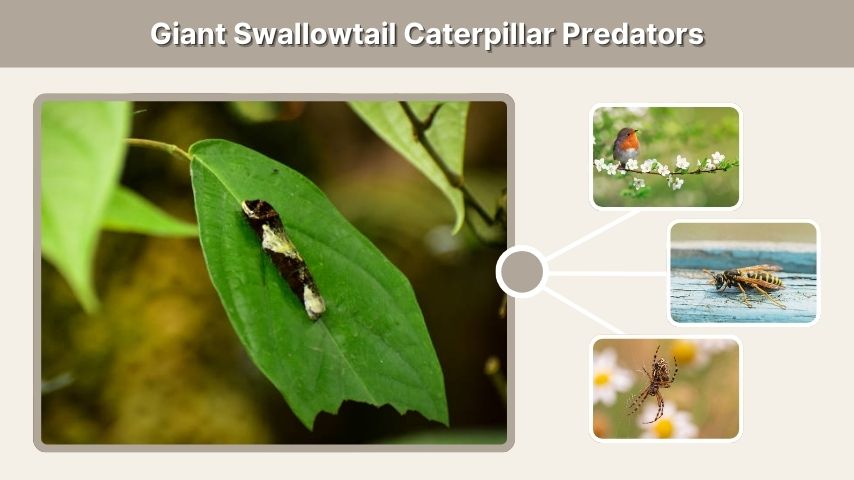
Giant swallowtail caterpillars face many predators and parasites. Their bird-dropping camouflage helps, but it is not perfect.
Common Threats
Predators and enemies may include:
- Birds
- Wasps
- Spiders
- Assassin bugs
- Ants
- Parasitic flies
- Parasitic wasps
- Lizards
- Small mammals
The osmeterium helps against some small predators, but larger predators may still eat the caterpillar.
Giant Swallowtail Caterpillar in Different Regions
People search for eastern giant swallowtail caterpillar, western giant swallowtail caterpillar, and regional terms such as Arizona or Australia. Naming can be confusing because swallowtail species and ranges vary by region.
Eastern and Western Giant Swallowtail
In much of eastern North America, the giant swallowtail is commonly associated with Papilio cresphontes. Western populations may be treated differently by some modern sources, often under the western giant swallowtail name. For gardeners, the practical point is similar: the caterpillars use citrus-family host plants and have strong camouflage.
Giant Swallowtail Caterpillar in Australia
A true North American giant swallowtail caterpillar is not a typical Australian garden species. Australia has its own swallowtail butterflies and citrus-feeding caterpillars. If you are in Australia and find a caterpillar on citrus, local identification is important before assuming it is a giant swallowtail.
Giant Swallowtail Caterpillar for Sale
Searches for “giant swallowtail caterpillar for sale” usually come from butterfly enthusiasts. Before buying caterpillars, check local laws and ethical concerns. Moving insects across regions can spread disease, parasites, or non-native genetics.
It is usually better to plant host plants and attract local butterflies naturally. This supports native populations and avoids transport problems.
FAQs
What does a giant swallowtail caterpillar look like?
A giant swallowtail caterpillar looks mottled brown, white, gray, and black, often resembling bird droppings. Older caterpillars become larger and thicker but keep strong camouflage. When threatened, they may extend an orange forked osmeterium that looks like a tiny snake tongue.
What does a giant swallowtail caterpillar eat?
It eats leaves from citrus-family host plants. Common foods include orange, lemon, lime, grapefruit, kumquat, rue, prickly ash, hoptree, wafer ash, and wild lime. It should not be moved to milkweed or random garden plants because it needs specific host plants to survive.
Is a giant swallowtail caterpillar poisonous?
It is not considered dangerous like a stinging caterpillar, and it does not have painful spines. However, it has chemical defenses and should not be eaten or handled roughly. It is best to observe it or move it gently with a leaf if needed.
Should I kill giant swallowtail caterpillars on citrus trees?
Usually, no. A few caterpillars on a mature citrus tree are rarely a serious problem and will become beautiful butterflies. If a small or young citrus tree is being heavily defoliated, move the caterpillars to another suitable host plant instead of killing them.
How long does it take for a giant swallowtail caterpillar to become a butterfly?
Timing varies with temperature, season, and local conditions. The caterpillar grows through several instars, forms a chrysalis, and later emerges as an adult butterfly. In warm conditions, the chrysalis may last around a couple of weeks, but some pupae can take longer.