
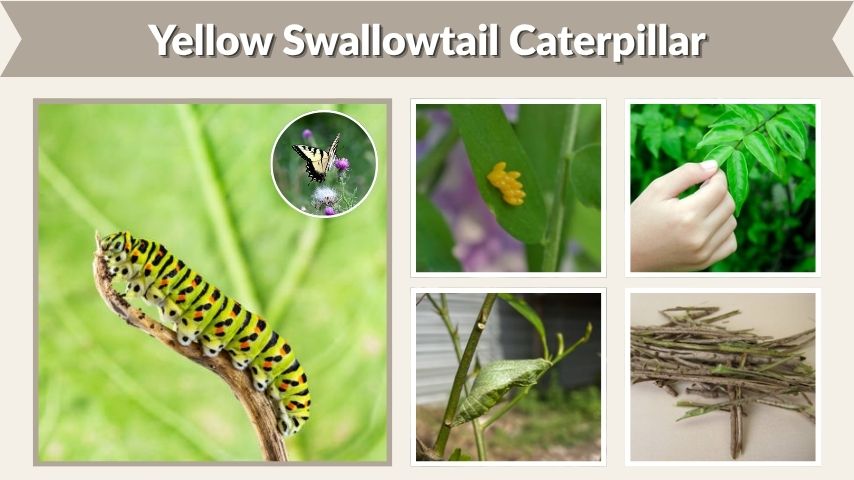
A yellow swallowtail caterpillar can be confusing to identify because several swallowtail butterflies have caterpillars that look green, yellowish, black-and-yellow, or snake-like at different stages. Some belong to tiger swallowtails, while others may be spicebush or black swallowtail caterpillars. This guide explains what yellow swallowtail caterpillars look like, what they eat, how they grow, and how to tell similar species apart.
What Is a Yellow Swallowtail Caterpillar?
A yellow swallowtail caterpillar is usually the larval stage of a swallowtail butterfly that has yellow coloring as an adult, such as an eastern tiger swallowtail, western tiger swallowtail, or common yellow swallowtail. However, the phrase can also describe a caterpillar with yellow markings, even if the adult butterfly is not mostly yellow.
This is why identification can be tricky. People often search for “yellow swallowtail caterpillar” after finding a green caterpillar with yellow eyespots, a black-and-yellow caterpillar on herbs, or a yellowish caterpillar preparing to pupate. These may be different swallowtail species.
Why the Name Can Be Confusing
The adult butterfly’s color does not always match the caterpillar’s color. A yellow tiger swallowtail butterfly does not usually start as a bright yellow caterpillar. In many species, young caterpillars are dark and look like bird droppings. Later, they may turn green with large false eyespots. Some species show yellow bands, yellow dots, or yellow-orange defense organs.
So, when identifying a caterpillar, look at more than color. The host plant, body pattern, size, location, and stage of growth are often more useful than the word “yellow.”
What Does a Yellow Swallowtail Caterpillar Look Like?
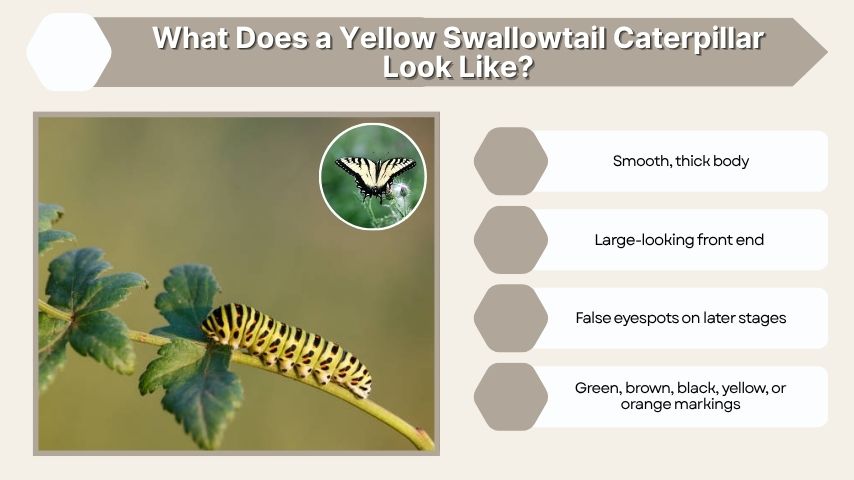
A yellow swallowtail caterpillar can look different depending on the species and stage. Many swallowtail caterpillars change appearance as they grow through several instars, which are the growth stages between molts.
Common Appearance Features
Many swallowtail caterpillars share a few recognizable traits:
- Smooth, thick body
- Large-looking front end
- False eyespots on later stages
- Green, brown, black, yellow, or orange markings
- A hidden forked organ called an osmeterium
- Strong connection to specific host plants
The osmeterium is one of the most distinctive swallowtail caterpillar features. When disturbed, the caterpillar may push out this forked organ from behind the head. It often looks like small orange or yellow “horns,” but it is not used for stinging. Instead, it gives off a strong smell that helps discourage predators.
Eastern Tiger Swallowtail Caterpillar
The eastern tiger swallowtail caterpillar is often linked with the term yellow swallowtail caterpillar because the adult butterfly is yellow with black tiger-like stripes. The caterpillar, however, is not usually yellow. Young larvae are dark and resemble bird droppings. Later stages become green with large eyespots near the front of the body.
These eyespots can make the caterpillar look like a tiny snake. This is a defense strategy. Birds and other predators may hesitate when they see the large false eyes.
Spicebush Swallowtail Caterpillar
The yellow spicebush swallowtail caterpillar search term usually refers to the spicebush swallowtail’s later larval stages. These caterpillars are famous for their large eyespots and snake-like appearance. They are often green, but they may turn yellowish or orange before forming a chrysalis.
Spicebush swallowtail caterpillars also make folded leaf shelters. They pull the edges of leaves together with silk and hide inside when they are not feeding. This makes them harder to spot on host plants like spicebush, sassafras, and sweetbay.
Black and Yellow Swallowtail Caterpillar
A black and yellow swallowtail caterpillar is often a black swallowtail caterpillar, especially if it is found on parsley, dill, fennel, carrot, or similar herbs. Mature black swallowtail caterpillars are green with black bands and yellow-orange spots. They are sometimes called parsleyworms because they commonly feed on plants in the carrot family.
This caterpillar does not become a yellow tiger swallowtail butterfly. It becomes a black swallowtail butterfly. That distinction matters when comparing yellow swallowtail caterpillar vs black swallowtail caterpillar.
Yellow Swallowtail Caterpillar Stages
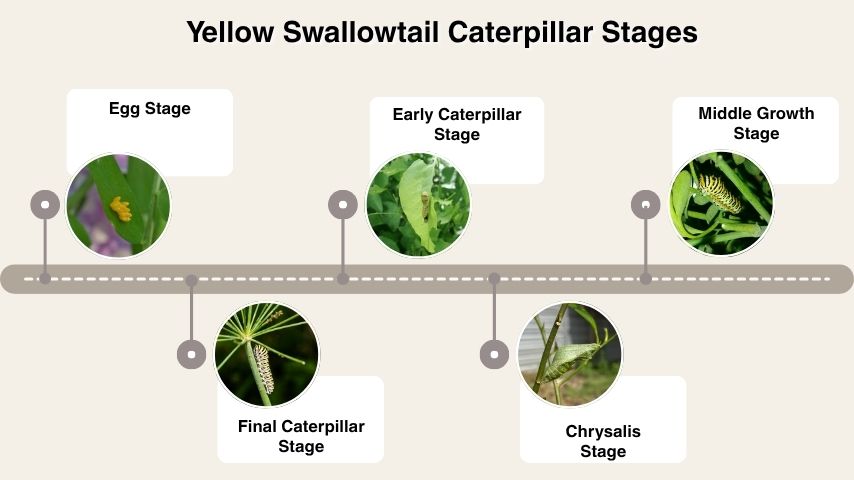
Swallowtail caterpillars grow through several stages before becoming butterflies. These stages are called instars. Each instar happens between molts, when the caterpillar sheds its outer skin and grows larger.
Egg Stage
The life cycle begins when a female swallowtail butterfly lays eggs on or near a host plant. The egg is usually small, round, and pale. The female chooses plants that the caterpillars can eat after hatching.
This is important because caterpillars cannot simply eat any leaf. Most swallowtail caterpillars depend on specific host plants. If the egg is laid on the wrong plant, the caterpillar may not survive.
Early Caterpillar Stage
In the early stage, many swallowtail caterpillars are dark, brown, or black with pale markings. This helps them resemble bird droppings, which makes them less attractive to predators.
At this stage, they are small and easy to miss. They may rest along leaf veins or on the upper surface of leaves. Gardeners often notice damage to leaves before seeing the caterpillar itself.
Middle Growth Stage
As the caterpillar grows, it eats more and molts several times. Its pattern becomes clearer. Depending on the species, it may develop stripes, dots, saddle-like markings, or the early appearance of false eyespots.
This is when identification becomes easier. The host plant can give a strong clue. A caterpillar on tulip tree or wild cherry may be a tiger swallowtail. One on spicebush or sassafras may be a spicebush swallowtail. One on parsley, dill, or fennel is likely a black swallowtail.
Final Caterpillar Stage
In the final instar, the caterpillar is at its largest and most dramatic. Tiger and spicebush swallowtail caterpillars may look green and snake-like. Black swallowtail caterpillars become bold green, black, and yellow-orange striped larvae.
Near the end of this stage, the caterpillar may stop eating and begin wandering. This is normal. It is searching for a safe place to pupate.
Chrysalis Stage
After the caterpillar finishes feeding, it forms a chrysalis. This is the pupal stage where transformation happens. The chrysalis may be green, brown, or gray depending on the species, location, and season.
Some swallowtails overwinter as chrysalises. In warmer seasons, the butterfly may emerge sooner. In cooler periods, the chrysalis can remain dormant until conditions improve.
Yellow Swallowtail Caterpillar Food and Host Plants
The most important thing to know about yellow swallowtail caterpillar food is that each species has preferred host plants. Adult butterflies drink nectar from many flowers, but caterpillars need specific leaves.
| Caterpillar Type | Common Host Plants | Key Identification Clue |
|---|---|---|
| Eastern tiger swallowtail caterpillar | Tulip tree, wild cherry, ash, sweetbay magnolia, willow | Green later stage with large false eyespots |
| Western tiger swallowtail caterpillar | Cottonwood, willow, alder, ash, sycamore | Often found on trees in western regions |
| Spicebush swallowtail caterpillar | Spicebush, sassafras, sweetbay, tulip tree | Hides inside folded leaf shelters |
| Black swallowtail caterpillar | Parsley, dill, fennel, carrot, Queen Anne’s lace | Green body with black bands and yellow-orange dots |
| Giant swallowtail caterpillar | Citrus, prickly ash, rue | Often resembles bird droppings even when larger |
What Does a Yellow Swallowtail Caterpillar Eat?
A yellow swallowtail caterpillar eats the leaves of its host plant. It does not eat nectar, fruit, or general garden plants the way adult butterflies feed from flowers. For example, a tiger swallowtail caterpillar feeds mainly on certain trees, while a black swallowtail caterpillar feeds on herbs in the carrot family.
This is why moving a caterpillar to the wrong plant can harm it. If you find a caterpillar and want to protect it, identify the plant it was already eating. That plant is usually the best clue to its diet.
Do Yellow Swallowtail Caterpillars Eat Parsley?
Some people search for yellow swallowtail caterpillar parsley because they find a striped caterpillar eating parsley. In most cases, that caterpillar is a black swallowtail caterpillar, not a yellow tiger swallowtail caterpillar.
Black swallowtail caterpillars commonly feed on parsley, dill, fennel, carrot tops, and related plants. They may have yellow-orange spots, which can cause confusion with the phrase yellow swallowtail caterpillar.
Yellow Swallowtail Caterpillar vs Black Swallowtail Caterpillar
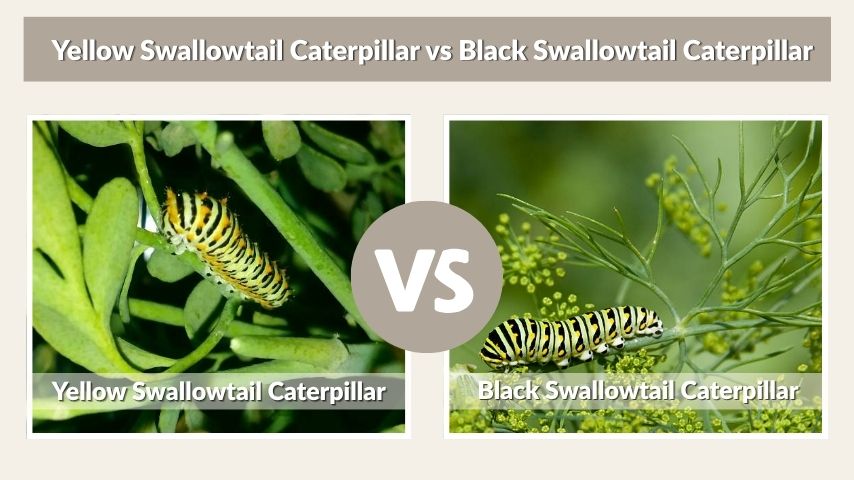
The difference between a yellow swallowtail caterpillar and a black swallowtail caterpillar usually comes down to species, host plant, and markings.
A tiger swallowtail caterpillar is often green in its later stage and may have large eyespots. It usually feeds on trees. A black swallowtail caterpillar is green with black bands and yellow-orange dots. It usually feeds on herbs such as parsley, dill, fennel, and carrot.
Main Differences
Use these clues when comparing them:
- Tiger swallowtail caterpillars are often found on trees.
- Black swallowtail caterpillars are often found on parsley, dill, fennel, and carrot.
- Tiger swallowtail caterpillars may look like small green snakes.
- Black swallowtail caterpillars look striped and colorful.
- Tiger swallowtail adults are often yellow with black stripes.
- Black swallowtail adults are mostly black with yellow and blue markings.
If you found the caterpillar on fennel or parsley, it is probably not a yellow tiger swallowtail. It is more likely a black swallowtail.
Yellow Spicebush Swallowtail Caterpillar
A yellow spicebush swallowtail caterpillar is usually a spicebush swallowtail larva near the later stage or close to pupation. Spicebush swallowtail caterpillars are known for dramatic color changes. They can appear green, yellowish, or orange depending on their stage.
How to Identify It
Look for these signs:
- Large false eyespots
- Smooth body
- Leaf shelter made by folding a leaf
- Host plant such as spicebush or sassafras
- Green to yellow-orange color shift near pupation
The leaf shelter is one of the best clues. If the caterpillar is hiding in a folded leaf on spicebush or sassafras, it is likely a spicebush swallowtail caterpillar.
Are Yellow Swallowtail Caterpillars Harmful?
Yellow swallowtail caterpillars are not harmful to people. They do not bite or sting. The orange or yellow forked organ that appears when they are disturbed may look alarming, but it is a defensive scent organ, not a stinger.
However, they can chew leaves on host plants. In most cases, the damage is minor, especially on trees and native shrubs. On small herb plants like parsley or dill, black swallowtail caterpillars can eat a noticeable amount.
Should You Remove Them?
If the caterpillar is on a native tree or shrub, it is usually best to leave it alone. Swallowtail caterpillars become important pollinating butterflies. If it is on a small herb plant you want to harvest, you can move some caterpillars to another suitable host plant of the same type.
Avoid spraying pesticides. Insecticides can kill caterpillars, butterflies, bees, and other beneficial insects.
How to Raise a Yellow Swallowtail Caterpillar Safely
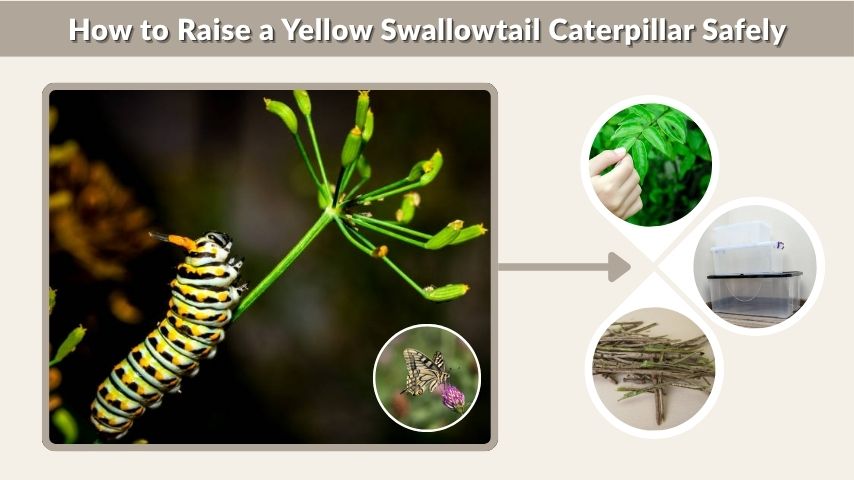
Raising a swallowtail caterpillar can be a rewarding way to observe metamorphosis, but it requires care. The most important rule is to feed it the correct host plant.
Basic Care Tips
To raise one safely:
- Keep the caterpillar with leaves from the plant where you found it.
- Provide fresh leaves daily.
- Avoid leaves treated with pesticides.
- Keep the container clean and ventilated.
- Add small sticks for pupation.
- Do not handle the caterpillar often.
- Release the adult butterfly near flowers and host plants.
Never mix unknown caterpillars from different plants unless you are sure they are the same species and eat the same food. Caterpillars can starve if given the wrong leaves.
Yellow Swallowtail Caterpillar Chrysalis
The chrysalis is the resting stage between caterpillar and butterfly. A yellow swallowtail caterpillar chrysalis may be green, brown, tan, or gray. The color often helps it blend with stems, bark, leaves, or dried plant material.
What If the Caterpillar Dies While Making a Chrysalis?
Sometimes a caterpillar dies while preparing to pupate. This can happen because of parasites, disease, stress, pesticides, injury, or improper conditions. If the caterpillar was wandering and stopped eating, that alone does not mean it was dying. Wandering is normal before pupation.
However, if it becomes limp, turns black, leaks fluid, or smells bad, it may not survive. Remove dead caterpillars from any rearing container to protect others.
How to Attract Yellow Swallowtail Butterflies
To attract yellow swallowtail butterflies, provide both host plants for caterpillars and nectar plants for adults. Many gardens only provide flowers, but butterflies also need places to lay eggs.
Garden Tips
Plant a mix of native host plants and nectar flowers. For tiger swallowtails, consider native trees such as tulip tree, wild cherry, willow, or sweetbay magnolia if they suit your region. For spicebush swallowtails, plant spicebush or sassafras where appropriate. For black swallowtails, grow parsley, dill, fennel, or other carrot-family plants.
You can also help by reducing pesticide use, leaving some natural leaf litter, and providing a variety of flowering plants throughout the warm season.
FAQs
What does a yellow swallowtail caterpillar look like?
A yellow swallowtail caterpillar may be green with false eyespots, black and yellow striped, or yellowish before pupation, depending on the species. Tiger swallowtail caterpillars often look green and snake-like in later stages, while black swallowtail caterpillars are green with black bands and yellow-orange dots.
What does a yellow swallowtail caterpillar eat?
It depends on the species. Tiger swallowtail caterpillars usually eat leaves from trees such as tulip tree, wild cherry, ash, willow, or magnolia. Spicebush swallowtail caterpillars eat spicebush, sassafras, and related plants. Black swallowtail caterpillars eat parsley, dill, fennel, carrot, and other carrot-family plants.
Is a yellow and black caterpillar a swallowtail?
It may be. A green caterpillar with black bands and yellow-orange dots on parsley, dill, or fennel is usually a black swallowtail caterpillar. Some other caterpillars also have yellow and black markings, so host plant, body shape, and location should be used for a more accurate identification.
Does a yellow swallowtail caterpillar turn into a yellow butterfly?
Sometimes, but not always. A tiger swallowtail caterpillar can become a yellow swallowtail butterfly. However, a black swallowtail caterpillar with yellow markings becomes a mostly black butterfly. Caterpillar color alone does not always match the adult butterfly’s color.
Are yellow swallowtail caterpillars poisonous?
Most swallowtail caterpillars are not dangerous to people and do not sting. They use camouflage, false eyespots, and a smelly forked organ called an osmeterium for defense. It is still best to avoid unnecessary handling because caterpillars are delicate and can be stressed or injured easily.