
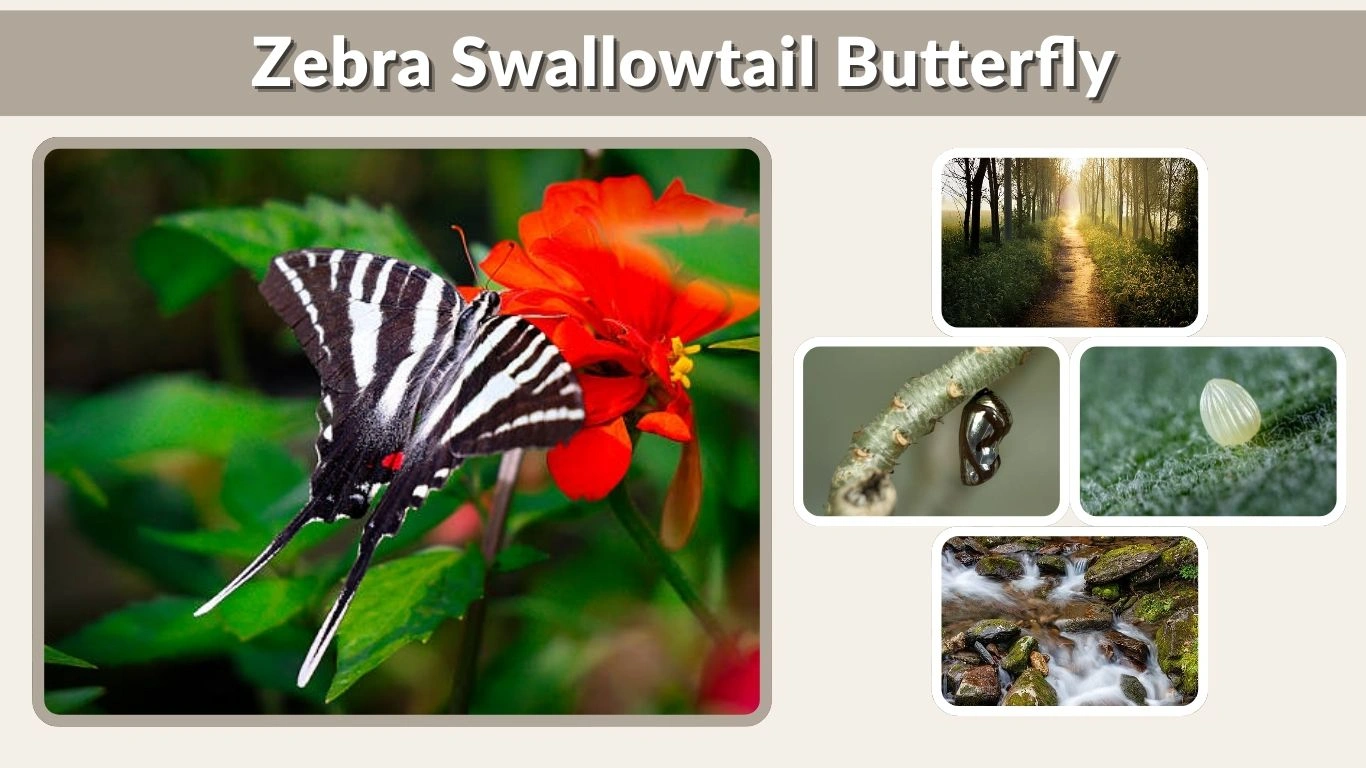
The zebra swallowtail butterfly is one of the most striking butterflies in North America. Known for its bold black-and-white striped wings and long tail extensions, this butterfly is easy to recognize in forests, gardens, and woodland habitats. It is closely connected to pawpaw trees because its caterpillars rely almost entirely on these plants for survival.
This guide explores the zebra swallowtail butterfly’s appearance, caterpillar stages, host plants, and habitat. You will also learn how to identify male and female butterflies and discover what makes this species unique among swallowtail butterflies.
What Is a Zebra Swallowtail Butterfly?
The zebra swallowtail butterfly belongs to the swallowtail family and is native to the eastern United States. Its scientific name is Eurytides marcellus, and it is admired for its graceful flight and zebra-like wing patterns.
Unlike many butterflies with bright orange or yellow wings, the zebra swallowtail has elegant black-and-white stripes that help it stand out from other swallowtail species. It also features blue and red markings near the hind wings, adding even more color to its appearance.
Why It Is Called a Zebra Swallowtail
The butterfly gets its name from the striped pattern covering its wings. These markings resemble the stripes of a zebra and create a dramatic contrast against the butterfly’s pale background.
Several characteristics make this species unique:
- Black-and-white striped wings
- Long swallowtail extensions
- Blue and red hindwing markings
- Slow and graceful flight
- Distinctive triangular wing shape
Where Zebra Swallowtails Are Found
Zebra swallowtail butterflies are commonly found in moist forests, woodland edges, river valleys, and areas where pawpaw trees grow naturally. They prefer warm habitats with access to nectar flowers and shaded woodland cover.
In the United States, they are especially common in states such as:
- Tennessee
- Arkansas
- Missouri
- Ohio
- Georgia
Zebra Swallowtail Butterfly Identification
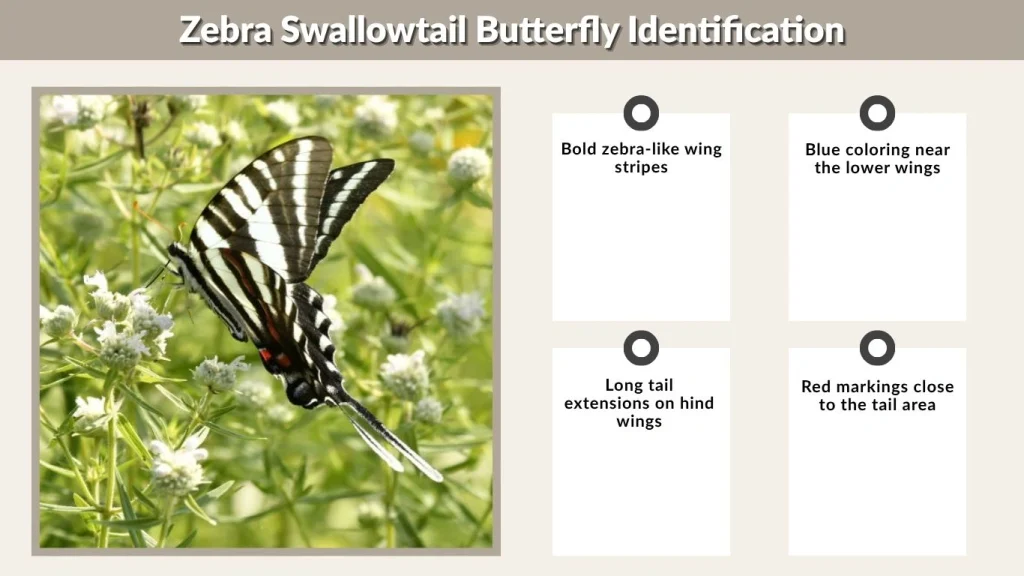
Identifying a zebra swallowtail butterfly is usually easy because of its dramatic wing pattern and elongated tails. However, male and female butterflies do have slight differences that can help with closer identification.
Male Zebra Swallowtail Butterfly
Male zebra swallowtails are generally slimmer and slightly smaller than females. They are often seen patrolling woodland trails and searching for mates during warm months.
Males may also gather near puddles or damp soil to absorb minerals, a behavior known as puddling.
Female Zebra Swallowtail Butterfly
Female zebra swallowtails have a slightly larger abdomen because they carry eggs. They spend much of their time searching for pawpaw plants where they can safely lay eggs for developing caterpillars.
Females are usually less active than males and remain closer to host plants during egg-laying periods.
Key Identification Features
You can identify a zebra swallowtail butterfly by looking for several important features:
- Bold zebra-like wing stripes
- Long tail extensions on hind wings
- Blue coloring near the lower wings
- Red markings close to the tail area
- Light, fluttering flight pattern
Zebra Swallowtail Caterpillar
The zebra swallowtail caterpillar changes dramatically as it grows. Young caterpillars look very different from mature larvae, making the life cycle especially interesting to observe.
Early Caterpillar Stages
Newly hatched zebra swallowtail caterpillars are small and pale. As they develop, they begin forming green bodies with larger thorax sections and false eye spots that help scare away predators.
The caterpillar also develops a specialized defense organ called an osmeterium. When threatened, this organ releases an unpleasant odor designed to deter predators.
Mature Caterpillar Appearance
As the caterpillar matures, its body becomes greener and more colorful. The larger thorax gives it a snake-like appearance that can confuse birds and other predators.
Mature caterpillars usually display:
- Bright green coloration
- Yellow and black banding
- Enlarged thorax area
- Small blue spots
- False eye markings
Zebra Swallowtail Butterfly Life Cycle
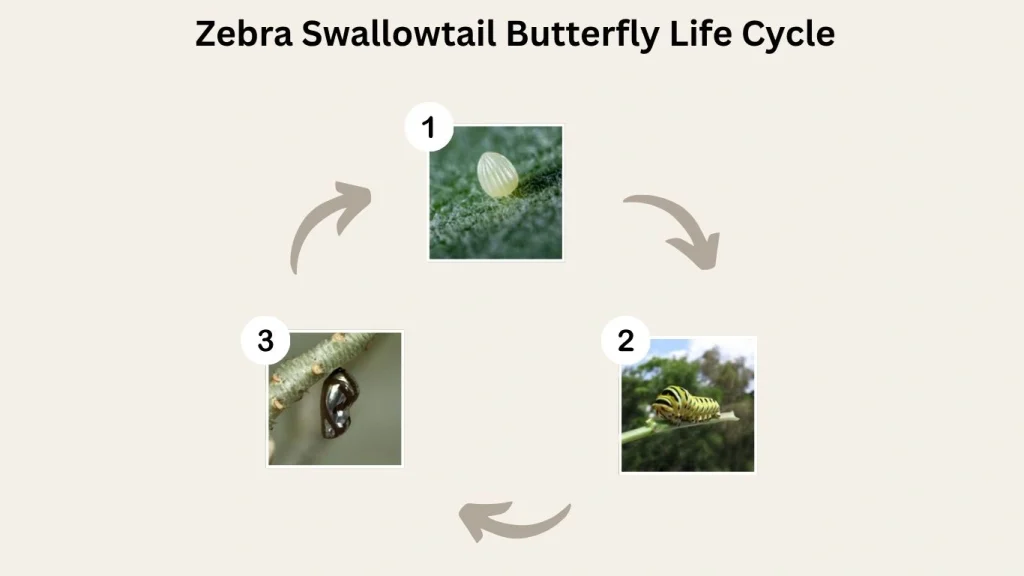
The zebra swallowtail butterfly experiences complete metamorphosis, passing through four distinct stages during its life cycle. Each stage plays an important role in the butterfly’s development.
Egg Stage
Female butterflies lay tiny green eggs individually on young pawpaw leaves. These eggs are carefully placed where newly hatched caterpillars can immediately begin feeding.
Eggs usually hatch within several days depending on temperature and weather conditions.
Caterpillar Stage
After hatching, the caterpillar begins feeding on pawpaw leaves almost constantly. During this stage, it molts several times while growing rapidly in size.
Because zebra swallowtail caterpillars rely heavily on pawpaw plants, they are rarely found far from these trees.
Chrysalis Stage
Once fully grown, the caterpillar forms a chrysalis attached to stems or nearby surfaces. Inside the chrysalis, the caterpillar undergoes metamorphosis and transforms into an adult butterfly.
This stage may last several weeks, although cooler weather can extend development time.
Zebra Swallowtail Host Plant
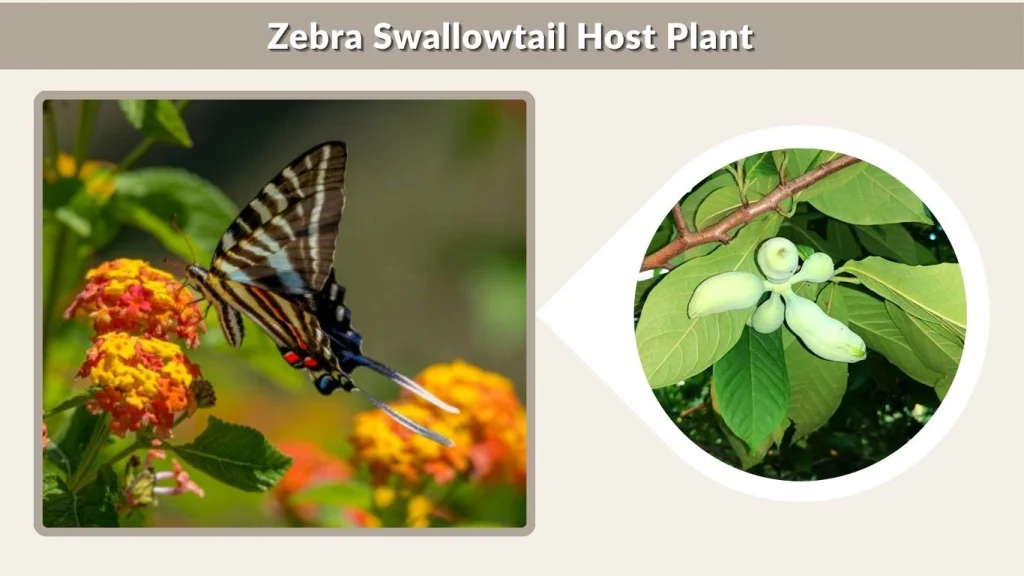
Pawpaw trees are essential for the survival of zebra swallowtail butterflies. Without these plants, the caterpillars cannot complete their development.
Why Pawpaw Trees Matter
The zebra swallowtail caterpillar feeds almost exclusively on pawpaw leaves. These plants contain natural chemicals that help protect the caterpillars from predators after ingestion.
The most important host plant is:
- Common pawpaw (Asimina triloba)
Other Important Host Plants
In some regions, zebra swallowtail caterpillars may also use related pawpaw species as host plants.
These may include:
- Dwarf pawpaw
- Slimleaf pawpaw
- Smallflower pawpaw
What Do Zebra Swallowtail Butterflies Eat?
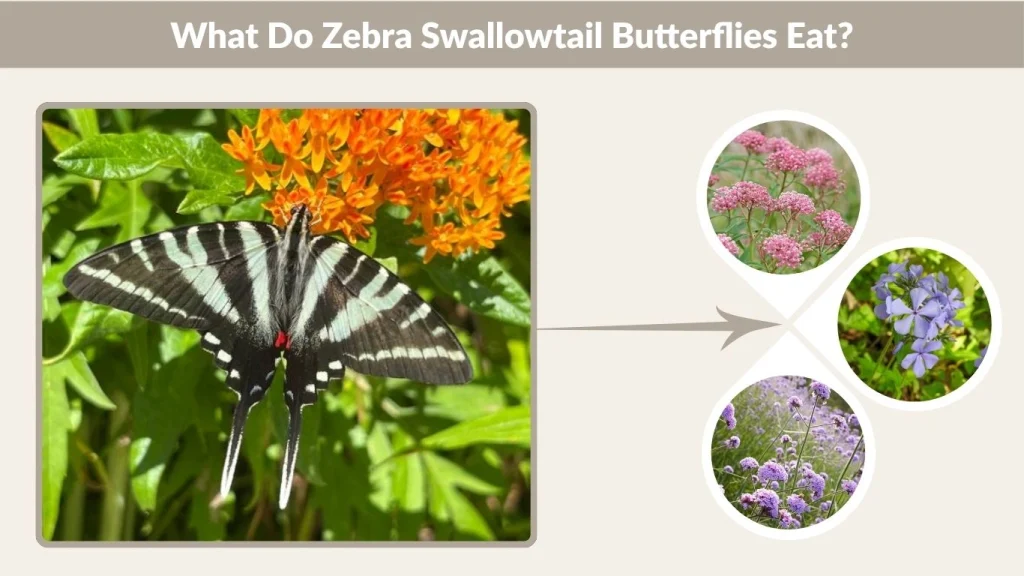
Adult zebra swallowtail butterflies mainly feed on flower nectar. Their long proboscis allows them to reach deep into flowers while collecting nutrients needed for energy and reproduction.
Unlike caterpillars, adult butterflies can feed from a wide variety of flowering plants throughout their habitat.
Favorite Nectar Sources
Zebra swallowtails are attracted to colorful native flowers that bloom during spring and summer. Gardens filled with nectar-rich plants often attract these butterflies regularly.
Some favorite nectar plants include:
- Milkweed
- Phlox
- Verbena
- Butterfly bush
- Purple coneflower
What Zebra Swallowtail Caterpillars Eat
Caterpillars have a much more specialized diet than adult butterflies. They feed almost entirely on pawpaw leaves during every stage of larval development.
This close relationship between caterpillars and pawpaw trees is one reason zebra swallowtail populations depend heavily on healthy woodland habitats.
Zebra Swallowtail Habitat and Range
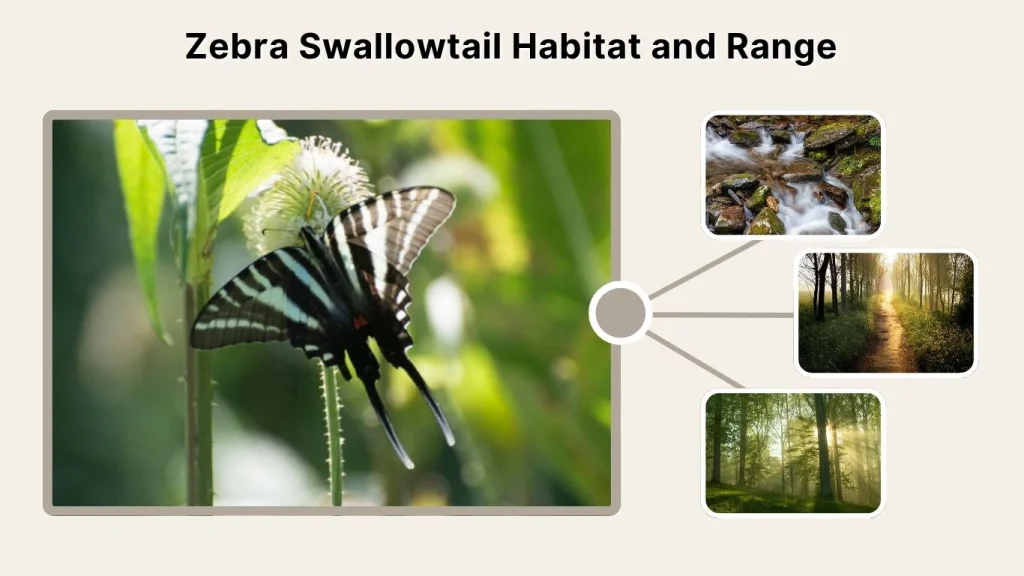
The zebra swallowtail butterfly thrives in warm, moist environments where host plants grow naturally. It is most commonly found in wooded regions of the eastern United States.
Where Zebra Swallowtails Live
These butterflies prefer areas with rich vegetation and partial shade. They are frequently seen near streams, woodland paths, forest edges, and river valleys.
Their habitat often includes dense clusters of pawpaw trees because caterpillars cannot survive without them.
Zebra Swallowtail Range
The zebra swallowtail range extends across much of the eastern and southeastern United States. Populations are especially common in regions with humid summers and abundant woodland cover.
They are regularly observed in:
- Tennessee
- Kentucky
- Arkansas
- Missouri
- North Carolina
Seasonal Activity
Zebra swallowtails are active from spring through early fall. In warmer southern regions, multiple generations may appear during a single year.
The appearance of adults often depends on temperature, rainfall, and the availability of nectar plants and host trees.
Are Zebra Swallowtail Butterflies Rare?
Zebra swallowtail butterflies are not currently considered endangered, but their populations can be limited in areas where pawpaw trees are scarce.
Because the species depends so heavily on specific host plants, habitat destruction can significantly reduce local butterfly numbers.
Why Some Populations Decline
Urban development and deforestation are major threats to woodland butterfly habitats. Removing native plants also reduces nectar sources for adults and feeding plants for caterpillars.
Several factors may negatively affect zebra swallowtail populations:
- Habitat loss
- Pesticide use
- Removal of pawpaw trees
- Climate changes
- Forest fragmentation
Are Zebra Swallowtails Protected?
Although they are not federally endangered, zebra swallowtails benefit from conservation programs that protect native woodland ecosystems and pollinator habitats.
Gardeners and conservation groups often plant native flowers and pawpaw trees to support healthy butterfly populations.
Tiger Swallowtail vs Zebra Swallowtail
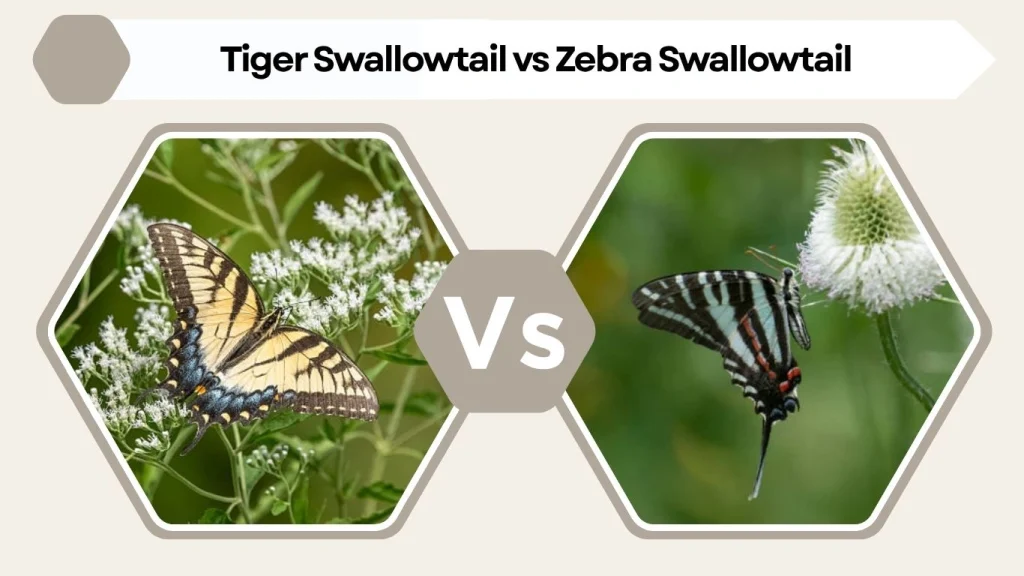
Tiger swallowtails and zebra swallowtails are both members of the swallowtail butterfly family, but they look very different from one another.
Main Appearance Differences
Tiger swallowtails are larger and display bright yellow wings with dark tiger-like stripes. Zebra swallowtails, by contrast, have black-and-white striping and longer tail extensions.
The flight pattern also differs slightly because zebra swallowtails tend to glide more gently through woodland habitats.
Habitat Differences
Tiger swallowtails are highly adaptable and can live in suburban gardens, parks, and forests. Zebra swallowtails are more closely tied to woodland environments where pawpaw trees grow naturally.
Caterpillar Comparison
Tiger swallowtail caterpillars usually feed on a wide variety of trees and shrubs, while zebra swallowtail caterpillars rely heavily on pawpaw leaves alone.
This specialized feeding behavior makes zebra swallowtails more sensitive to habitat changes.
Zebra Swallowtail Butterfly Meaning and Symbolism
Butterflies are often associated with transformation and renewal, and the zebra swallowtail carries especially strong symbolic meaning because of its striking appearance and graceful movement.
Spiritual Meaning of the Zebra Swallowtail
Many people view the zebra swallowtail butterfly as a symbol of:
- Personal transformation
- Spiritual growth
- Freedom and independence
- Positive life changes
- Emotional renewal
The butterfly’s life cycle from caterpillar to winged adult also represents rebirth and personal evolution in many spiritual traditions.
Zebra Swallowtail Tattoo Meaning
Zebra swallowtail tattoos are popular because they combine beauty with symbolism. People often choose these designs to represent resilience, change, or a meaningful transition in life.
The striped wing pattern also creates visually striking tattoo artwork that stands out from traditional butterfly designs.
Fun Facts About Zebra Swallowtails
The zebra swallowtail butterfly has several fascinating characteristics that make it one of the most interesting butterflies in North America.
Interesting Zebra Swallowtail Facts
- Tennessee recognizes the zebra swallowtail as its official state butterfly
- The butterfly’s long tails may help distract predators during attacks
- Caterpillars absorb chemicals from pawpaw leaves for protection
- Zebra swallowtails are strong woodland pollinators
- Their flight is slower and more graceful than many other swallowtails
FAQs
What is the host plant for a zebra swallowtail butterfly?
The primary host plant for zebra swallowtail butterflies is the pawpaw tree, especially the common pawpaw (Asimina triloba). Female butterflies lay their eggs on pawpaw leaves because the caterpillars feed almost exclusively on these plants after hatching.
Are zebra swallowtail butterflies rare?
Zebra swallowtail butterflies are not considered endangered, but they can be uncommon in areas where pawpaw trees are limited. Their populations are closely connected to healthy woodland habitats and the availability of native host plants.
What do zebra swallowtail caterpillars eat?
Zebra swallowtail caterpillars mainly eat pawpaw leaves throughout their larval stage. These leaves contain natural compounds that help protect the caterpillars from predators by making them less appealing as food sources.
How can you identify a zebra swallowtail butterfly?
You can identify a zebra swallowtail butterfly by its black-and-white striped wings, long tail extensions, and blue and red markings near the hind wings. It also has a graceful flight pattern that differs from many other swallowtail butterflies.
What is the spiritual meaning of a zebra swallowtail butterfly?
The zebra swallowtail butterfly is often seen as a symbol of transformation, renewal, freedom, and personal growth. Many people associate its life cycle and elegant appearance with positive change and spiritual development.