
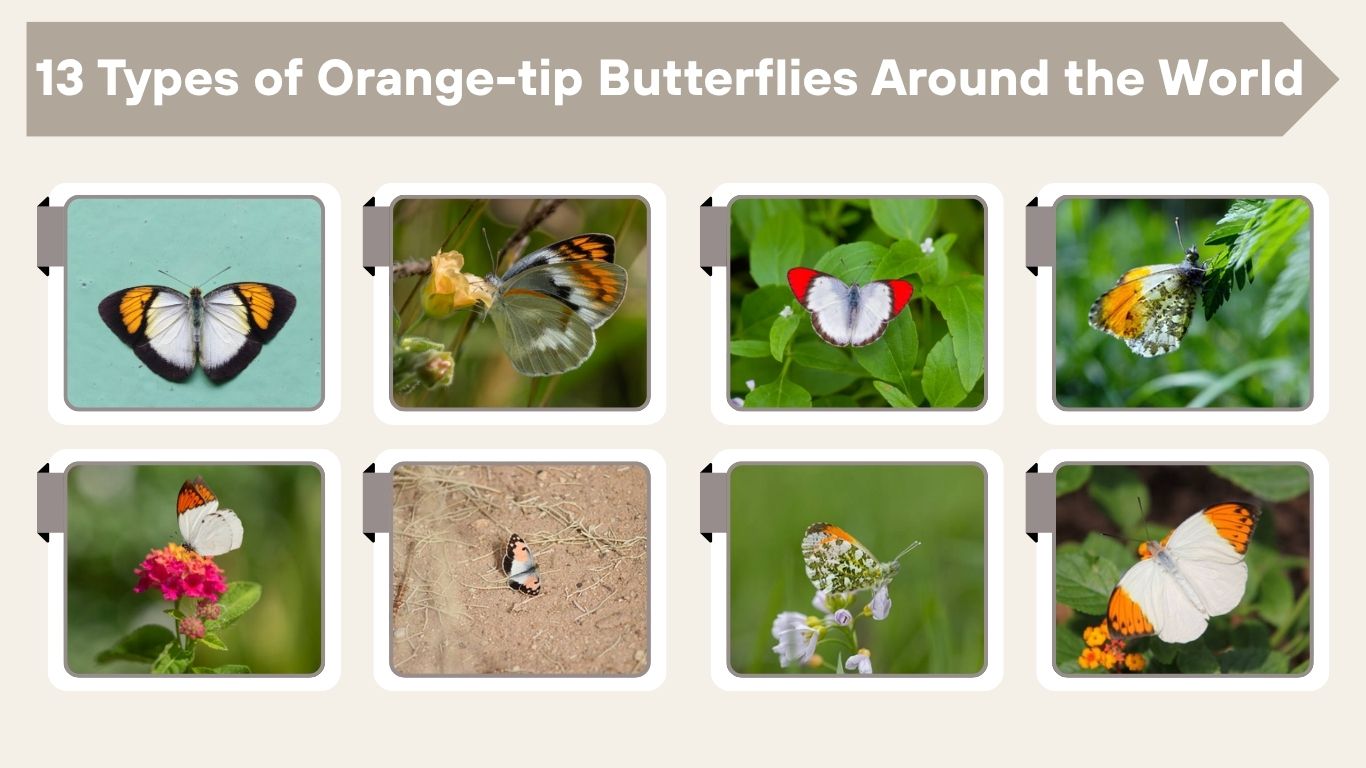
Orange-tip butterflies are beautiful and delicate insects known for their bright orange wing markings and graceful daytime flight. These butterflies are commonly found in meadows, gardens, woodland edges, and grasslands where flowering plants are abundant. They play an important role in pollination while feeding on nectar from wildflowers. Different Orange-tip species vary in size, color intensity, habitat preference, and wing patterns, making them fascinating to observe in nature. This guide explores 13 types of Orange-tip butterflies, including their identification, habitat, behavior, diet, and lifecycle characteristics found across various regions of the world.
1. Large Orange-tip
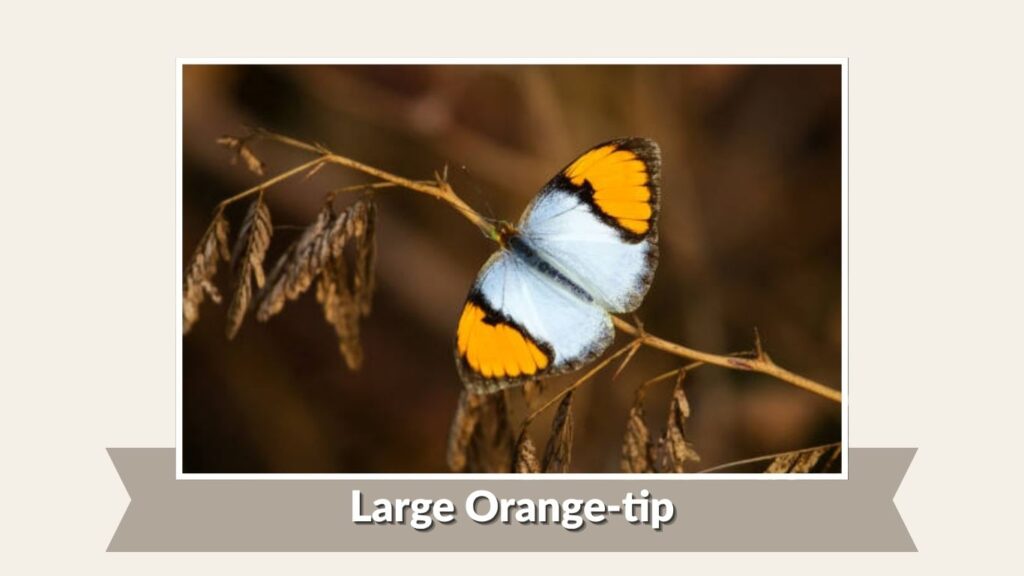
Large Orange-tip butterflies are beautiful insects known for the bright orange patches on their wings and their graceful flight patterns. They are commonly seen in open meadows, gardens, and woodland edges during warm seasons. These butterflies play an important role in pollination while feeding on nectar from flowering plants in natural habitats across various regions.
Identification
- White wings with bright orange tips on the forewings
- Black markings near the wing edges
- Males usually display brighter orange coloration than females
- Underside of the hindwings has green marbled patterns
- Medium-sized butterfly with delicate wing shape
- Slender dark body with long antennae
Habitat and Distribution
Large Orange-tip butterflies are commonly found in grasslands, woodland edges, gardens, farmland, and open countryside with abundant flowering plants. They prefer warm environments where nectar sources and host plants are available for breeding. These butterflies are distributed across parts of Europe, Asia, and nearby temperate regions. During spring and early summer, they are often seen flying near wildflowers and damp meadows. Their populations thrive in areas with natural vegetation and undisturbed breeding habitats.
Behavior and Diet
Large Orange-tip butterflies are active daytime insects that spend much of their time flying between flowers in search of nectar. Adults feed on nectar from wildflowers, while caterpillars mainly consume plants from the mustard family. Males are often territorial and patrol open spaces searching for females during the breeding season. These butterflies are generally gentle and avoid predators through quick flight movements and camouflage provided by the green marbled patterns on the underside of their wings.
Lifecycle
The lifecycle of the Large Orange-tip butterfly begins when the female lays eggs on suitable host plants. After hatching, the caterpillars feed on leaves and flower buds while growing through several stages. Once fully developed, the caterpillar forms a chrysalis attached to vegetation where transformation takes place. Inside the chrysalis, it develops into an adult butterfly. After emerging, the butterfly expands and dries its wings before flying off to feed, reproduce, and continue the life cycle.
2. Small Orange-tip
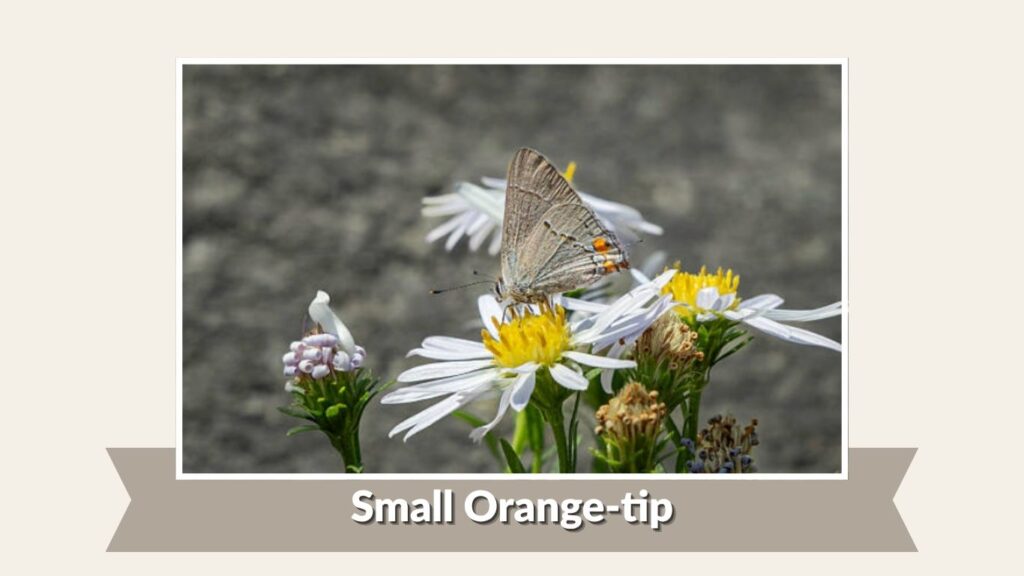
Small Orange-tip butterflies are delicate and colorful insects recognized for the orange patches on their forewings and their light, fluttering flight. They are commonly found in meadows, gardens, and open woodland areas during warmer months. These butterflies contribute to pollination while feeding on flower nectar and are admired for their graceful appearance and seasonal activity in natural habitats.
Identification
- Small white wings with bright orange tips on the forewings
- Thin black markings along the wing edges
- Green marbled patterns underneath the hindwings
- Females usually have smaller or lighter orange markings
- Slender body with fine antennae
- Gentle and fluttering flight style
Habitat and Distribution
Small Orange-tip butterflies are commonly found in grasslands, gardens, woodland edges, farmland, and open countryside where flowering plants grow abundantly. They prefer sunny habitats with wildflowers and suitable host plants for breeding. These butterflies are distributed across parts of Europe, Asia, and temperate regions with mild climates. During spring and early summer, they are frequently seen near meadows, pathways, and damp grassy areas. Their populations thrive in natural environments with low disturbance and rich vegetation.
Behavior and Diet
Small Orange-tip butterflies are active during the daytime and spend most of their time feeding on nectar from flowers. Adults commonly visit wildflowers, while caterpillars feed on plants from the mustard family. Males actively search for females by flying through open spaces and defending small territories. These butterflies rely on quick flight movements and camouflage from the green marbled wing undersides to avoid predators. They are peaceful insects that rarely remain still for long periods during warm sunny weather.
Lifecycle
The lifecycle of the Small Orange-tip butterfly begins when females lay eggs on suitable host plants. After hatching, the caterpillars feed on leaves and flower buds while passing through several growth stages. Once fully developed, the caterpillar forms a chrysalis attached to nearby vegetation. Inside the chrysalis, transformation into an adult butterfly occurs over time. After emerging, the butterfly expands and dries its wings before flying away to feed, reproduce, and continue the next generation.
3. African Orange-tip
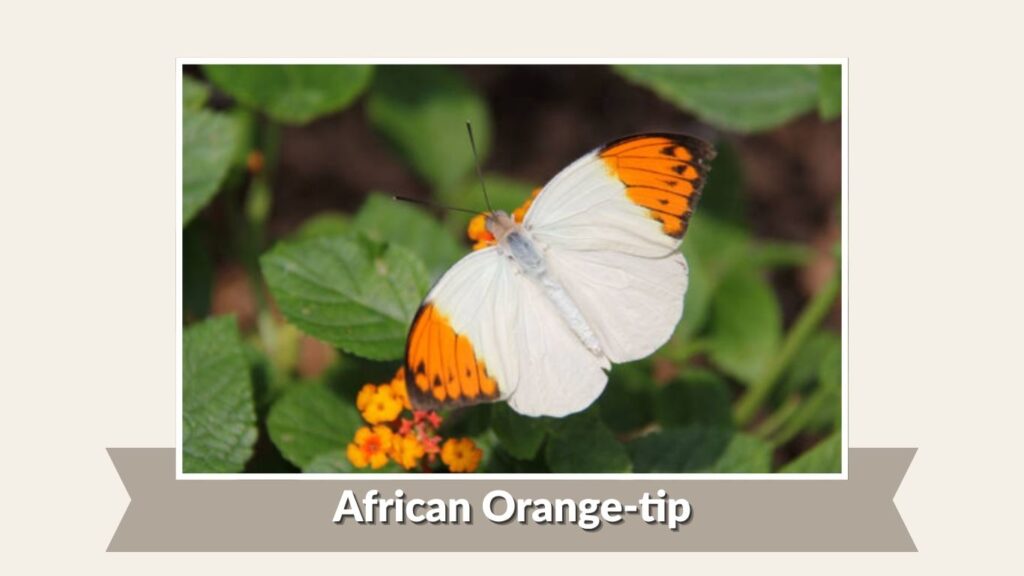
African Orange-tip butterflies are colorful insects known for their striking orange wing tips and energetic flight patterns. They are commonly found in warm African habitats filled with flowering plants and open vegetation. These butterflies are important pollinators and are admired for their bright wing patterns, which make them easy to spot while flying through grasslands and woodland areas.
Identification
- White wings with vivid orange forewing tips
- Black borders and markings near the wing edges
- Greenish marbled patterns under the hindwings
- Males usually have brighter orange coloration than females
- Medium-sized body with slender antennae
- Fast and fluttering flight behavior
Habitat and Distribution
African Orange-tip butterflies are widely distributed across grasslands, savannas, gardens, woodland edges, and open countryside in many African regions. They prefer sunny habitats with flowering plants and suitable host vegetation for breeding. These butterflies are commonly active during warm seasons and are often seen near wildflowers, riverbanks, and lightly forested areas. Their populations thrive in environments with abundant nectar sources and natural plant diversity, especially in tropical and subtropical climates throughout the continent.
Behavior and Diet
African Orange-tip butterflies are active during the daytime and spend much of their time feeding on flower nectar. Adults frequently visit wildflowers, while caterpillars mainly feed on plants belonging to the mustard family. Males actively patrol open spaces searching for females during the breeding season. These butterflies rely on rapid flight movements and wing camouflage to avoid predators in natural habitats. They are peaceful insects that play a useful role in pollination while moving between flowering plants.
Lifecycle
The lifecycle of the African Orange-tip butterfly begins when the female lays eggs on suitable host plants. After hatching, the caterpillars feed on leaves, stems, and flower buds while growing through several stages. Once fully developed, the caterpillar forms a chrysalis attached to vegetation where transformation takes place. Inside the chrysalis, it gradually develops into an adult butterfly. After emerging, the butterfly expands its wings, begins feeding on nectar, mates, and continues the reproductive cycle in its habitat.
4. Indian Orange-tip
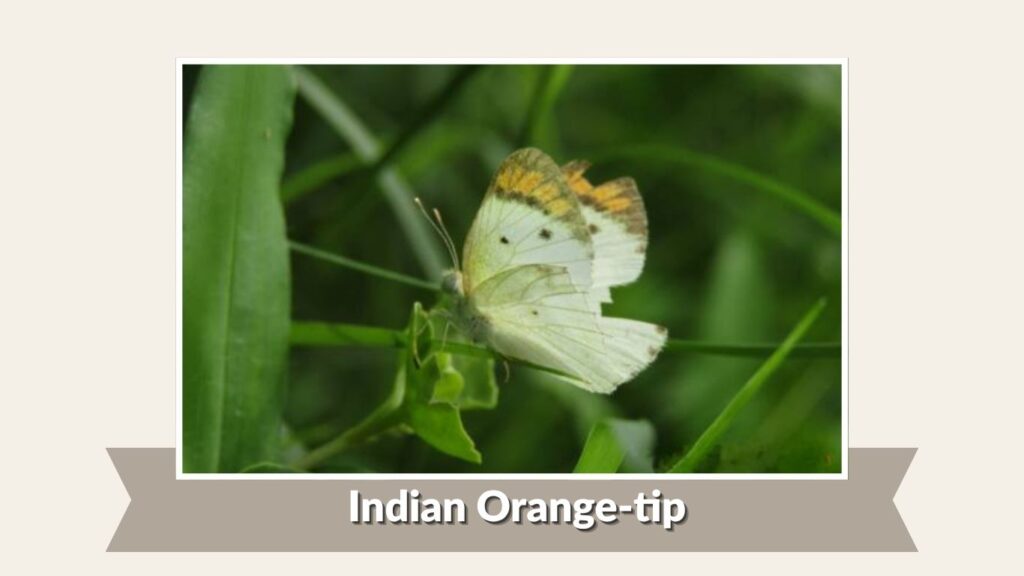
Indian Orange-tip butterflies are attractive insects recognized for their bright orange wing patches and graceful flight. They are commonly seen in gardens, forests, grasslands, and farmland across the Indian subcontinent. These butterflies are important pollinators that feed on flower nectar and are especially active during warm and sunny seasons in natural and semi-natural habitats.
Identification
- White wings with bright orange tips on the forewings
- Black markings near the upper wing edges
- Green marbled patterns on the underside of hindwings
- Males display more vivid orange coloration than females
- Medium-sized butterfly with slender body
- Long antennae and delicate wing structure
Habitat and Distribution
Indian Orange-tip butterflies are widely distributed across India, Nepal, Bangladesh, Sri Lanka, and nearby South Asian regions. They inhabit gardens, woodland edges, grasslands, farmland, and open countryside where flowering plants and host vegetation are available. These butterflies prefer warm climates with plenty of sunlight and natural plant diversity. They are commonly seen during spring and summer near meadows, forest clearings, and roadsides filled with wildflowers. Their populations thrive in areas with low pesticide use and healthy vegetation.
Behavior and Diet
Indian Orange-tip butterflies are active daytime insects that spend most of their time flying between flowers in search of nectar. Adults feed mainly on nectar from wildflowers, while caterpillars consume plants from the mustard family. Males often patrol territories and search actively for females during the breeding season. These butterflies use quick flight movements and the marbled wing underside as camouflage against predators. They are harmless insects that contribute to pollination while moving through natural habitats.
Lifecycle
The lifecycle of the Indian Orange-tip butterfly begins when females lay eggs on suitable host plants. After hatching, the caterpillars feed on leaves and flower buds while growing through several developmental stages. Once mature, the caterpillar forms a chrysalis attached to vegetation where transformation takes place. Inside the chrysalis, it gradually develops into an adult butterfly. After emerging, the butterfly expands and dries its wings before flying away to feed, mate, and continue the reproductive cycle.
5. White Orange-tip
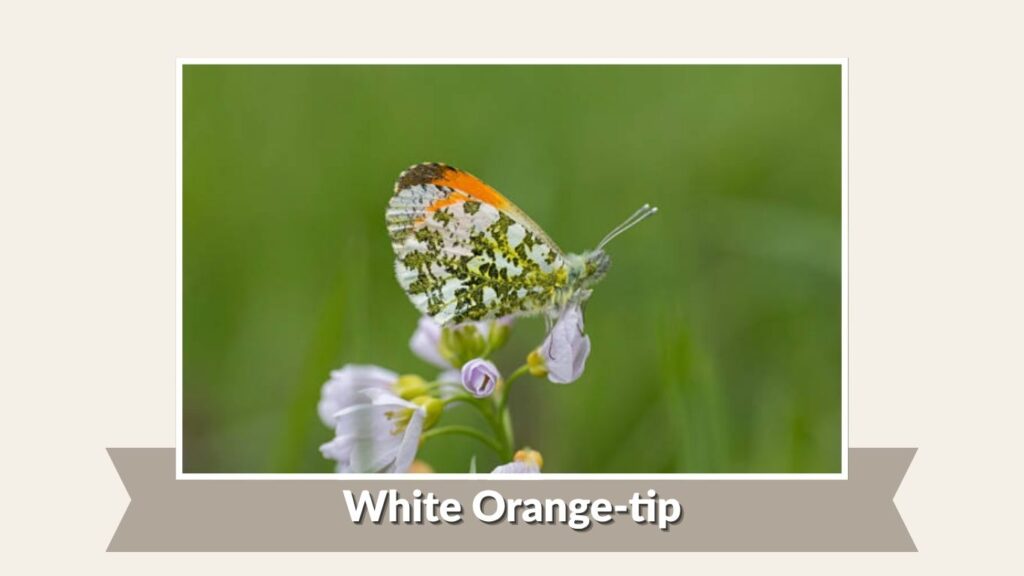
White Orange-tip butterflies are elegant insects known for their mostly white wings combined with bright orange markings near the forewings. They are commonly found in open grassy habitats and flowering landscapes during warmer months. These butterflies are important pollinators and are admired for their delicate appearance, active daytime behavior, and graceful flight among wildflowers and natural vegetation.
Identification
- Mostly white wings with orange patches on the forewings
- Thin black markings near the wing tips
- Green marbled patterns underneath the hindwings
- Males usually have brighter orange coloration
- Medium-sized butterfly with slender dark body
- Long antennae and delicate wing edges
Habitat and Distribution
White Orange-tip butterflies are found in grasslands, gardens, woodland edges, farmland, and open countryside with abundant flowering plants. They prefer warm and sunny habitats where host plants and nectar sources are widely available. These butterflies are distributed across parts of Europe, Asia, and nearby temperate regions. They are especially active during spring and early summer when wildflowers bloom heavily. Their populations thrive in areas with natural vegetation, low pollution, and undisturbed breeding environments.
Behavior and Diet
White Orange-tip butterflies are active during the daytime and spend much of their time feeding on nectar from flowers. Adults frequently visit wildflowers, while caterpillars mainly feed on plants from the mustard family. Males actively patrol territories and search for females during the breeding season. These butterflies use quick and fluttering flight movements to avoid predators, while the green marbled patterns under their wings provide camouflage when resting among vegetation.
Lifecycle
The lifecycle of the White Orange-tip butterfly begins when the female lays eggs on suitable host plants. After hatching, the caterpillars feed on leaves and flower buds while passing through several growth stages. Once fully developed, the caterpillar forms a chrysalis attached to nearby vegetation. Inside the chrysalis, transformation into an adult butterfly gradually occurs. After emerging, the butterfly expands and dries its wings before flying away to feed, reproduce, and continue the life cycle in suitable habitats.
6. Yellow Orange-tip
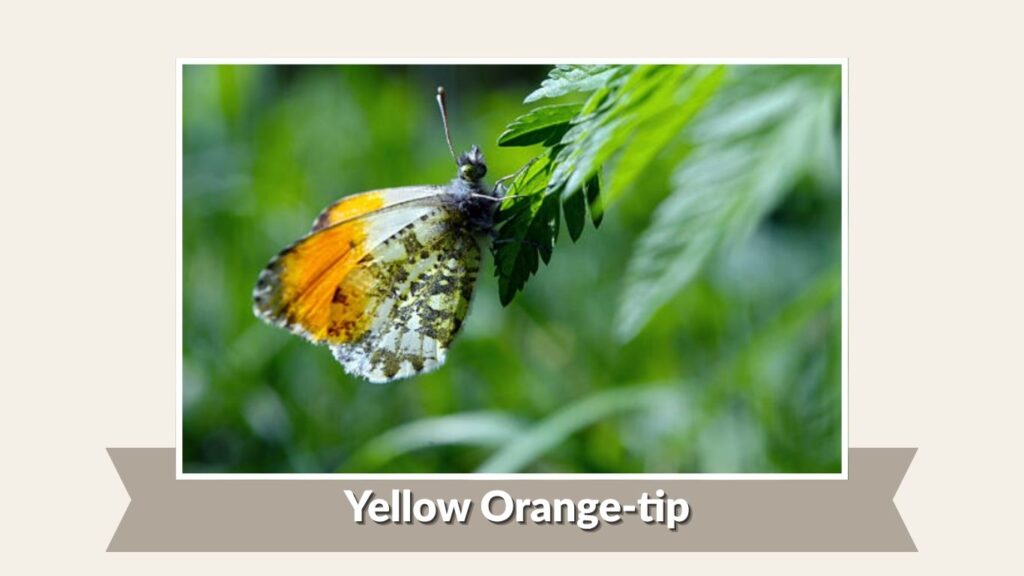
Yellow Orange-tip butterflies are colorful insects admired for their pale yellow wings combined with bright orange markings near the forewings. They are active daytime butterflies commonly seen flying through gardens, meadows, and woodland edges during warm seasons. These butterflies help pollinate flowering plants while feeding on nectar and are known for their delicate appearance and graceful flight behavior.
Identification
- Pale yellow or creamy wings with orange forewing tips
- Thin black markings along the wing edges
- Green marbled patterns under the hindwings
- Males usually display brighter orange coloration
- Medium-sized butterfly with slender body
- Long antennae and soft fluttering flight
Habitat and Distribution
Yellow Orange-tip butterflies are commonly found in grasslands, gardens, forest edges, farmland, and open countryside where flowering plants are abundant. They prefer sunny environments with rich vegetation and suitable host plants for breeding. These butterflies are distributed across warm regions of Asia, Africa, and nearby temperate zones. They are especially active during spring and summer when wildflowers bloom heavily. Their populations thrive in habitats with low disturbance, natural plant diversity, and plentiful nectar sources.
Behavior and Diet
Yellow Orange-tip butterflies are active during daylight hours and spend much of their time feeding on nectar from flowers. Adults often visit wildflowers, while caterpillars feed mainly on plants from the mustard family. Males patrol open spaces in search of females and may defend small territories during the breeding season. These butterflies rely on quick flight movements and camouflage from their wing undersides to avoid predators in natural habitats.
Lifecycle
The lifecycle of the Yellow Orange-tip butterfly begins when females lay eggs on suitable host plants. After hatching, the caterpillars feed on leaves and flower buds while developing through several stages. Once fully grown, the caterpillar forms a chrysalis attached to vegetation where transformation takes place. Inside the chrysalis, it gradually develops into an adult butterfly. After emerging, the butterfly expands and dries its wings before flying away to feed, mate, and continue the reproductive cycle.
7. Desert Orange-tip
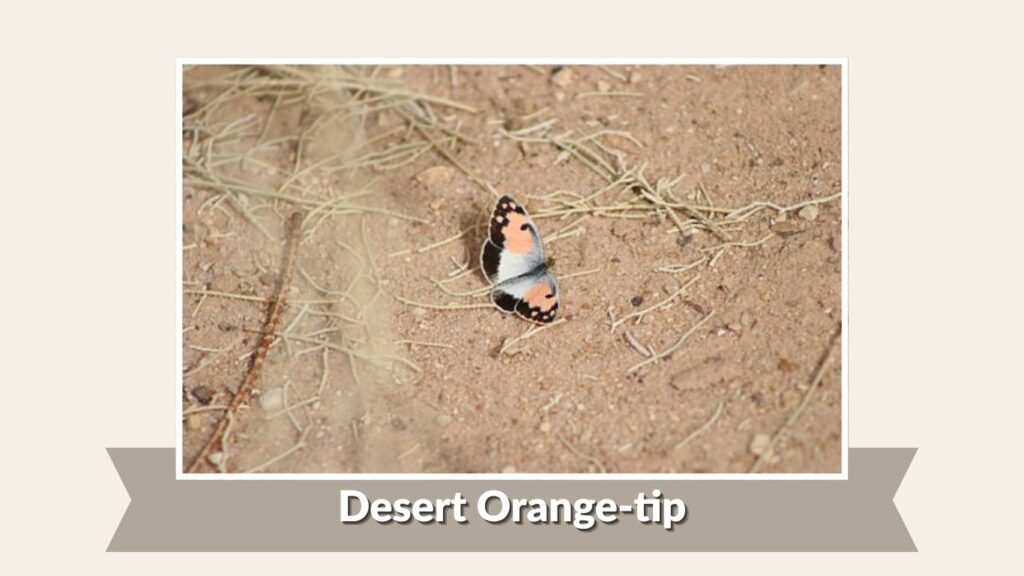
Desert Orange-tip butterflies are hardy insects adapted to dry and warm environments where flowering plants are available seasonally. They are recognized for their bright orange wing tips and their ability to survive in arid landscapes with limited vegetation. These butterflies are important pollinators and are often seen flying quickly across open desert grasslands and semi-arid habitats during warmer months.
Identification
- White or pale cream wings with orange forewing tips
- Thin black markings near the wing edges
- Greenish marbled patterns beneath the hindwings
- Medium-sized butterfly with slender body
- Long antennae and narrow wings
- Fast and fluttering flight behavior
Habitat and Distribution
Desert Orange-tip butterflies are commonly found in arid and semi-arid regions across parts of Asia, Africa, and the Middle East. They inhabit desert grasslands, scrublands, dry valleys, and rocky open landscapes where seasonal flowers and host plants grow after rainfall. These butterflies prefer warm climates with scattered vegetation and sunny conditions. They are often active during spring when desert plants bloom. Their populations survive best in natural habitats with minimal disturbance and access to temporary nectar sources.
Behavior and Diet
Desert Orange-tip butterflies are active during the daytime and spend much of their time searching for nectar-producing flowers. Adults mainly feed on nectar, while caterpillars consume plants from the mustard family and related vegetation. Males actively patrol open areas searching for females during the breeding season. These butterflies use rapid flight movements and camouflage from their wing undersides to avoid predators. Their ability to adapt to harsh desert conditions helps them survive in environments with limited resources.
Lifecycle
The lifecycle of the Desert Orange-tip butterfly begins when females lay eggs on suitable desert host plants. After hatching, the caterpillars feed on leaves and flower buds while developing through several growth stages. Once fully grown, the caterpillar forms a chrysalis attached to nearby vegetation or dry stems. Inside the chrysalis, transformation into an adult butterfly gradually occurs. After emerging, the butterfly expands its wings, begins feeding on nectar, mates, and continues the reproductive cycle during favorable environmental conditions.
8. Mountain Orange-tip
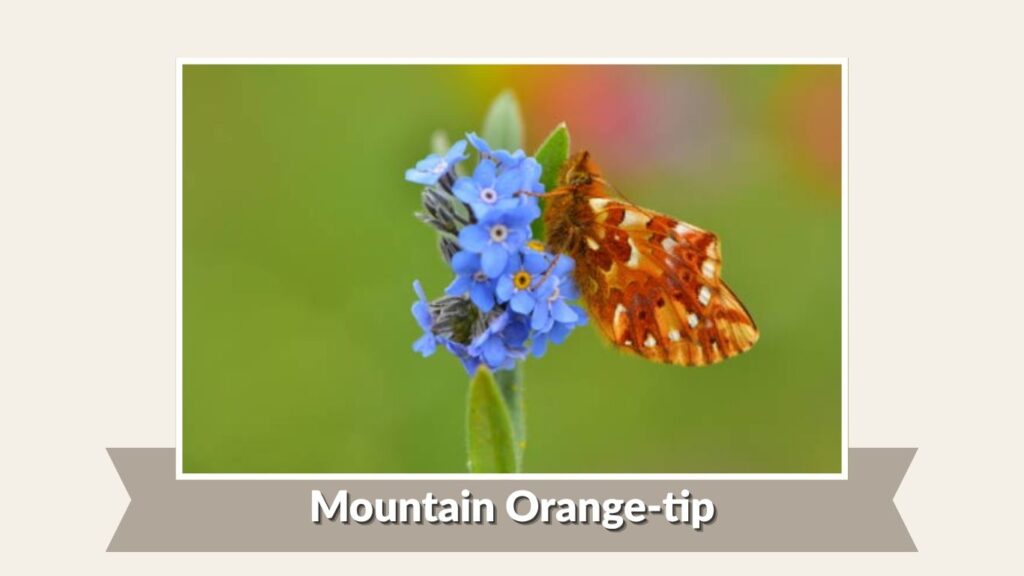
Mountain Orange-tip butterflies are beautiful insects adapted to cooler highland environments with open meadows and flowering plants. They are recognized for their bright orange wing tips and graceful flight through mountainous landscapes. These butterflies play an important role in pollination and are often active during warm daylight hours in alpine and hillside habitats during spring and summer.
Identification
- White wings with bright orange tips on the forewings
- Black markings near the upper wing edges
- Green marbled patterns underneath the hindwings
- Medium-sized butterfly with slender body
- Long antennae and delicate wing structure
- Smooth and fluttering flight in open mountain areas
Habitat and Distribution
Mountain Orange-tip butterflies are commonly found in high-altitude meadows, hillside grasslands, woodland edges, and alpine valleys across parts of Asia and Europe. They prefer cool and sunny mountain environments with abundant wildflowers and natural vegetation. These butterflies are especially active during spring and summer when flowering plants bloom in upland regions. Their populations thrive in undisturbed habitats with clean air, suitable host plants, and open sunny spaces that support feeding and breeding activities.
Behavior and Diet
Mountain Orange-tip butterflies are active during the daytime and spend most of their time feeding on nectar from mountain wildflowers. Adults visit flowering plants frequently, while caterpillars mainly feed on plants from the mustard family. Males actively search for females by flying across open meadows and hillside paths. These butterflies rely on quick flight movements and the marbled patterns under their wings for camouflage when resting among grasses and vegetation in rocky mountain environments.
Lifecycle
The lifecycle of the Mountain Orange-tip butterfly begins when the female lays eggs on suitable host plants in mountain habitats. After hatching, the caterpillars feed on leaves and flower buds while developing through several stages. Once fully grown, the caterpillar forms a chrysalis attached to vegetation or stems. Inside the chrysalis, transformation into an adult butterfly gradually takes place. After emerging, the butterfly dries and expands its wings before flying off to feed, reproduce, and continue the life cycle.
9. Veined Orange-tip
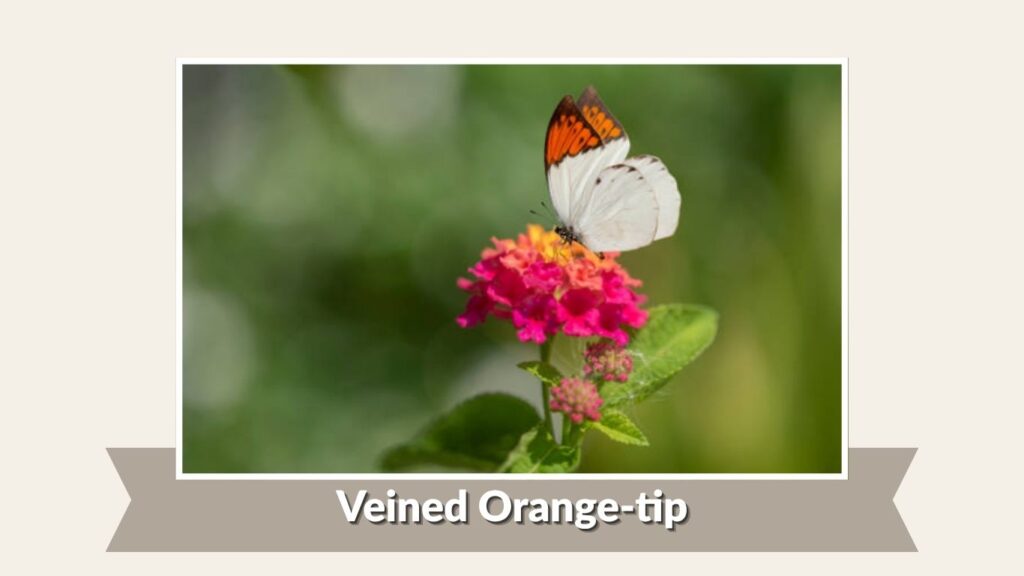
Veined Orange-tip butterflies are attractive insects known for the delicate vein-like patterns visible on their wings along with their bright orange wing tips. They are commonly found in open natural habitats filled with flowering plants and grasses. These butterflies are important pollinators and are admired for their graceful flight and colorful appearance during warm seasons in temperate and subtropical regions.
Identification
- White or pale cream wings with orange forewing tips
- Dark vein-like markings visible across the wings
- Green marbled patterns under the hindwings
- Medium-sized butterfly with slender body
- Long antennae and narrow wing shape
- Males usually have brighter orange coloration than females
Habitat and Distribution
Veined Orange-tip butterflies are commonly found in grasslands, meadows, woodland edges, gardens, and open countryside where flowering plants are abundant. They prefer sunny environments with natural vegetation and suitable host plants for breeding. These butterflies are distributed across parts of Asia, Europe, and nearby temperate regions. They are especially active during spring and early summer when wildflowers bloom heavily. Their populations thrive in undisturbed habitats with rich plant diversity and clean environmental conditions.
Behavior and Diet
Veined Orange-tip butterflies are active during the daytime and spend much of their time feeding on nectar from flowers. Adults commonly visit wildflowers, while caterpillars mainly consume plants belonging to the mustard family. Males patrol open spaces searching for females during the breeding season and may defend small territories. These butterflies rely on rapid flight movements and camouflage from the marbled patterns under their wings to protect themselves from predators in grassy and woodland habitats.
Lifecycle
The lifecycle of the Veined Orange-tip butterfly begins when the female lays eggs on suitable host plants. After hatching, the caterpillars feed on leaves and flower buds while passing through several stages of growth. Once fully developed, the caterpillar forms a chrysalis attached to vegetation where transformation occurs. Inside the chrysalis, it gradually develops into an adult butterfly. After emerging, the butterfly expands and dries its wings before flying away to feed, reproduce, and continue the next generation.
10. Eastern Orange-tip
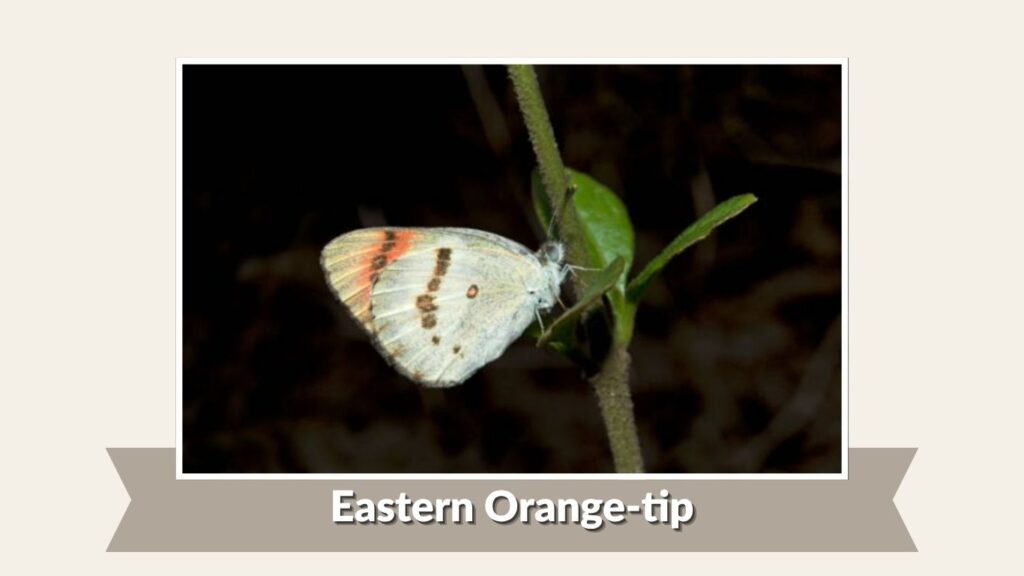
Eastern Orange-tip butterflies are colorful insects recognized for their bright orange wing tips and elegant fluttering flight. They are commonly found in eastern woodland regions, grasslands, and gardens where flowering plants are abundant. These butterflies are important pollinators and are especially active during warm seasons, moving between flowers while feeding on nectar in natural and semi-natural habitats.
Identification
- White wings with vivid orange patches on the forewings
- Thin black markings near the wing edges
- Green marbled patterns underneath the hindwings
- Medium-sized butterfly with slender body
- Long antennae and delicate wing shape
- Males usually show brighter orange coloration than females
Habitat and Distribution
Eastern Orange-tip butterflies are commonly distributed across eastern regions of Asia and nearby temperate areas. They inhabit grasslands, woodland edges, gardens, farmland, and open countryside with abundant flowering plants and host vegetation. These butterflies prefer sunny environments with natural plant diversity and low habitat disturbance. They are most active during spring and early summer when wildflowers bloom heavily. Their populations thrive in regions with moderate temperatures, clean environments, and suitable breeding conditions.
Behavior and Diet
Eastern Orange-tip butterflies are active during daylight hours and spend much of their time feeding on nectar from flowers. Adults frequently visit wildflowers, while caterpillars mainly feed on plants from the mustard family. Males actively patrol territories and search for females during the breeding season. These butterflies use fast and fluttering flight movements to avoid predators, while the marbled patterns under their wings provide camouflage when resting among leaves and grasses.
Lifecycle
The lifecycle of the Eastern Orange-tip butterfly begins when females lay eggs on suitable host plants. After hatching, the caterpillars feed on leaves and flower buds while developing through several stages. Once fully grown, the caterpillar forms a chrysalis attached to nearby vegetation where transformation takes place. Inside the chrysalis, it gradually develops into an adult butterfly. After emerging, the butterfly expands and dries its wings before flying away to feed, mate, and continue the reproductive cycle.
11. Western Orange-tip
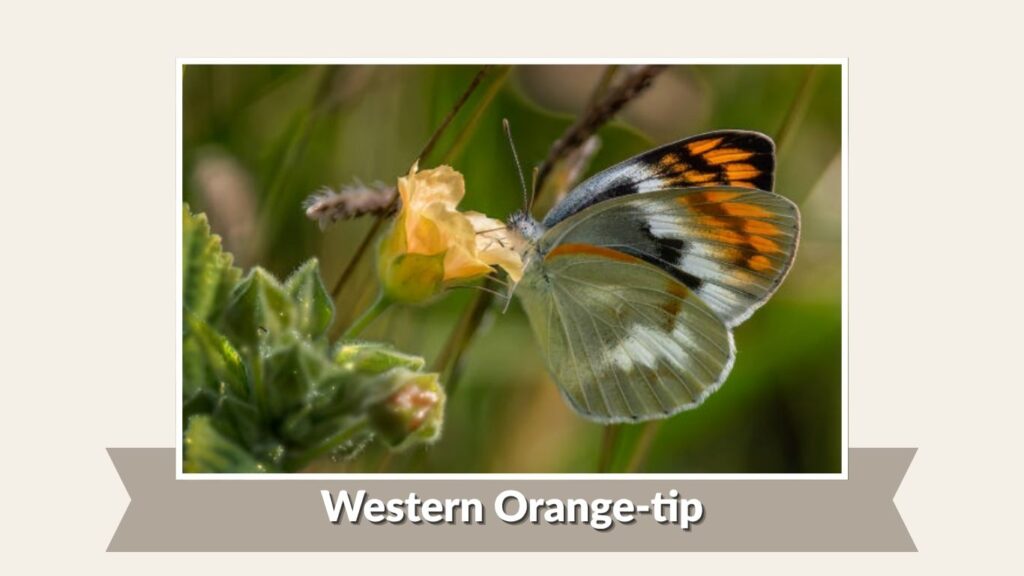
Western Orange-tip butterflies are striking insects known for their bright orange wing tips and active daytime behavior. They are commonly found in western grasslands, open woodlands, and flowering meadows where nectar plants are abundant. These butterflies are important pollinators and are admired for their graceful flight and colorful appearance during spring and summer in warm natural habitats.
Identification
- White wings with vivid orange forewing tips
- Thin black markings along the upper wing edges
- Green marbled patterns beneath the hindwings
- Medium-sized butterfly with slender body
- Long antennae and delicate wing structure
- Males usually display brighter orange coloration than females
Habitat and Distribution
Western Orange-tip butterflies are commonly distributed across western temperate and subtropical regions with open natural landscapes. They inhabit grasslands, woodland edges, gardens, meadows, and farmland where flowering plants and host vegetation are available. These butterflies prefer sunny habitats with mild temperatures and natural plant diversity. They are most active during spring and early summer when wildflowers bloom heavily. Their populations thrive in undisturbed environments with abundant nectar sources and suitable breeding areas.
Behavior and Diet
Western Orange-tip butterflies are active during daylight hours and spend much of their time feeding on nectar from flowering plants. Adults frequently visit wildflowers, while caterpillars mainly feed on plants belonging to the mustard family. Males actively patrol open areas searching for females during the breeding season. These butterflies rely on quick fluttering flight and camouflage from the marbled patterns under their wings to protect themselves from predators in natural habitats.
Lifecycle
The lifecycle of the Western Orange-tip butterfly begins when females lay eggs on suitable host plants. After hatching, the caterpillars feed on leaves and flower buds while growing through several stages. Once fully developed, the caterpillar forms a chrysalis attached to nearby vegetation where transformation occurs. Inside the chrysalis, it gradually develops into an adult butterfly. After emerging, the butterfly expands and dries its wings before flying away to feed, reproduce, and continue the life cycle.
12. Scarlet Orange-tip
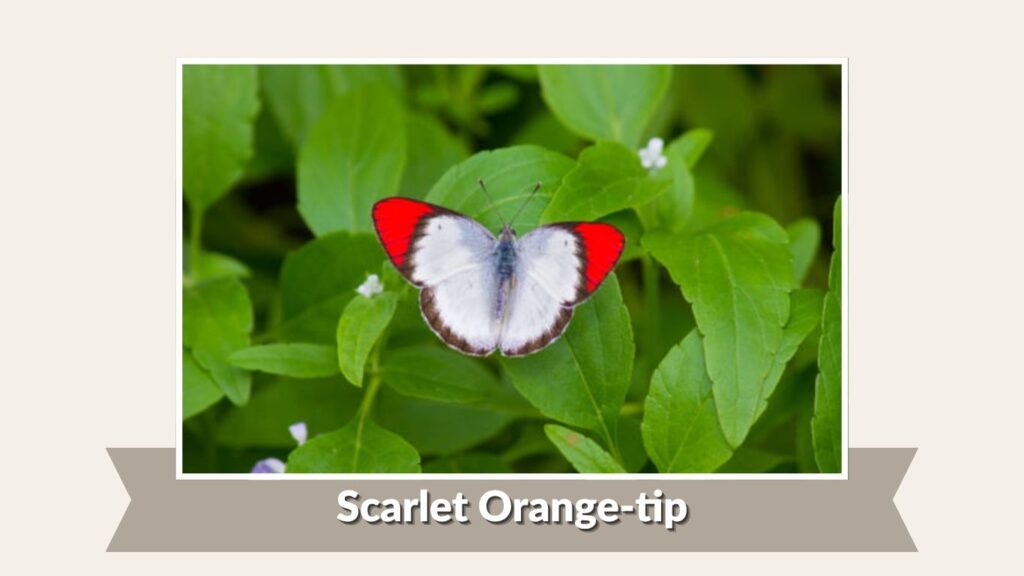
Scarlet Orange-tip butterflies are colorful insects admired for their rich scarlet-orange wing markings and graceful flight patterns. They are commonly found in sunny natural habitats with abundant flowering plants. These butterflies play an important role in pollination while feeding on nectar and are especially noticeable during warm seasons because of their vivid wing coloration and active daytime behavior.
Identification
- White or pale wings with deep scarlet-orange forewing tips
- Thin black markings near the wing edges
- Green marbled patterns beneath the hindwings
- Medium-sized butterfly with slender body
- Long antennae and narrow wing shape
- Males usually display brighter scarlet coloration than females
Habitat and Distribution
Scarlet Orange-tip butterflies are commonly found in grasslands, woodland edges, gardens, meadows, and open countryside across warm temperate and subtropical regions. They prefer sunny environments with flowering plants and suitable host vegetation for breeding. These butterflies are active during spring and summer when nectar sources are abundant. Their populations thrive in habitats with rich natural vegetation, low environmental disturbance, and open sunny spaces that support feeding, breeding, and resting activities throughout their seasonal lifecycle.
Behavior and Diet
Scarlet Orange-tip butterflies are active during the daytime and spend much of their time feeding on nectar from flowers. Adults frequently visit colorful wildflowers, while caterpillars mainly consume plants from the mustard family. Males patrol open areas searching for females and may defend small territories during the breeding season. These butterflies rely on fast fluttering flight and camouflage from the marbled underside of their wings to protect themselves from predators in natural environments.
Lifecycle
The lifecycle of the Scarlet Orange-tip butterfly begins when females lay eggs on suitable host plants. After hatching, the caterpillars feed on leaves and flower buds while developing through several growth stages. Once fully mature, the caterpillar forms a chrysalis attached to nearby vegetation where transformation occurs. Inside the chrysalis, it gradually develops into an adult butterfly. After emerging, the butterfly expands and dries its wings before flying away to feed, reproduce, and continue the reproductive cycle.
13. Green-Banded Orange-tip
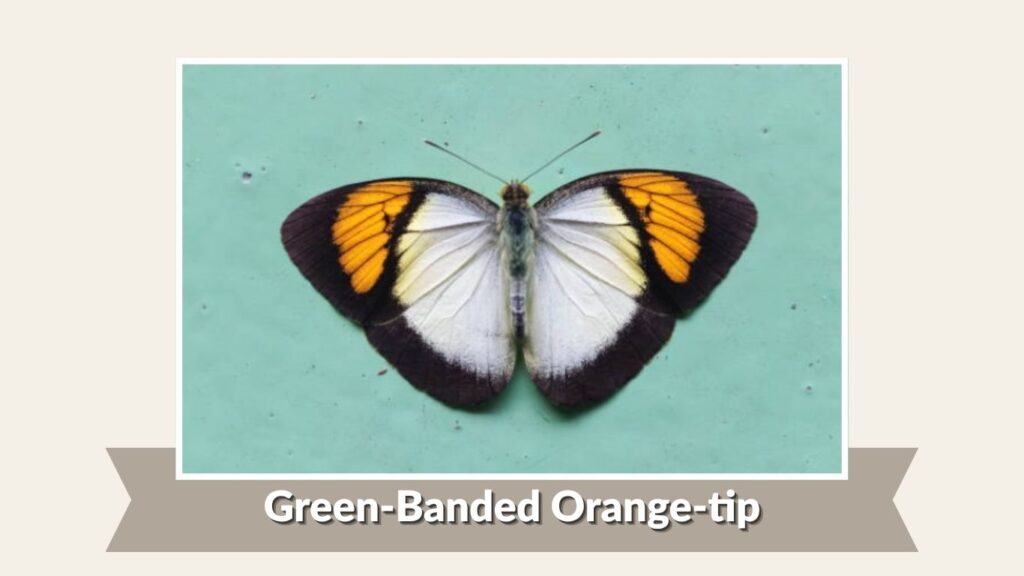
Green-Banded Orange-tip butterflies are unique insects recognized for the green band-like patterns beneath their wings combined with bright orange forewing tips. They are commonly found in grassy habitats, woodland edges, and flowering meadows during warm seasons. These butterflies are important pollinators and are admired for their colorful wing patterns, delicate flight, and active daytime behavior in natural environments.
Identification
- White wings with bright orange tips on the forewings
- Distinct green banded or marbled patterns beneath the hindwings
- Thin black markings near the wing edges
- Medium-sized butterfly with slender body
- Long antennae and delicate wing structure
- Males usually display brighter orange coloration than females
Habitat and Distribution
Green-Banded Orange-tip butterflies are commonly found in grasslands, gardens, woodland edges, meadows, and open countryside across warm temperate and subtropical regions. They prefer sunny habitats with abundant flowering plants and suitable host vegetation for breeding. These butterflies are especially active during spring and early summer when wildflowers bloom heavily. Their populations thrive in areas with natural vegetation, low environmental disturbance, and plentiful nectar sources that support feeding and reproduction throughout their active season.
Behavior and Diet
Green-Banded Orange-tip butterflies are active during daylight hours and spend most of their time feeding on nectar from flowers. Adults frequently visit wildflowers, while caterpillars mainly feed on plants from the mustard family. Males patrol open spaces in search of females during the breeding season and may defend small territories. These butterflies use rapid fluttering flight and the green marbled wing underside as camouflage to avoid predators while resting among grasses and leaves.
Lifecycle
The lifecycle of the Green-Banded Orange-tip butterfly begins when females lay eggs on suitable host plants. After hatching, the caterpillars feed on leaves and flower buds while developing through several growth stages. Once fully mature, the caterpillar forms a chrysalis attached to nearby vegetation where transformation occurs. Inside the chrysalis, it gradually develops into an adult butterfly. After emerging, the butterfly expands and dries its wings before flying away to feed, mate, and continue the reproductive cycle.
FAQs
What do Orange-tip butterflies eat?
Orange-tip butterflies mainly feed on nectar from flowering plants. Adult butterflies commonly visit wildflowers in gardens, meadows, and woodland edges. Their caterpillars usually feed on plants from the mustard family, including wild mustard and related species that provide important nutrients during their growth stages.
Where are Orange-tip butterflies commonly found?
Orange-tip butterflies are commonly found in grasslands, gardens, woodland edges, meadows, and open countryside. They prefer sunny habitats with abundant flowers and suitable host plants for breeding. Different species can be found across Europe, Asia, Africa, and other temperate or subtropical regions depending on climate and vegetation.
Are Orange-tip butterflies harmful to humans?
Orange-tip butterflies are completely harmless to humans. They do not bite, sting, or damage property. These butterflies are gentle pollinators that contribute positively to ecosystems by helping flowering plants reproduce while feeding on nectar in natural and cultivated habitats during warm seasons.
How long do Orange-tip butterflies live?
The lifespan of an adult Orange-tip butterfly is usually a few weeks, although the entire lifecycle from egg to adult can take several months. Much of their life is spent in the egg, caterpillar, or chrysalis stages before they emerge as fully developed butterflies during the breeding season.
Why do Orange-tip butterflies have bright wing colors?
The bright orange wing tips help Orange-tip butterflies attract mates and may also serve as warning signals to predators. The green marbled patterns underneath their wings provide camouflage when resting among leaves and grasses, helping them blend into their surroundings and avoid detection in natural habitats.