
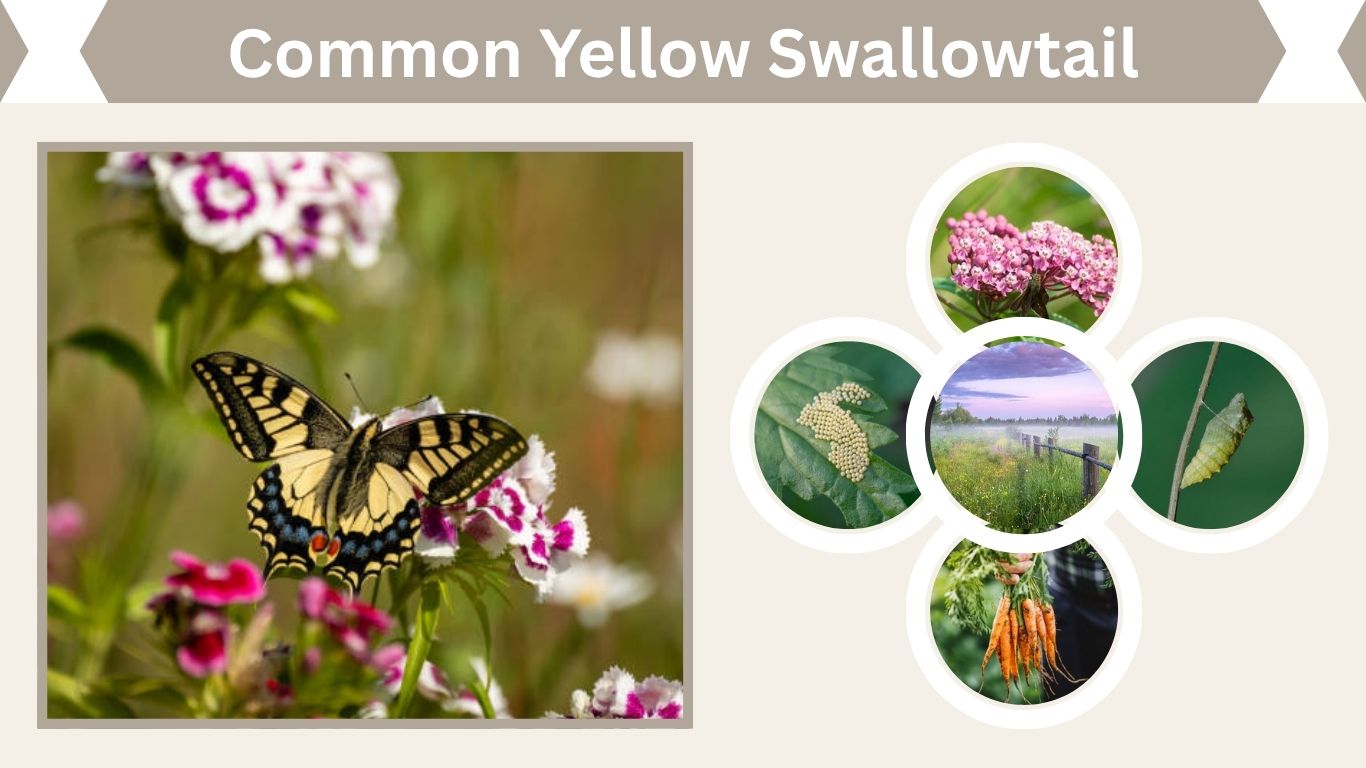
The Common Yellow Swallowtail is one of the most recognizable butterflies in North America, Europe, and parts of Asia. Its bright yellow wings, black stripes, and distinctive tail-like extensions make it a favorite among butterfly enthusiasts and gardeners alike. Understanding its life cycle, habitat, diet, and behavior is essential for observing, protecting, and attracting these pollinators to gardens and natural areas. This guide covers identification, feeding habits, defense strategies, and more.
Understanding the Common Yellow Swallowtail
The Common Yellow Swallowtail, scientifically known as Papilio machaon, is a member of the Papilionidae family. It is widely distributed across temperate regions and is highly adaptable, often found in gardens, meadows, and river valleys. These butterflies are vital pollinators, contributing to both wild and cultivated plants. Awareness of their behavior and needs helps enthusiasts enjoy observing them while minimizing accidental disturbances that could lead to defensive actions like fluttering or evasive flights.
Key Physical Features
- Wing Coloration: Bright yellow wings with prominent black stripes running longitudinally.
- Tail Extensions: Small “swallowtails” at the bottom of hindwings that mimic predator-targeting decoys.
- Eye Spots: Blue and red spots near the hindwing tails for predator deterrence.
Sexual Dimorphism
- Males: Often more vivid in color with slightly narrower wings.
- Females: Slightly larger, with muted yellow tones in some populations.
Common Yellow Swallowtail Habitat and Distribution
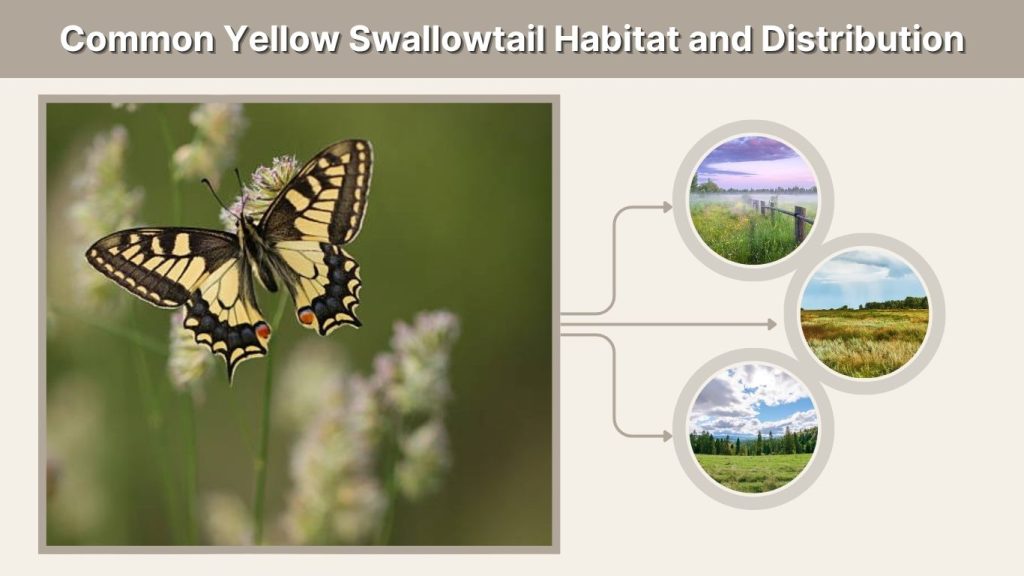
The Common Yellow Swallowtail thrives in diverse habitats, ranging from gardens to open meadows. Its adaptability allows it to flourish in areas with abundant host and nectar plants. Understanding where these butterflies are likely to be seen aids in both observation and conservation efforts.
Preferred Habitats
- Meadows, fields, and open woodlands
- Riverbanks and gardens with flowering plants
- Areas with host plants for caterpillars
Geographic Range
- Widely present across North America, Europe, and parts of Asia
- Common in temperate zones, less frequent in arid regions
Common Yellow Swallowtail Life Cycle and Development
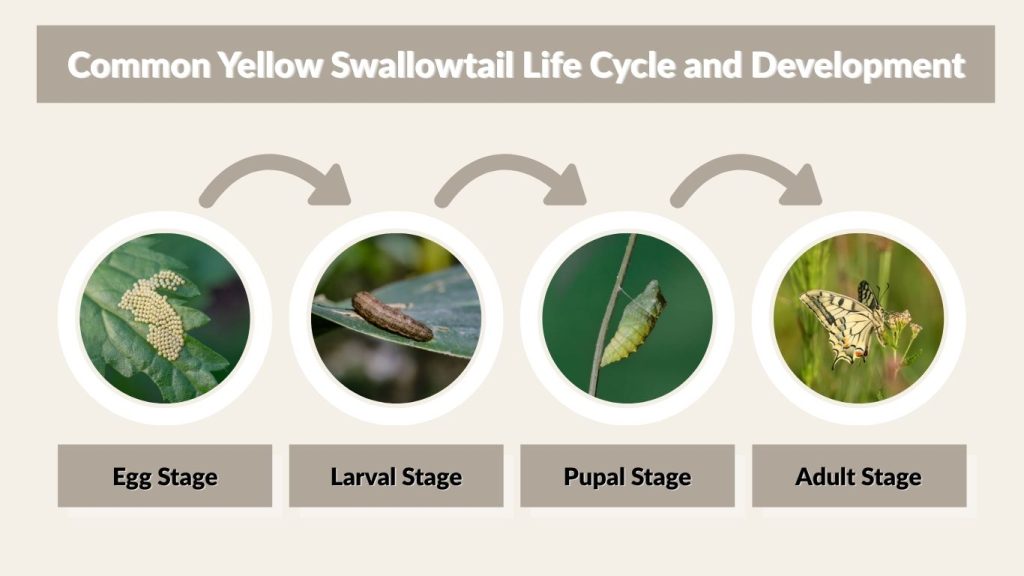
Like all butterflies, the Common Yellow Swallowtail undergoes complete metamorphosis. Its life cycle includes four distinct stages: egg, larva (caterpillar), pupa (chrysalis), and adult. Each stage has unique requirements and behaviors, making the species fascinating to observe over time.
Egg Stage
- Small, spherical eggs are laid singly on host plants.
- Incubation lasts 4–10 days depending on temperature.
Larval Stage (Caterpillar)
- Appearance: Green or black with false eye spots to scare predators.
- Feeding: Consumes leaves of parsley, fennel, dill, and other carrot-family plants.
- Growth: Goes through multiple instars before pupation.
Pupal Stage (Chrysalis)
- Cocoon: Attaches to stems or leaves with silk.
- Duration: 10–20 days, depending on environmental conditions.
- Defense: Camouflaged to blend with surroundings.
Adult Stage
- Emerges fully winged, ready to fly and mate.
- Lifespan varies from 2–4 weeks in summer; longer if overwintering as chrysalis in cooler regions.
Common Yellow Swallowtail Diet and Feeding Habits
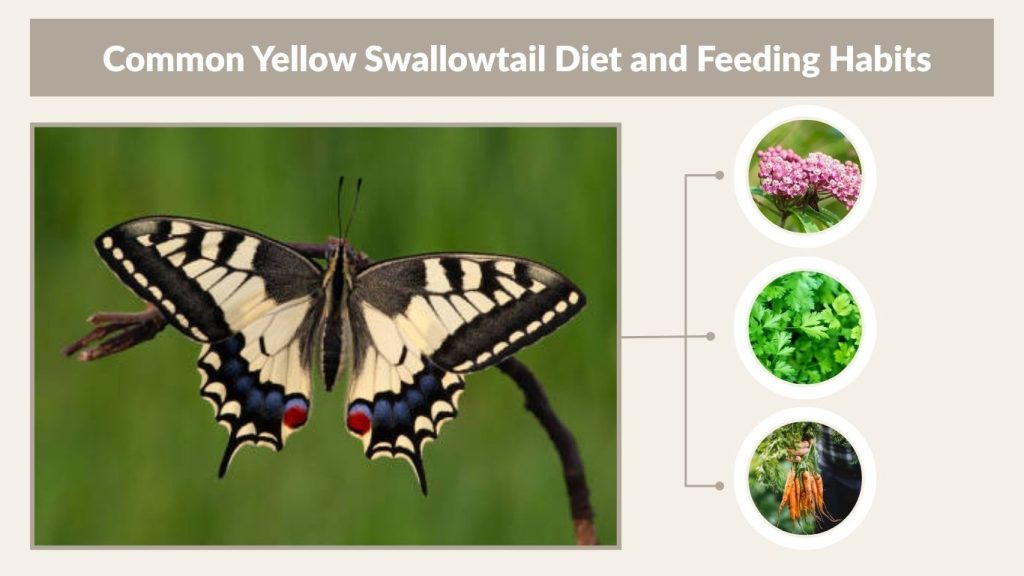
Both larvae and adults have specialized diets. While caterpillars feed on specific host plants, adult swallowtails rely on nectar from a variety of flowers, making them important pollinators in gardens and natural ecosystems.
Caterpillar Diet
- Parsley (Petroselinum crispum)
- Dill (Anethum graveolens)
- Fennel (Foeniculum vulgare)
- Carrot (Daucus carota) leaves
Adult Diet
- Nectar from milkweed, thistles, clover, and lantana
- Prefers flowers with accessible nectar sources
- Uses long proboscis to reach deep flower nectaries
Common Yellow Swallowtail Behavior and Flight Patterns
Common Yellow Swallowtails exhibit distinctive behaviors that aid in mating, feeding, and avoiding predators. Their flight is graceful, slow, and gliding, which makes them highly visible during the day.
Flight Behavior
- Slow, floating glide interspersed with quick wing beats
- Often flies near host plants for egg-laying opportunities
Mating Behavior
- Males patrol territories to attract females
- Courtship involves aerial displays and pheromone signaling
Predators and Defense Mechanisms
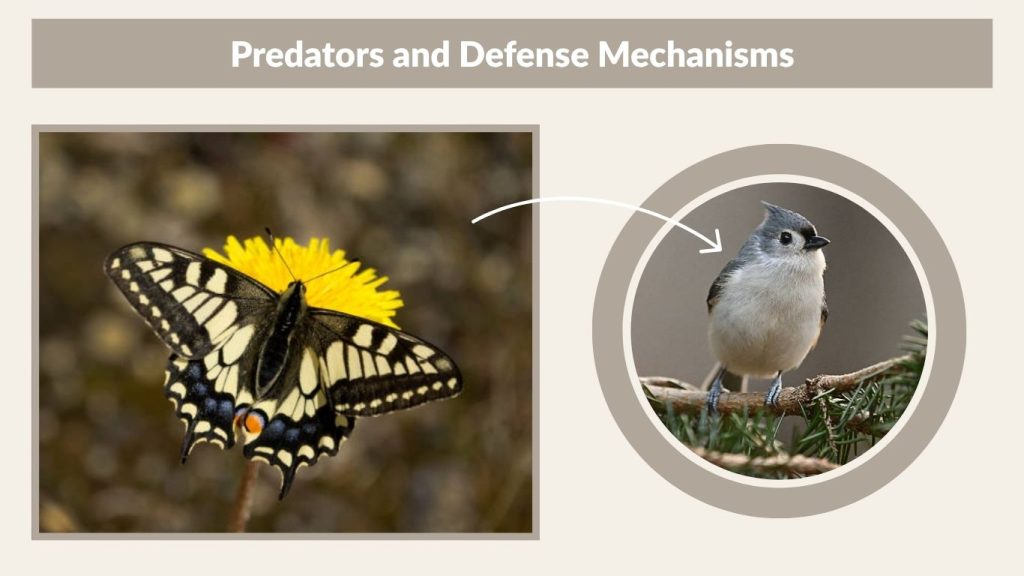
The Common Yellow Swallowtail faces natural threats from birds, spiders, and parasitic insects. To survive, both larvae and adults have evolved remarkable defense strategies that deter predators and increase survival chances. Understanding these mechanisms helps gardeners and observers protect the species.
Common Predators
- Birds that feed on butterflies and caterpillars
- Spiders and insect-eating predatory wasps
- Parasitic flies and wasps that target larvae
Defense Mechanisms
- Eye spots on larvae and hindwings: Mimic small snakes or dangerous animals
- Camouflage: Caterpillars blend with host plant stems and leaves
- Tailed wings: Adults’ hindwing tails divert predator attacks away from vital body parts
Conservation Status
While the Common Yellow Swallowtail is widespread and generally abundant, habitat loss and pesticide use can affect local populations. Conservation efforts are essential to maintain healthy populations and protect these vital pollinators.
Population Trends
- Stable in most regions, but local declines have been reported
- Sensitive to agricultural pesticides and urban development
Conservation Measures
- Planting pollinator-friendly gardens with host and nectar plants
- Avoiding pesticide use near natural butterfly habitats
- Supporting local conservation programs for butterflies and pollinators
Common Yellow Swallowtail Identification Tips
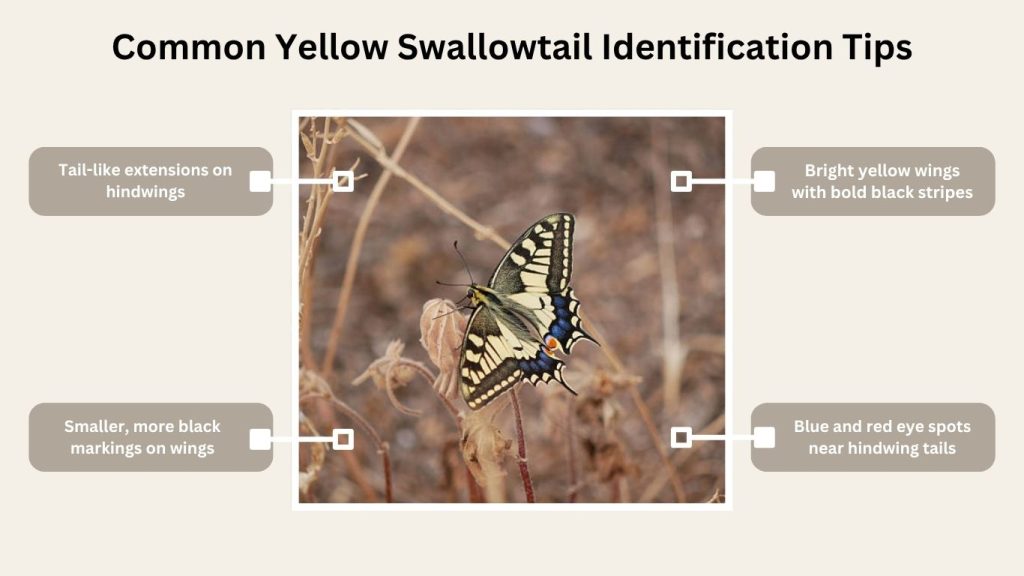
Proper identification ensures that enthusiasts can distinguish the Common Yellow Swallowtail from other swallowtail species and similar butterflies.
Key Identification Features
- Bright yellow wings with bold black stripes
- Blue and red eye spots near hindwing tails
- Tail-like extensions on hindwings
Differentiating Similar Species
- Eastern Black Swallowtail: Smaller, more black markings on wings
- Giant Swallowtail: Larger, with darker, more irregular patterns
- Observation of wing patterns, size, and habitat helps confirm identification
Gardening and Human Interaction
Gardeners can attract and support the Common Yellow Swallowtail by planting suitable host and nectar plants. Providing safe spaces without pesticides helps maintain both adult butterflies and their larvae.
Host Plants for Caterpillars
- Parsley (Petroselinum crispum)
- Dill (Anethum graveolens)
- Fennel (Foeniculum vulgare)
- Carrot (Daucus carota)
Nectar Plants for Adults
- Milkweed (Asclepias species)
- Clover (Trifolium species)
- Thistle (Cirsium species)
- Lantana (Lantana camara)
Garden Tips
- Plant clusters of flowers to attract adults
- Avoid chemical sprays to protect larvae
- Provide sunny, sheltered spots for butterflies to rest
Geographic and Seasonal Considerations
Understanding when and where the Common Yellow Swallowtail is most active aids in observation, research, and conservation efforts.
Seasonal Activity
- Spring and Summer: Peak activity for adults and egg-laying
- Fall: Populations decrease as adults die and some pupae overwinter
- Climate Influence: Warmer regions may see multiple generations per year
Geographic Distribution
- North America: Widely distributed from southern Canada to northern Mexico
- Europe and Asia: Found in temperate zones
- Habitat Preference: Open meadows, gardens, river valleys, and sunny clearings
FAQs
Can Common Yellow Swallowtails be raised at home?
Yes, enthusiasts can raise them using host plants like parsley, fennel, or dill. Caterpillars should be kept in a safe container, fed regularly, and released as adults once they emerge. Ensure no pesticides are used on the plants.
What are the main threats to Common Yellow Swallowtails?
Habitat loss, pesticides, and climate changes are primary threats. Predation by birds and parasitic insects also impacts survival, especially at the larval and pupal stages.
How can I attract more butterflies to my garden?
Plant a combination of host plants for larvae and nectar-rich flowers for adults. Provide sunny spots, shelter from wind, and avoid chemical sprays to encourage visits.
How many generations per year do they have?
In temperate regions, they typically produce one to two generations per year. Warmer climates may allow multiple generations, with adults appearing from spring through late summer.
Do they migrate like some other butterflies?
No, Common Yellow Swallowtails are mostly sedentary. They may disperse locally for feeding and mating but do not undertake long-distance migrations like monarchs.