
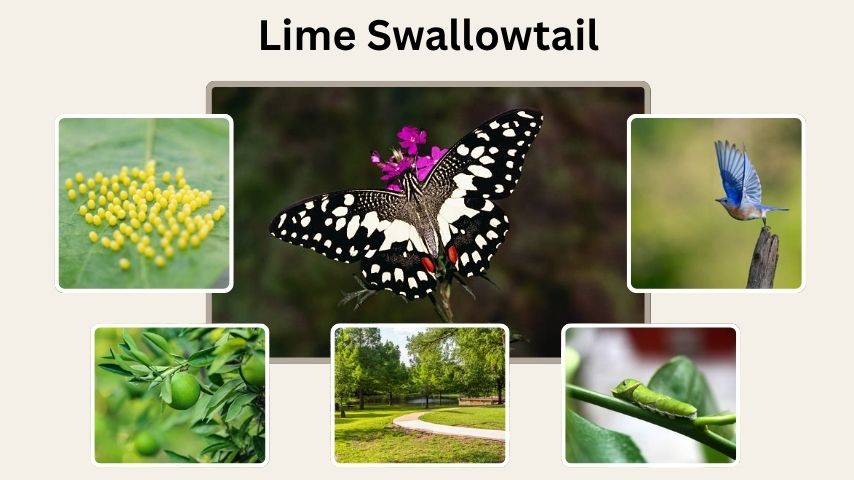
The Lime Swallowtail is a colorful butterfly species commonly found around citrus plants, gardens, and tropical environments. It is known for its fast flight, striking black-and-cream wing patterns, and fascinating life cycle. Many people search for this butterfly because its caterpillars often appear on lime, lemon, and orange trees. Despite being considered a pest in some orchards, the Lime Swallowtail also plays an important role in pollination and ecosystem balance. Learning about its eggs, caterpillar stages, chrysalis, and adult behavior helps nature lovers better understand this beautiful insect.
What Is the Lime Swallowtail?
The Lime Swallowtail is a medium-sized butterfly belonging to the swallowtail family. It is famous for its elegant wing shape and close connection to citrus plants. Adult butterflies are active during the daytime and are often seen feeding on flower nectar in gardens and orchards. Their caterpillars develop mainly on citrus leaves, making the species especially common in warm tropical and subtropical regions.
Scientific Name and Classification
- Scientific name: Papilio demoleus
- Family: Papilionidae
- Insect group: Swallowtail butterfly
- Related to other citrus-feeding swallowtails
- Common in tropical climates
Why It Is Called a Lime Swallowtail
The butterfly receives its name because the caterpillars frequently feed on lime and citrus plants. Lime trees, lemon trees, and orange plants are among the most common host plants for developing larvae. In many regions, gardeners notice the caterpillars on citrus leaves during warmer months when breeding activity increases.
Lime Swallowtail Identification
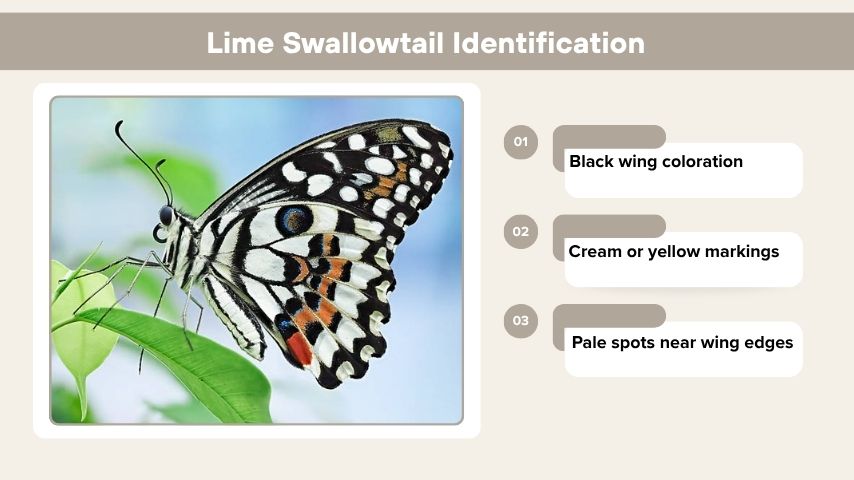
The Lime Swallowtail has bold wing patterns that make it easy to recognize. Adults usually display dark wings decorated with pale yellow or cream markings. Unlike some swallowtail species, this butterfly lacks long tail extensions on the hindwings. Its slender body and fast flight help it move quickly between flowers and host plants throughout the day.
Size and Wingspan
Adult Lime Swallowtails usually have a wingspan between 8 and 10 centimeters. Their bodies are slim, lightweight, and well adapted for agile flight. Strong wings allow them to travel quickly across gardens and orchards while searching for nectar and suitable plants for egg-laying.
Wing Colors and Patterns
- Black wing coloration
- Cream or yellow markings
- Pale spots near wing edges
- Distinct patterned hindwings
- Light-colored underside
Key Identification Features
- Fast and direct flight
- Slender butterfly body
- Long antennae
- Smooth wing edges
- Bold contrasting wing patterns
- Active daytime behavior
Lime Swallowtail Habitat and Distribution
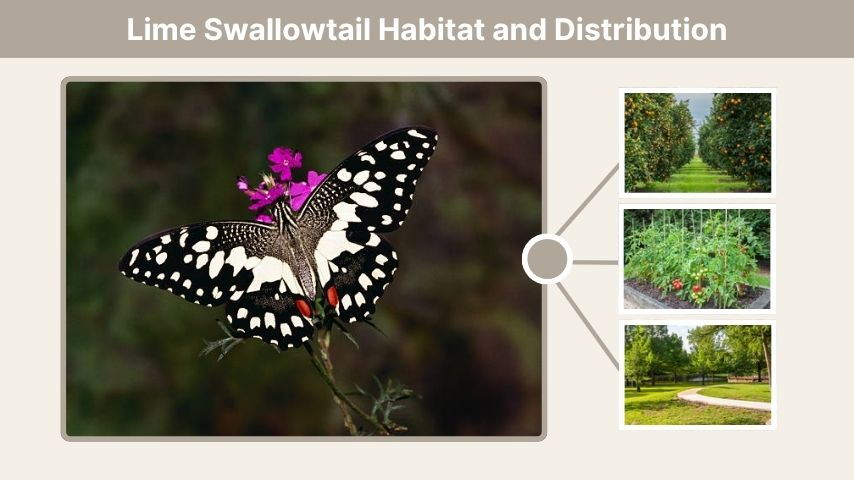
The Lime Swallowtail thrives in warm environments where citrus plants are abundant. It is commonly found in gardens, orchards, parks, farmland, and forest edges. Because the caterpillars depend heavily on citrus leaves, adult butterflies often remain close to areas with lime, lemon, and orange trees. Warm climates support year-round activity in many tropical regions.
Natural Habitat
- Citrus orchards
- Home gardens
- Tropical forests
- Parklands
- Forest edges
- Agricultural areas
Geographic Distribution
The Lime Swallowtail is widely distributed across Asia, Africa, Australia, and parts of the Pacific region. It adapts well to both rural and urban environments where citrus plants are available. In some areas, the butterfly has expanded its range because of widespread citrus cultivation and favorable warm-weather conditions.
Seasonal Activity
This butterfly remains most active during warm months when flowers bloom and citrus plants produce fresh leaves. Breeding activity often increases after rainfall because young host plant growth provides ideal food for caterpillars. Adults are commonly seen flying during sunny daytime hours while feeding or searching for mates.
Lime Swallowtail Life Cycle
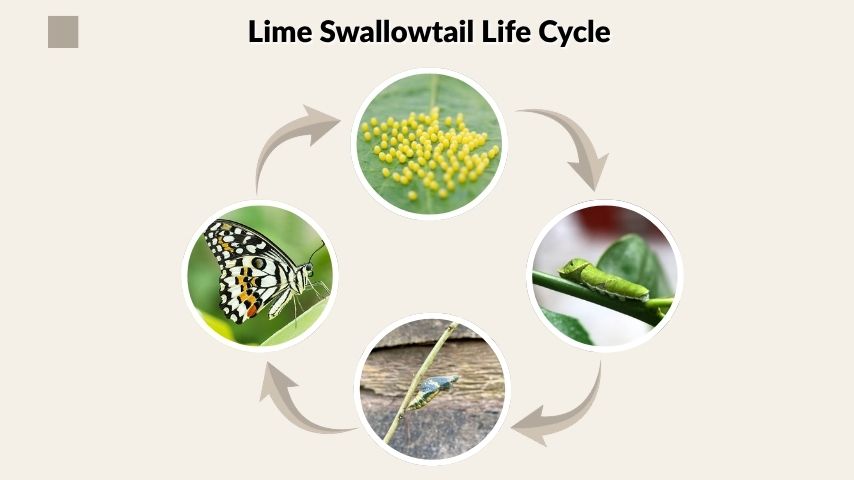
The life cycle of the Lime Swallowtail includes four main stages: egg, caterpillar, pupa, and adult butterfly. This complete metamorphosis allows the insect to transform dramatically during development. Each stage plays an important role in survival, growth, and reproduction. Warm temperatures and healthy citrus plants strongly influence successful development.
Egg Stage
- Eggs are small and round
- Usually laid on citrus leaves
- Pale yellow in color
- Females lay eggs individually
- Eggs hatch within several days
Caterpillar Stage
Young caterpillars first resemble bird droppings, which helps protect them from predators. As they grow, they become green with markings that blend into citrus leaves. Caterpillars feed heavily on leaves and pass through several molting stages before becoming fully developed larvae ready for pupation.
Pupa or Chrysalis Stage
The mature caterpillar attaches itself to a branch or stem before forming a chrysalis. During this stage, the insect remains motionless while major body changes occur inside. Over time, wings, antennae, and adult butterfly structures develop before the butterfly finally emerges.
Adult Butterfly Stage
After completing development inside the chrysalis, the adult butterfly emerges with soft folded wings. It rests briefly while pumping fluid into the wings to expand and strengthen them. Once dry, the butterfly begins flying in search of nectar, mates, and suitable citrus plants for reproduction. Adult Lime Swallowtails are active during the daytime and are commonly seen visiting flowers in sunny gardens and orchards.
Lime Swallowtail Caterpillar
The Lime Swallowtail caterpillar changes appearance several times as it grows. Young caterpillars closely resemble bird droppings, helping them avoid predators such as birds and lizards. Older caterpillars become bright green with patterns that blend into leaves. These larvae spend most of their time feeding on citrus plants and growing rapidly before entering the pupal stage.
What Does the Caterpillar Look Like?
- Early stages resemble bird droppings
- Mature caterpillars become green
- White or cream markings on the body
- Smooth body texture
- Short false eye spots near the head
Is the Caterpillar Poisonous?
The Lime Swallowtail caterpillar is not poisonous to humans. However, it has a defensive organ called an osmeterium that releases a strong odor when threatened. This scent helps scare away predators. Although harmless, the caterpillar should still be handled gently to avoid stress or injury.
Caterpillar Diet
The caterpillars feed mainly on citrus leaves and tender shoots. Common host plants include lime, lemon, orange, and other citrus species. Heavy feeding can damage young plants, especially when many caterpillars are present on a single tree. Despite this, the species remains an important part of local ecosystems and food chains.
What Does the Lime Swallowtail Eat?
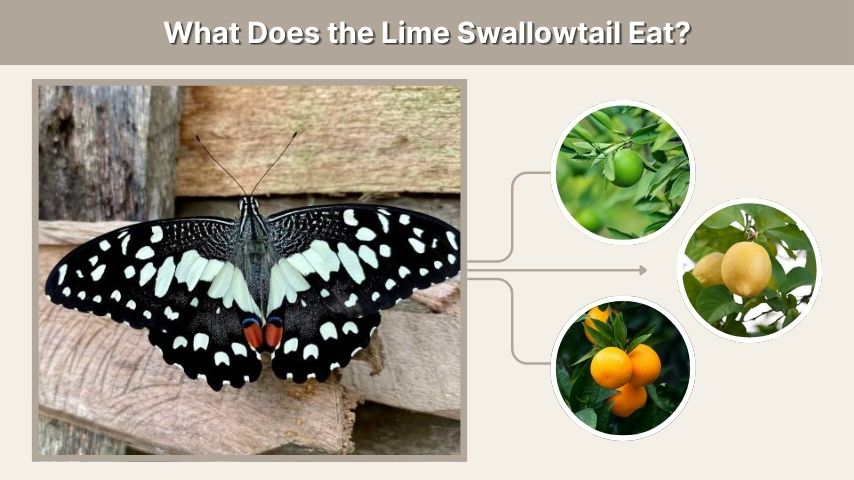
The diet of the Lime Swallowtail changes throughout its life cycle. Caterpillars mainly consume citrus leaves, while adult butterflies feed on flower nectar and mineral-rich moisture sources. Their feeding behavior supports pollination and helps maintain healthy garden ecosystems in many tropical and subtropical regions.
Caterpillar Food Sources
- Lime leaves
- Lemon leaves
- Orange tree foliage
- Citrus shoots
- Young citrus plant leaves
Adult Butterfly Diet
Adult Lime Swallowtails feed mostly on flower nectar collected from blooming plants. They may also drink fruit juices and absorb minerals from damp soil or puddles. These nutrients provide energy needed for flight, mating, and egg production during the butterfly’s active adult stage.
Feeding Behavior
Lime Swallowtails are active daytime feeders that move quickly between flowers and host plants. Their long feeding tube, called a proboscis, allows them to drink nectar efficiently from deep flowers. Frequent feeding supports their high energy needs because the butterflies are fast and constantly active while flying.
Lime Swallowtail Behavior
The Lime Swallowtail is an energetic butterfly species known for its rapid flight and active daytime movement. Adults spend much of their time searching for flowers, mates, and citrus plants suitable for laying eggs. Caterpillars rely mainly on camouflage and defensive scents to avoid predators while feeding openly on leaves.
Flight and Movement
- Fast and direct flight patterns
- Frequent movement between flowers
- Hovering near nectar plants
- Active during sunny weather
- Long-distance searching behavior
Mating Behavior
Male butterflies often patrol territories while searching for females. After mating, females carefully select healthy citrus plants for laying eggs. Eggs are usually placed individually on leaves to reduce competition between developing caterpillars and improve survival chances.
Defensive Behavior
Young caterpillars use bird-dropping mimicry to avoid detection from predators. Older caterpillars depend on camouflage and their strong-smelling osmeterium defense organ. Adult butterflies rely mainly on quick flight and agile movement to escape birds, spiders, and other threats in their environment.
Lime Swallowtail Predators and Threats
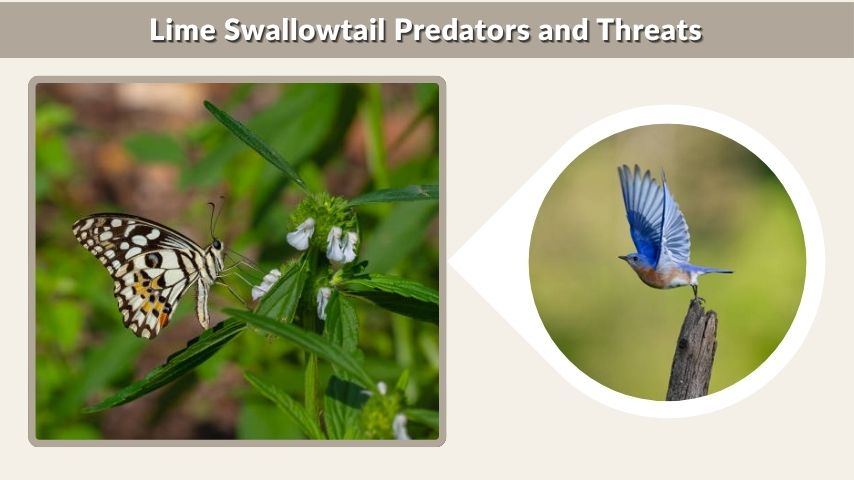
Like many butterflies, the Lime Swallowtail faces threats from both predators and environmental changes. Birds, spiders, lizards, and predatory insects commonly feed on eggs, caterpillars, and adults. Human activities such as pesticide use and habitat destruction can also reduce butterfly populations in some regions.
Natural Predators
- Birds
- Spiders
- Lizards
- Predatory insects
- Praying mantises
Environmental Threats
Pesticides sprayed on citrus plants can harm caterpillars and adult butterflies. Habitat destruction and climate changes may also reduce food sources and breeding locations. Protecting flowering plants and reducing harmful chemical use can help support healthier butterfly populations in gardens and natural habitats.
FAQs
What is the life cycle of the Lime Swallowtail?
The Lime Swallowtail goes through four stages: egg, caterpillar, chrysalis, and adult butterfly. Eggs hatch into caterpillars that feed on citrus leaves, then form a chrysalis before emerging as fully developed butterflies after metamorphosis is complete.
Is the Lime Swallowtail caterpillar poisonous?
No, the Lime Swallowtail caterpillar is not poisonous to humans. However, it has a defensive organ called an osmeterium that releases a strong smell when threatened, helping scare away predators such as birds and insects.
What plants do Lime Swallowtail caterpillars eat?
Lime Swallowtail caterpillars mainly feed on citrus plants, including lime, lemon, orange, and other related species. They prefer fresh leaves and tender shoots, especially on young citrus trees growing in gardens and orchards.
What does a Lime Swallowtail chrysalis look like?
The chrysalis is usually green or brown and attaches to branches or stems using silk. Its color helps it blend into the environment, protecting the developing butterfly from predators during the pupal stage.
How can you tell male and female Lime Swallowtails apart?
Male and female Lime Swallowtails look very similar, but females are often slightly larger with broader wings. Females also spend more time searching for suitable citrus plants where they can lay eggs after mating.