
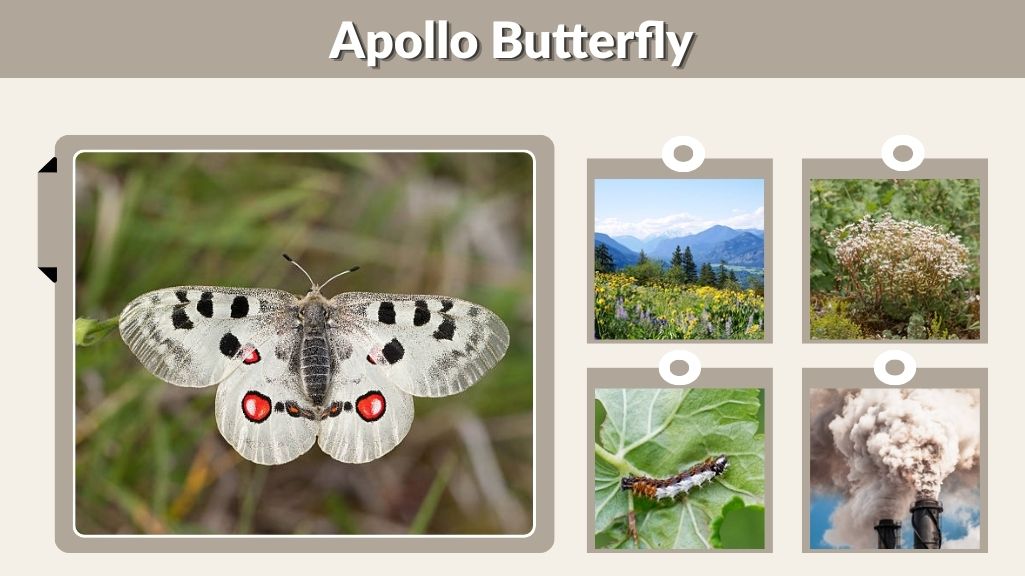
The Apollo Butterfly (Parnassius apollo) is one of Europe’s most striking and recognizable butterflies. Known for its white wings decorated with black markings and distinctive red eye spots, this species inhabits mountain meadows and rocky slopes across parts of Europe and Asia. The Apollo Butterfly has become a symbol of biodiversity and conservation because many populations have declined in recent decades. Understanding its habitat, life cycle, and ecological importance helps highlight the need to protect this remarkable butterfly and its fragile mountain environments.
What Is an Apollo Butterfly?
The Apollo Butterfly is a large mountain butterfly belonging to the swallowtail family. It is admired for its beautiful wing patterns and its ability to survive in alpine environments. Although once widespread across many regions, habitat loss and environmental changes have caused significant population declines in several countries.
Species Overview
Apollo Butterflies are medium-to-large butterflies that prefer sunny mountain landscapes. Adults are active during summer and can often be seen gliding above meadows rich in wildflowers. Their distinctive appearance makes them one of the most recognizable butterfly species in Europe.
Apollo Butterfly Scientific Name
The scientific name of the Apollo Butterfly is Parnassius apollo. It belongs to the family Papilionidae, which includes swallowtails and other large butterflies. This classification reflects its evolutionary relationship with some of the world’s most spectacular butterfly species.
Apollo Butterfly Family
The Apollo Butterfly belongs to the Papilionidae family. Unlike many tropical swallowtails, Apollo Butterflies have adapted to cooler mountain climates. Their specialized habitat requirements make them particularly sensitive to environmental disturbances and habitat changes.
How to Identify an Apollo Butterfly
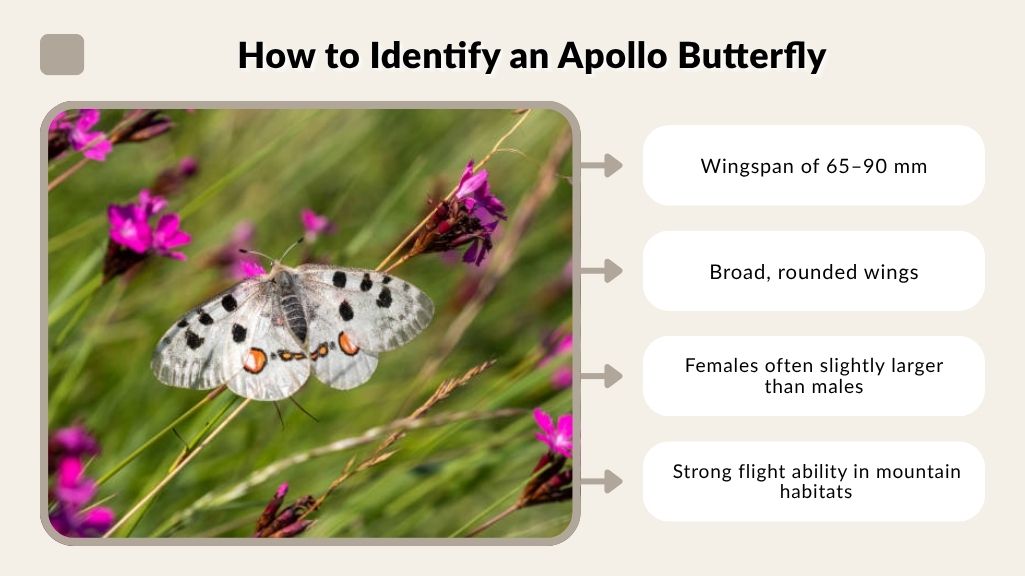
The Apollo Butterfly possesses several unique characteristics that make identification relatively easy. Its striking coloration, large wings, and distinctive red markings help distinguish it from most other butterfly species found within its range.
Physical Appearance
Adult Apollo Butterflies have creamy-white wings with black spots and transparent sections. The hindwings feature bright red eye spots outlined in black, which may help deter predators. Their bodies are covered with fine hairs that provide protection in cooler mountain environments.
Apollo Butterfly Size
Apollo Butterflies are among the larger butterfly species found in Europe.
Typical size characteristics include:
- Wingspan of 65–90 mm
- Broad, rounded wings
- Females often slightly larger than males
- Strong flight ability in mountain habitats
Their relatively large size allows them to travel efficiently between flowering plants in open alpine landscapes.
Distinctive Features
Several traits help separate Apollo Butterflies from other species.
Key identifying features include:
- White wing coloration
- Black wing markings
- Red eye spots on hindwings
- Hairy body adapted to cool climates
- Slow, gliding flight pattern
These features make the species easy to recognize in the field.
Where Do Apollo Butterflies Live?
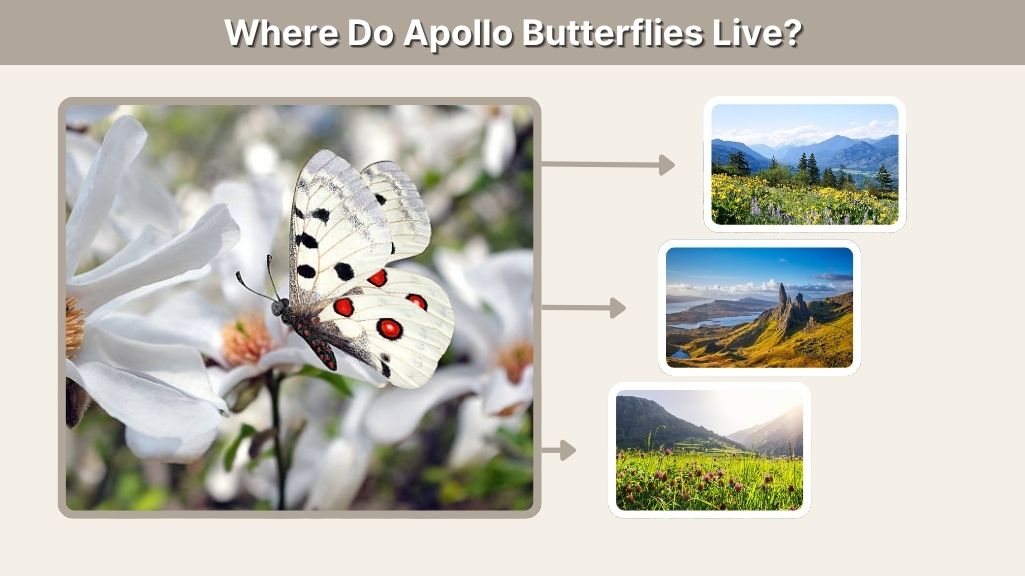
Apollo Butterflies occupy highly specialized habitats that provide suitable host plants, warm sunlight, and relatively low levels of disturbance. Their distribution is strongly linked to mountainous regions where environmental conditions support their unique life cycle requirements.
Apollo Butterfly Habitat
The species is most commonly found in mountain meadows, rocky slopes, alpine grasslands, and sunny hillsides. These habitats provide nectar-rich flowers for adults and appropriate host plants for developing caterpillars.
Geographic Distribution
Apollo Butterflies occur across portions of Europe and Asia. Populations can be found in the Alps, Pyrenees, Carpathian Mountains, Scandinavia, and several mountainous areas of Central Asia. Distribution varies depending on local habitat quality and climate conditions.
Habitat Requirements
Healthy Apollo Butterfly populations depend on specific environmental conditions. Suitable habitats must provide host plants, abundant nectar sources, and open sunny areas. Because these requirements are highly specialized, habitat loss can have significant impacts on local populations.
Apollo Butterfly Life Cycle
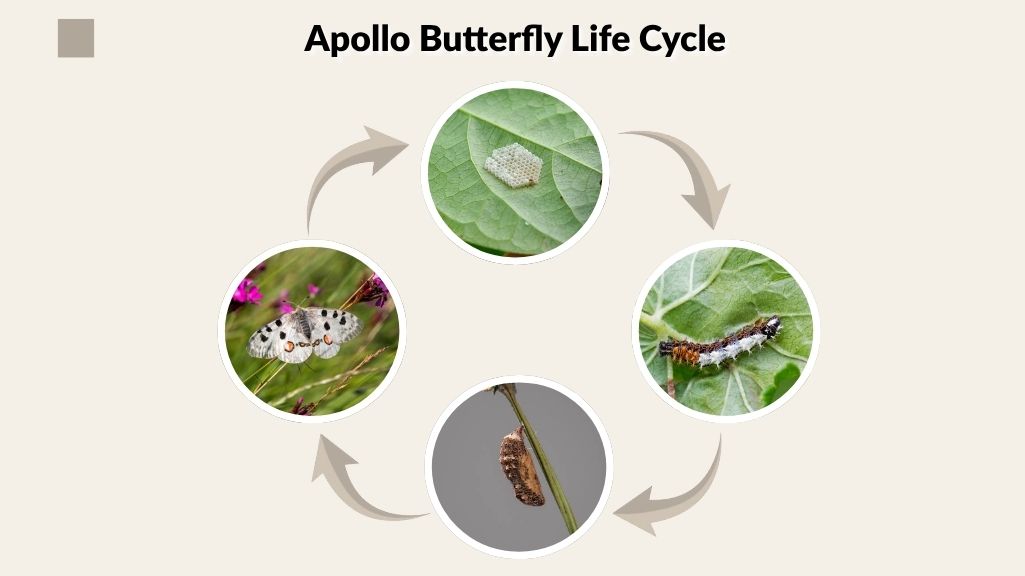
The Apollo Butterfly undergoes complete metamorphosis, progressing through four distinct stages before reaching adulthood. Each stage depends on environmental conditions and the availability of appropriate food sources.
Life Cycle Stages
The Apollo Butterfly develops through the following stages:
- Egg
- Caterpillar
- Pupa
- Adult butterfly
Each stage serves a unique role in growth, survival, and reproduction.
Apollo Butterfly Caterpillar
Apollo Butterfly caterpillars are dark-colored with small orange markings. They emerge from eggs in spring and begin feeding immediately on host plants. Their development is closely tied to the availability of specific plant species found in mountain habitats.
Adult Development
After completing the pupal stage, adult butterflies emerge during summer. Newly emerged adults expand and dry their wings before taking flight. Their primary goals during adulthood are feeding, mating, and laying eggs for the next generation.
Apollo Butterfly Food Sources
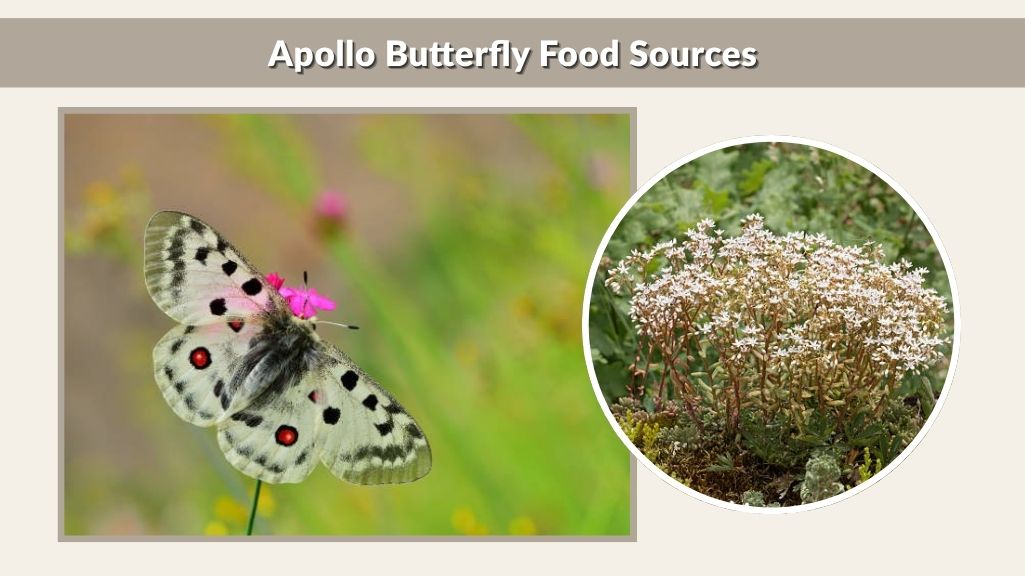
Food availability is one of the most important factors affecting Apollo Butterfly survival. Both caterpillars and adults depend on specific food sources throughout their life cycle. These dietary requirements influence habitat selection and overall population health.
Caterpillar Diet
Apollo Butterfly caterpillars feed mainly on succulent plants belonging to the stonecrop group.
Primary food sources include:
- White stonecrop (Sedum album)
- Other Sedum species
- Houseleeks (Sempervivum)
- Related succulent plants
The availability of these host plants directly influences breeding success and caterpillar survival.
Adult Butterfly Diet
Adult Apollo Butterflies feed primarily on nectar collected from flowering plants. Mountain wildflowers provide the energy needed for flight, reproduction, and daily activities. Nectar-rich meadows are therefore essential components of suitable habitat.
Feeding Habits
Adult Apollo Butterflies spend much of their time visiting flowers in search of nectar. Their long proboscis allows them to reach nectar hidden deep within blossoms. Feeding activity is most common during warm, sunny conditions when butterflies are highly active. Nectar provides the energy needed for flight, mating, and egg production.
Role in Pollination
As Apollo Butterflies move between flowers, they contribute to pollination. Although they are not among the most important pollinators, their visits help transfer pollen between plants and support mountain ecosystem biodiversity.
Apollo Butterfly Lifespan
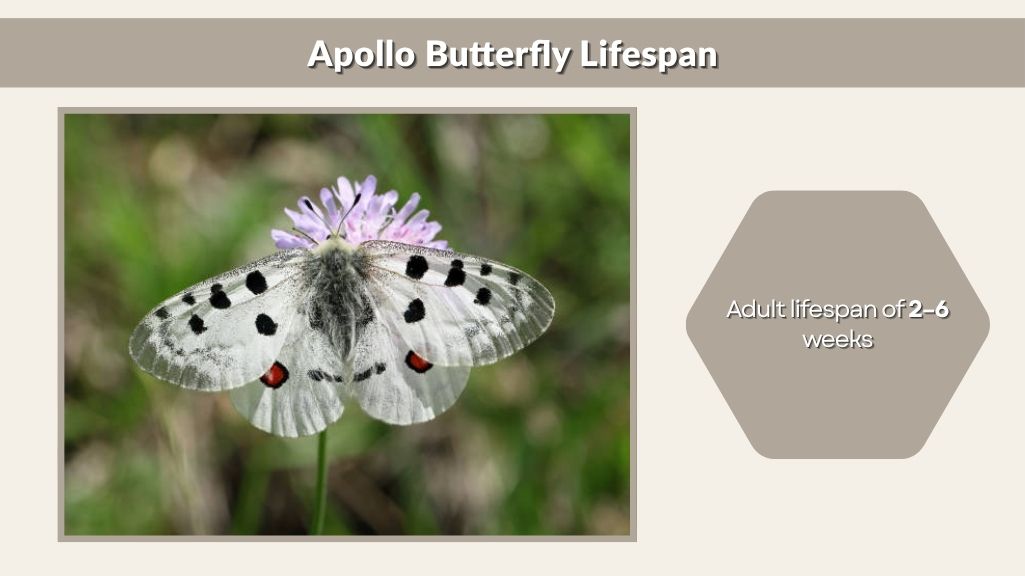
The lifespan of an Apollo Butterfly varies depending on environmental conditions, food availability, and predation pressure. While adults live only a relatively short time, the complete life cycle extends over a much longer period.
Average Lifespan
Most Apollo Butterflies spend the majority of their lives developing through immature stages.
General lifespan estimates include:
- Egg stage lasting several months
- Caterpillar stage during spring
- Pupal stage lasting several weeks
- Adult lifespan of 2–6 weeks
The adult stage is brief compared to the rest of the life cycle.
Factors Affecting Survival
Several factors influence survival rates. Weather conditions, habitat quality, food availability, predators, and human activities all affect population health. Small habitat changes can significantly impact local populations because of the butterfly’s specialized requirements.
Seasonal Behavior
Apollo Butterflies are typically active during summer. Adults emerge, reproduce, and lay eggs before the next generation begins development. Eggs often overwinter, allowing the species to survive harsh mountain winters.
Why Is the Apollo Butterfly Endangered?
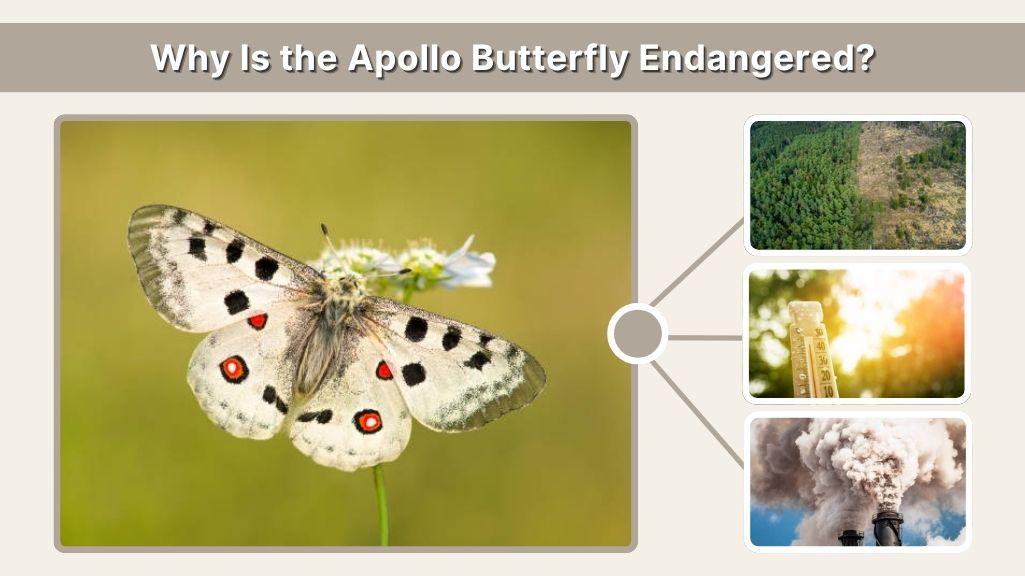
The Apollo Butterfly has experienced population declines across many parts of its historical range. Conservation organizations consider it a species of concern because habitat loss and environmental changes continue to threaten many populations.
Conservation Status
In several countries, Apollo Butterfly populations are protected by law. Regional conservation programs focus on habitat preservation and monitoring efforts to prevent further declines.
Major Threats
Several factors have contributed to population reductions.
Important threats include:
- Habitat loss
- Climate change
- Urban development
- Agricultural intensification
- Pollution
- Human disturbance
These pressures can reduce suitable breeding and feeding habitats.
Conservation Efforts
Conservation organizations and governments have implemented programs designed to protect Apollo Butterfly populations. Habitat restoration, protected areas, and public education initiatives are helping improve conditions in some regions.
Apollo Butterfly Meaning and Symbolism
The Apollo Butterfly has become a symbol of natural beauty, environmental protection, and biodiversity conservation. Its striking appearance and vulnerability have made it an important ambassador for wildlife conservation efforts.
Cultural Significance
The butterfly’s name comes from Apollo, the Greek god associated with light, beauty, and knowledge. This connection reflects the species’ elegance and its association with sunny mountain landscapes.
Symbolic Meaning
Many people associate the Apollo Butterfly with transformation, resilience, freedom, and the delicate balance of nature. Its life cycle serves as a reminder of the importance of adaptation and survival.
Modern Importance
Today, the Apollo Butterfly is frequently used as a symbol for conservation campaigns. Protecting this species often benefits numerous other plants and animals that share the same mountain habitats.
Interesting Facts About the Apollo Butterfly
The Apollo Butterfly is one of the most famous mountain butterflies in Europe. Its bright red eye spots help deter predators by creating the illusion of larger eyes. Unlike many butterflies, it thrives in high-altitude environments where conditions can be challenging. The species is named after Apollo from Greek mythology and is protected in many countries due to conservation concerns. Its presence often indicates healthy mountain ecosystems with rich biodiversity.
Amazing Apollo Butterfly Facts
Some fascinating facts about the Apollo Butterfly include:
- Named after the Greek god Apollo
- Belongs to the swallowtail family
- Recognized by its red eye spots
- Lives primarily in mountain habitats
- Protected in numerous European countries
- Depends on specific host plants
These characteristics make it one of the most unique butterflies in the world.
FAQs
Where do Apollo Butterflies live?
Apollo Butterflies live mainly in mountain meadows, rocky slopes, alpine grasslands, and sunny high-altitude habitats across Europe and parts of Asia.
What do Apollo Butterfly caterpillars eat?
Their caterpillars primarily feed on stonecrop plants such as Sedum album and related succulent species.
What is the life cycle of an Apollo Butterfly?
The life cycle consists of four stages: egg, caterpillar, pupa, and adult butterfly.
Why is the Apollo Butterfly endangered?
Habitat loss, climate change, pollution, and human disturbance have contributed to population declines in many regions.
How large is an Apollo Butterfly?
Adults typically have a wingspan ranging from 65 to 90 millimeters, making them one of Europe’s larger butterfly species.