
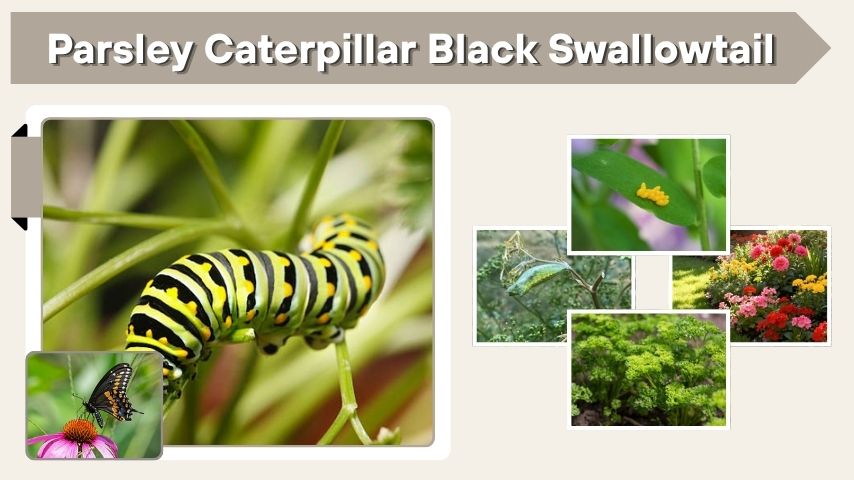
A parsley caterpillar on your herb plant may look like a garden pest at first, but it is often the young stage of the black swallowtail butterfly. These colorful caterpillars commonly feed on parsley, dill, fennel, and other carrot-family plants. While they may chew leaves, they usually become welcome visitors for gardeners who want to support butterflies and pollinators.
What Is a Parsley Caterpillar?
A parsley caterpillar is the common name many gardeners use for the caterpillar of the black swallowtail butterfly. It is often found feeding on parsley plants, which is why people notice it in herb gardens, raised beds, containers, and backyard vegetable patches.
This caterpillar is not a random pest. It is part of the butterfly life cycle. The adult black swallowtail lays eggs on specific host plants, and once the eggs hatch, the caterpillars begin feeding on those plants to grow.
Is It Really a Black Swallowtail Caterpillar?
In many cases, yes. A caterpillar found on parsley is often an eastern black swallowtail caterpillar. It may also be called a parsley worm, celery worm, or carrot caterpillar because it feeds on plants in the carrot family.
These caterpillars are especially common on parsley, dill, fennel, carrot tops, celery, and Queen Anne’s lace. If you find a green caterpillar with black bands and yellow or orange spots on parsley, there is a good chance it is a black swallowtail caterpillar.
Why Is It Called a Parsley Caterpillar?
The name “parsley caterpillar” comes from one of its favorite host plants. Parsley provides the food the caterpillar needs before it transforms into a chrysalis and later becomes a butterfly.
Gardeners often notice these caterpillars because parsley is grown close to homes, patios, and kitchen gardens. The caterpillar may blend into the leaves at first, but as it grows larger, its bold colors become easier to see.
What Does a Black Swallowtail Caterpillar Look Like?
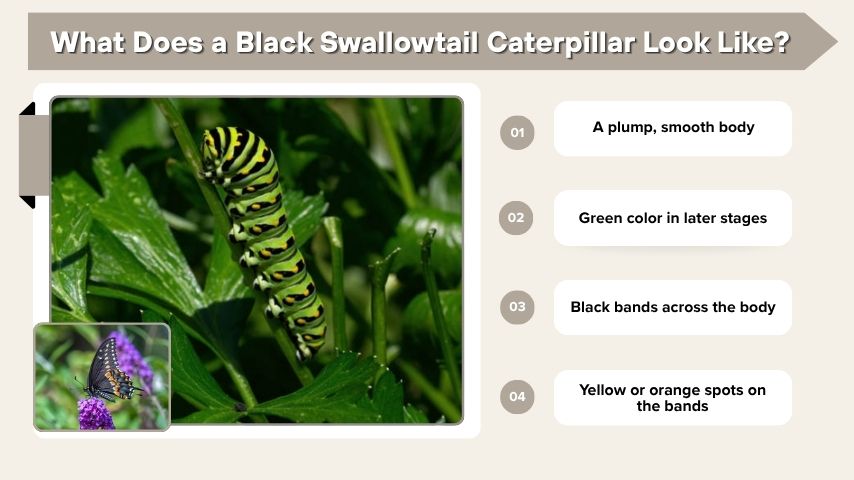
A black swallowtail caterpillar changes appearance as it grows. Young caterpillars look very different from older ones. This can confuse gardeners who are trying to identify what is eating their parsley.
Early-stage caterpillars are usually dark, sometimes black or brownish, with pale markings. They may look like small bird droppings, which helps protect them from predators. As they mature, they become brighter and more recognizable.
Key Identification Signs
Older black swallowtail caterpillars are easier to identify because they have a distinctive pattern. Look for these signs:
- A plump, smooth body
- Green color in later stages
- Black bands across the body
- Yellow or orange spots on the bands
- Short, rounded body segments
- Feeding on parsley, dill, fennel, or carrot-family plants
- An orange defensive organ that appears when disturbed
The orange organ is called an osmeterium. It may look like small horns coming out from behind the head. The caterpillar uses it when threatened.
Is the Caterpillar Poisonous or Dangerous?
Black swallowtail caterpillars are not dangerous to people. They do not sting, bite, or harm humans. If disturbed, they may release a strong odor from the osmeterium to scare away predators.
It is still best to handle them gently or avoid handling them at all. Their bodies are soft, and rough handling can injure them. If you need to move one, move the leaf it is resting on instead of picking up the caterpillar directly.
Why Black Swallowtail Caterpillars Eat Parsley
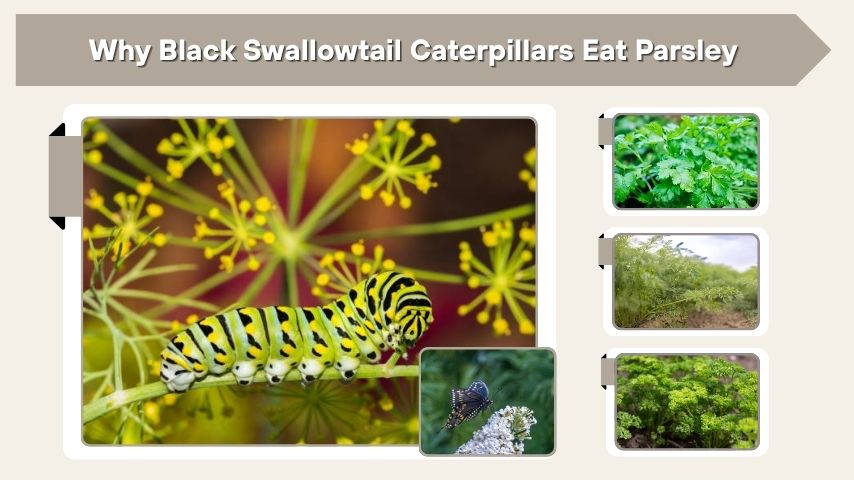
Black swallowtail caterpillars eat parsley because it is a host plant. A host plant is not just a plant the caterpillar likes; it is a plant the caterpillar needs to survive.
Adult butterflies search for these plants before laying eggs. When the eggs hatch, the tiny caterpillars already have the right food available. Without suitable host plants, the caterpillars cannot complete their life cycle.
Common Host Plants
Black swallowtail caterpillars feed on several plants, especially members of the carrot family. Common host plants include:
- Parsley
- Curly parsley
- Dill
- Fennel
- Carrot tops
- Celery
- Queen Anne’s lace
- Rue
If you want to support black swallowtails, planting more than one host plant is helpful. Dill and fennel are especially popular with these caterpillars.
Will They Kill My Parsley Plant?
A few caterpillars usually will not kill a healthy parsley plant. They may chew many leaves, but mature plants often recover. However, small parsley seedlings or container plants may be damaged more heavily if several caterpillars are feeding at once.
If you use parsley for cooking, plant extra. One plant can be for your kitchen, and another can be for the caterpillars. This simple approach lets you enjoy herbs while supporting butterflies.
Should You Remove Caterpillars from Parsley?
Whether you should remove black swallowtail caterpillars from parsley depends on your goal. If you want a perfect herb plant, the chewing may bother you. If you enjoy butterflies, leaving the caterpillars alone is often the best choice.
These caterpillars become black swallowtail butterflies, which are attractive pollinators. Many gardeners are happy to share a little parsley in exchange for more butterflies in the yard.
When to Leave Them Alone
Leave the caterpillars alone if the parsley plant is healthy and the damage is not severe. A few chewed stems or missing leaves are normal and usually not a major problem.
You should also leave them if they are large and close to forming a chrysalis. At that point, they have already done most of their feeding and will soon stop eating.
When to Move Them
You may want to move them if the plant is too small, if there are too many caterpillars, or if the parsley is almost completely eaten. Moving them is better than killing them.
Place them on another suitable host plant such as dill, fennel, carrot tops, or extra parsley. Do not move them to random garden plants because they may not be able to eat those leaves.
How to Move Them Safely
Move caterpillars carefully so they are not injured. A simple method is to cut or pinch off the leaf or stem they are sitting on, then place that leaf onto another host plant.
Avoid squeezing the caterpillar’s body. Do not place it on pesticide-treated plants. After moving it, check later to make sure it has started feeding again.
Black Swallowtail Caterpillar Life Cycle
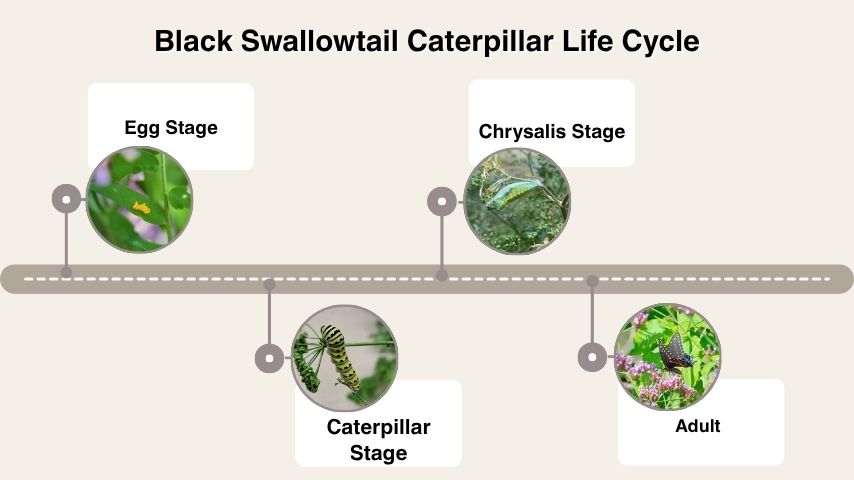
The black swallowtail butterfly goes through complete metamorphosis. This means it changes from egg to caterpillar, then chrysalis, and finally adult butterfly.
Each stage has a different purpose. The egg begins the life cycle, the caterpillar eats and grows, the chrysalis transforms, and the adult butterfly reproduces and visits flowers for nectar.
Egg Stage
The adult female black swallowtail lays tiny eggs on host plants such as parsley, dill, fennel, or Queen Anne’s lace. The eggs are usually small, round, and pale yellow or cream-colored.
They are often laid one at a time rather than in large clusters. This gives each caterpillar a better chance of finding enough food after hatching.
Caterpillar Stage
After hatching, the caterpillar begins eating leaves. It grows through several stages called instars. Each time it grows too large for its skin, it molts.
This stage is when gardeners notice the most leaf damage. The caterpillar must eat enough to store energy for the next stage of life.
Chrysalis Stage
When the caterpillar is fully grown, it stops eating and looks for a safe place to form a chrysalis. It may leave the parsley plant and crawl to a nearby stem, fence, pot, wall, branch, or garden structure.
The chrysalis may be green or brown, depending on its surroundings. Inside, the caterpillar transforms into an adult butterfly.
Adult Butterfly Stage
The adult black swallowtail emerges from the chrysalis with folded wings. After the wings expand and dry, the butterfly can fly away. Adults feed on flower nectar and search for mates.
Females later return to host plants to lay eggs, beginning the cycle again.
Black Swallowtail Chrysalis on Parsley
Sometimes a black swallowtail caterpillar forms its chrysalis on parsley, but it often moves away first. This wandering behavior is normal. The caterpillar is looking for a safe, stable place where it can attach securely.
A chrysalis may look like a small, angular case attached with silk. It may seem inactive, but important changes are happening inside.
Should You Move a Chrysalis?
It is best not to move a chrysalis unless it is in danger. If it is attached to a safe place, leave it alone. Moving it can damage the developing butterfly.
If the chrysalis is on a plant that must be cut or moved, handle it very carefully. Try to keep it in the same position and protect it from direct sun, heavy rain, ants, and other threats.
Parsley Caterpillar vs Other Garden Caterpillars
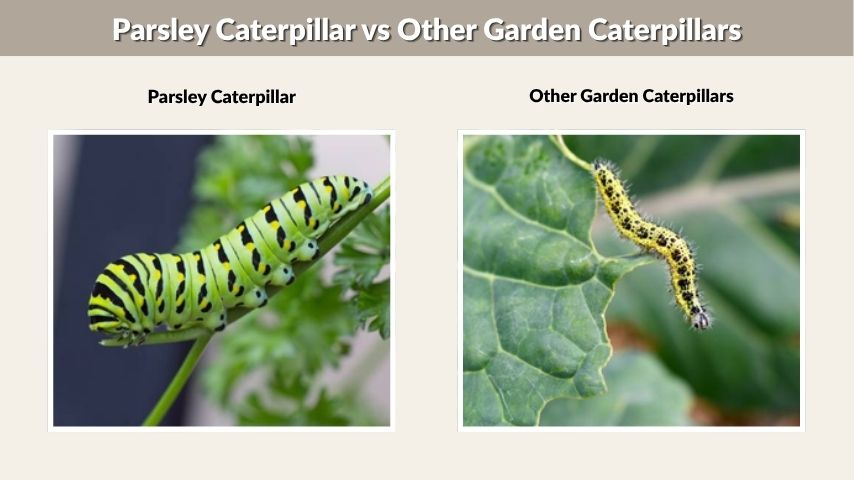
Not every caterpillar in the garden is a black swallowtail. Some caterpillars become moths, while others may cause more serious damage to vegetables or ornamentals. Identification helps you decide what to do.
| Feature | Black Swallowtail Caterpillar | Common Pest Caterpillar |
| Common plants | Parsley, dill, fennel, carrot tops | Many vegetables or ornamentals |
| Appearance | Green with black bands and yellow/orange spots | Varies widely by species |
| Benefit | Becomes a pollinating butterfly | May become a moth or pest insect |
| Damage level | Usually moderate on herbs | Can be heavy on crops |
| Best action | Leave alone or relocate | Identify before treating |
If you are unsure, take a clear photo before removing the caterpillar. Many beneficial caterpillars are mistaken for pests.
How to Protect Parsley Caterpillars in the Garden
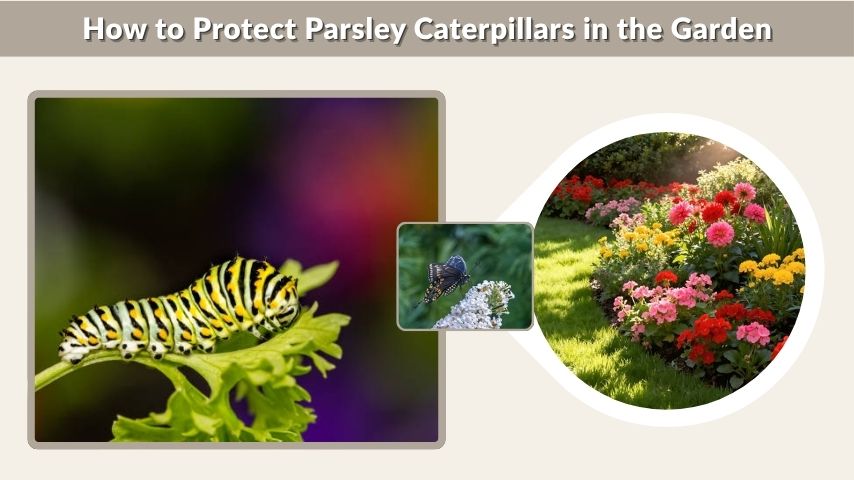
If you want more black swallowtail butterflies, your garden can become a safe place for them. The key is to provide host plants, avoid harmful chemicals, and allow some natural feeding.
A butterfly-friendly garden does not have to be messy. It simply needs the right plants and a little tolerance for caterpillar chewing.
Avoid Pesticides
Pesticides can kill black swallowtail caterpillars, even when the product is meant for other insects. Sprays used on parsley, dill, or fennel may remain on leaves and harm caterpillars that feed later.
If you want butterflies, avoid treating host plants with insecticides. Use hand removal for unwanted pests and keep butterfly host plants chemical-free.
Plant Extra Host Plants
Planting extra herbs is one of the easiest ways to protect both your garden and the caterpillars. Grow more parsley than you need, and add dill or fennel nearby.
This gives female butterflies more places to lay eggs and gives caterpillars enough food as they grow.
Provide Nectar Flowers
Adult black swallowtail butterflies need nectar. Add flowering plants near your herb garden to support the adult stage.
Good nectar plants include zinnias, coneflowers, lantana, milkweed, verbena, bee balm, and native wildflowers. A mix of bloom times helps provide nectar through the season.
Common Mistakes Gardeners Make
Many gardeners accidentally harm black swallowtail caterpillars because they do not realize what they are. Learning a few common mistakes can help you protect them.
Spraying Too Quickly
Some people see chewed parsley and spray the plant immediately. This can kill beneficial butterfly caterpillars. Always identify the caterpillar first before deciding what action to take.
Moving Them to the Wrong Plant
Black swallowtail caterpillars cannot eat just any leaf. They need specific host plants. Moving one to basil, lettuce, tomato, or flowers will not help it survive.
Always move it to parsley, dill, fennel, carrot tops, celery, Queen Anne’s lace, or another known host plant.
Removing the Chrysalis
A chrysalis may look dead, dry, or strange, but it is part of the normal butterfly life cycle. Unless it is clearly damaged or in danger, leave it alone and allow the butterfly to emerge naturally.
FAQs
Are parsley caterpillars black swallowtails?
Yes, parsley caterpillars are often black swallowtail caterpillars. They commonly feed on parsley, dill, fennel, carrot tops, celery, and Queen Anne’s lace. Older caterpillars are usually green with black bands and yellow or orange spots.
Will black swallowtail caterpillars kill my parsley?
A few caterpillars usually will not kill a healthy parsley plant, but they can chew many leaves. Small plants may suffer more damage. Planting extra parsley is the best way to support caterpillars while keeping some for kitchen use.
Should I remove black swallowtail caterpillars from parsley?
You do not need to remove them unless the plant is small or heavily damaged. Many gardeners leave them because they become black swallowtail butterflies. If needed, move them gently to another safe host plant.
What else do black swallowtail caterpillars eat?
Black swallowtail caterpillars eat parsley, dill, fennel, carrot tops, celery, Queen Anne’s lace, and rue. These are host plants that provide the right food. They should not be moved to unrelated plants.
Where do black swallowtail caterpillars form a chrysalis?
They may form a chrysalis on parsley, but they often wander to a nearby stem, wall, fence, pot, or branch. The chrysalis may be green or brown and is attached with silk. It should be left undisturbed when possible.