
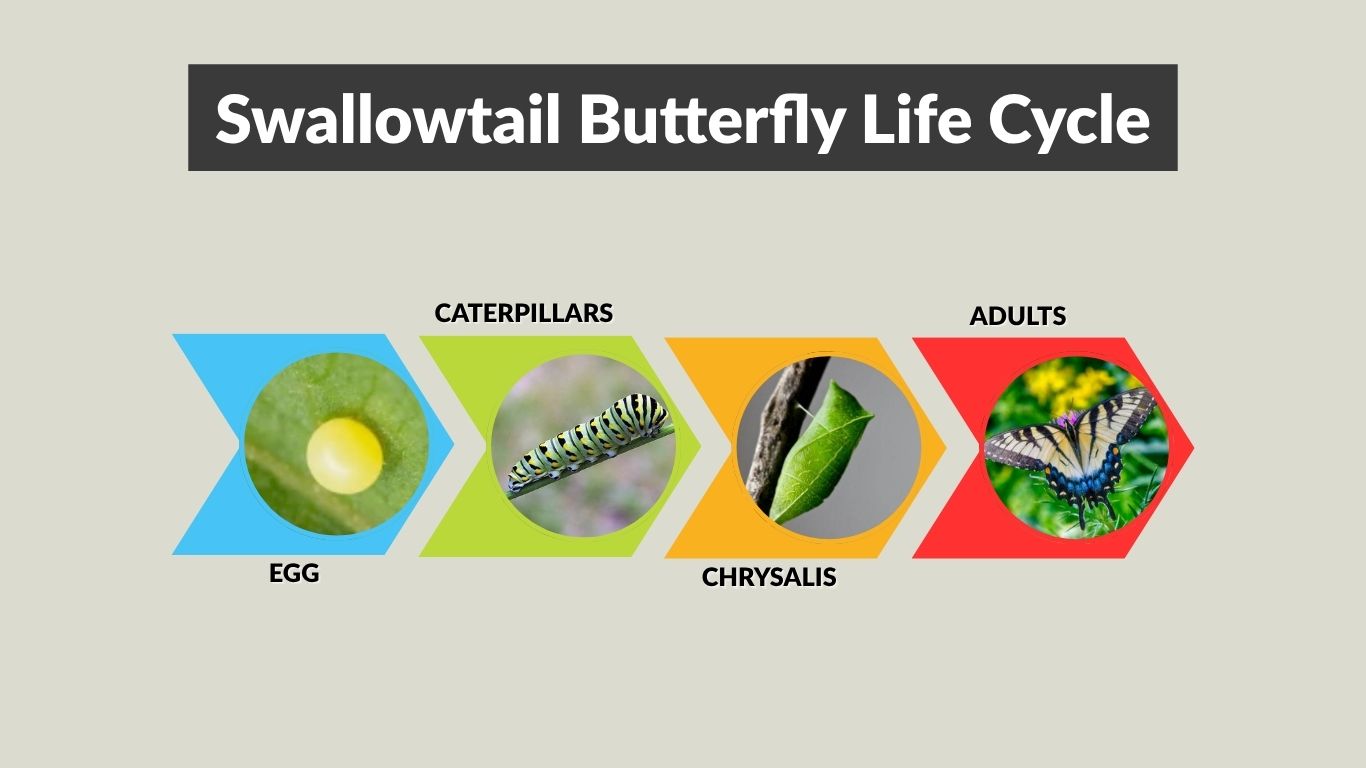
The swallowtail butterfly life cycle is one of nature’s most fascinating transformations. Like other butterflies, swallowtails pass through four main stages: egg, caterpillar, chrysalis, and adult butterfly. Each stage has a special purpose, from feeding and growing to transforming and reproducing. Understanding this cycle helps gardeners, students, and butterfly lovers recognize swallowtails in the wild and support them with the right plants.
What Is the Swallowtail Butterfly Life Cycle?
The swallowtail butterfly life cycle is the complete development process from egg to adult butterfly. This process is called complete metamorphosis because the insect changes form completely as it grows. A swallowtail does not simply become a larger version of itself. Instead, it moves through four distinct body forms.
The four stages are:
- Egg
- Larva, commonly called the caterpillar
- Pupa, commonly called the chrysalis
- Adult butterfly
Swallowtail butterflies belong to a large group of butterflies known for their graceful wings, bright patterns, and tail-like extensions on the hindwings. Not every swallowtail looks the same, but their life cycles follow the same basic pattern. The main differences appear in host plants, caterpillar appearance, timing, and habitat.
Swallowtail Butterfly Life Cycle Timeline
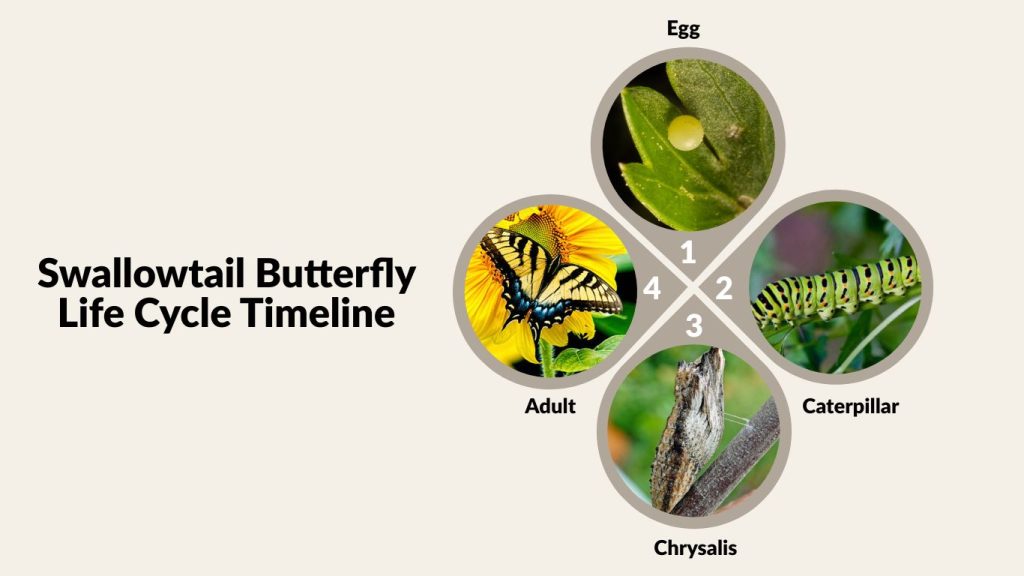
The timeline can vary depending on species, temperature, season, and food quality. Warm weather usually speeds up development, while cool weather slows it down. Some swallowtails complete a cycle in several weeks, while others pause as a chrysalis and emerge the following season.
| Life Cycle Stage | What Happens | Typical Duration |
| Egg | Female lays eggs on a suitable host plant | A few days to 2 weeks |
| Caterpillar | Larva feeds, grows, and molts several times | 2 to 4 weeks |
| Chrysalis | Caterpillar transforms inside the pupa | 1 to 3 weeks or longer |
| Adult | Butterfly emerges, feeds, mates, and lays eggs | About 2 to 3 weeks |
This timeline is a general guide. In colder climates, the chrysalis stage may last through winter. In warmer regions, several generations may appear in one year.
Stage 1: Egg on the Host Plant
The life cycle begins when a female swallowtail butterfly lays eggs on or near a host plant. A host plant is not just any plant. It is the specific plant that the caterpillar can eat after hatching. This is important because young caterpillars cannot travel far to find food.
Swallowtail eggs are usually small, round, and pale in color. They may be yellow, cream, greenish, or orange depending on the species. Many are laid singly rather than in large clusters.
Common swallowtail host plant examples include:
- Black swallowtail: parsley, dill, fennel, carrot, celery, and related plants
- Giant swallowtail: citrus-family plants, prickly ash, and rue
- Zebra swallowtail: pawpaw trees
- Tiger swallowtail: several tree species, including tulip tree, wild cherry, ash, and willow
- Spicebush swallowtail: spicebush and sassafras
The egg stage may look quiet, but important development is happening inside. When the caterpillar is ready, it chews its way out of the egg and begins feeding.
Stage 2: Swallowtail Caterpillar Growth
The caterpillar stage is the main feeding stage of the swallowtail butterfly life cycle. After hatching, the tiny larva starts eating the host plant. At first, it may eat the eggshell, then move on to leaves, flowers, or tender plant parts.
As the caterpillar grows, its skin becomes too tight. It sheds this skin through a process called molting. The growth stages between molts are called instars. A caterpillar usually passes through several instars before it is ready to become a chrysalis.
During this stage, the caterpillar’s job is simple:
- Eat enough food to grow
- Store energy for transformation
- Avoid predators
- Find a safe place to pupate
Swallowtail caterpillars are often easy to recognize. Black swallowtail caterpillars are green with black bands and yellow spots. Giant swallowtail caterpillars often resemble bird droppings, which helps protect them from predators. Spicebush swallowtail caterpillars may have large eye-like markings that make them look more threatening than they are.
Many swallowtail caterpillars also have a special defense organ called an osmeterium. When disturbed, this forked organ can appear behind the head and release a strong odor. It helps scare away ants, spiders, wasps, and other predators.
Stage 3: Chrysalis and Metamorphosis
When the caterpillar has finished growing, it stops feeding and searches for a safe place to pupate. It may attach itself to a twig, stem, fence, branch, or other firm surface. Then it forms a chrysalis.
The chrysalis is not a resting shell in the simple sense. Inside, the caterpillar’s body is being reorganized into an adult butterfly. Wings, legs, antennae, eyes, and other adult features develop during this stage.
Swallowtail chrysalises are often green, brown, or tan. Their color can help them blend with the surrounding plant material. Some are attached upright with a silk girdle, which looks like a small strap holding the chrysalis in place.
The chrysalis stage may last a short time in warm weather. However, some swallowtails remain in the chrysalis during winter. This seasonal pause is one reason gardeners are often advised not to remove every dry stem or leaf pile too early. A hidden chrysalis may be waiting for spring.
Stage 4: Adult Swallowtail Butterfly
The final stage begins when the adult butterfly emerges from the chrysalis. At first, its wings are soft, folded, and wet-looking. The butterfly must pump fluid into the wings and wait for them to expand and harden before flying.
Adult swallowtails focus on feeding, finding mates, and laying eggs. They drink nectar from flowers using a long, coiled mouthpart called a proboscis. Some species may also visit damp soil, mud, or mineral-rich areas.
Adult swallowtail butterflies help the next generation by:
- Finding nectar for energy
- Mating with another adult
- Locating the correct host plants
- Laying eggs where caterpillars can survive
The adult stage is the most visible and beautiful part of the life cycle, but it is only one part of the full transformation. Without eggs, caterpillars, host plants, and safe chrysalis sites, there would be no adult butterflies.
Black Swallowtail Butterfly Life Cycle
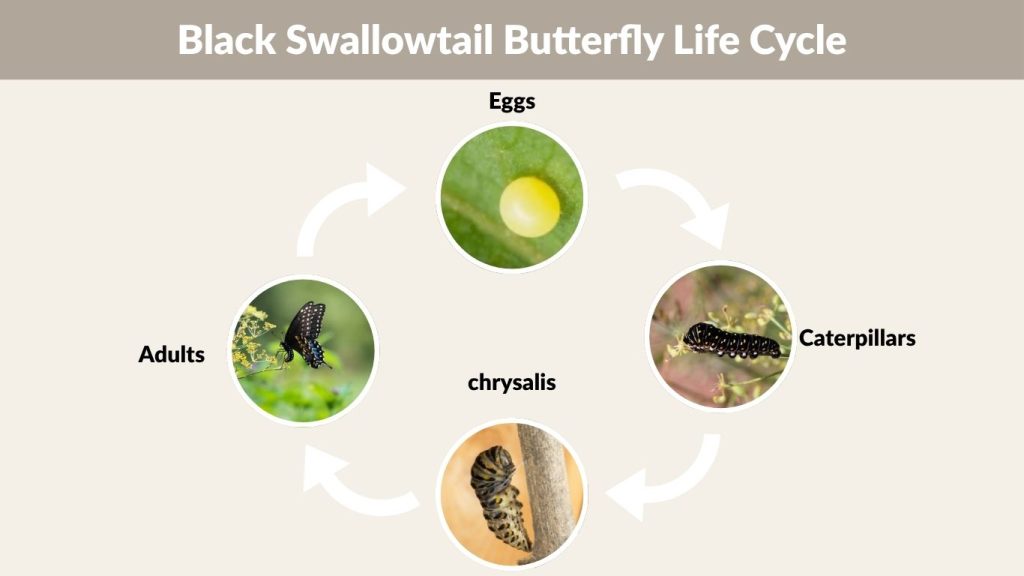
The black swallowtail butterfly life cycle is one of the most commonly searched topics because this species often appears in home gardens. Black swallowtail females lay eggs on plants in the carrot family. Gardeners often find caterpillars on dill, parsley, fennel, carrot tops, and celery.
Young caterpillars look darker and smaller. As they grow, they become bright green with black bands and yellow-orange spots. This bold pattern makes them easy to spot on herb plants.
The black swallowtail life cycle usually follows this pattern:
- Eggs are laid singly on host plants
- Caterpillars feed on leaves, flowers, and stems
- Mature caterpillars leave the plant to form a chrysalis
- Adults emerge, mate, and begin the cycle again
In warm weather, the cycle may move quickly. Later generations may overwinter as chrysalises and emerge the following spring.
Giant, Zebra, and Tiger Swallowtail Life Cycles
Many keyword variations focus on specific swallowtail species. These butterflies share the same four-stage life cycle, but their host plants and habitats differ.
Giant Swallowtail Butterfly
The giant swallowtail is one of the largest swallowtails in North America. Its caterpillar is famous for looking like bird droppings. This unusual appearance is a clever form of camouflage. Giant swallowtail caterpillars often feed on citrus-family plants, including orange, lemon, lime, and related species.
Zebra Swallowtail Butterfly
The zebra swallowtail has black-and-white striped wings and long tails. Its life cycle is closely tied to pawpaw trees. Female zebra swallowtails lay eggs on pawpaw leaves, and the caterpillars depend on these leaves for food. This makes the pawpaw tree essential for supporting this species.
Tiger Swallowtail Butterfly
Tiger swallowtails are large, yellow butterflies with black tiger-like stripes. Their caterpillars feed on several trees, depending on the species and region. Unlike black swallowtails, which are often found on garden herbs, tiger swallowtail caterpillars are more likely to be found on trees and shrubs.
How to Support the Swallowtail Butterfly Life Cycle
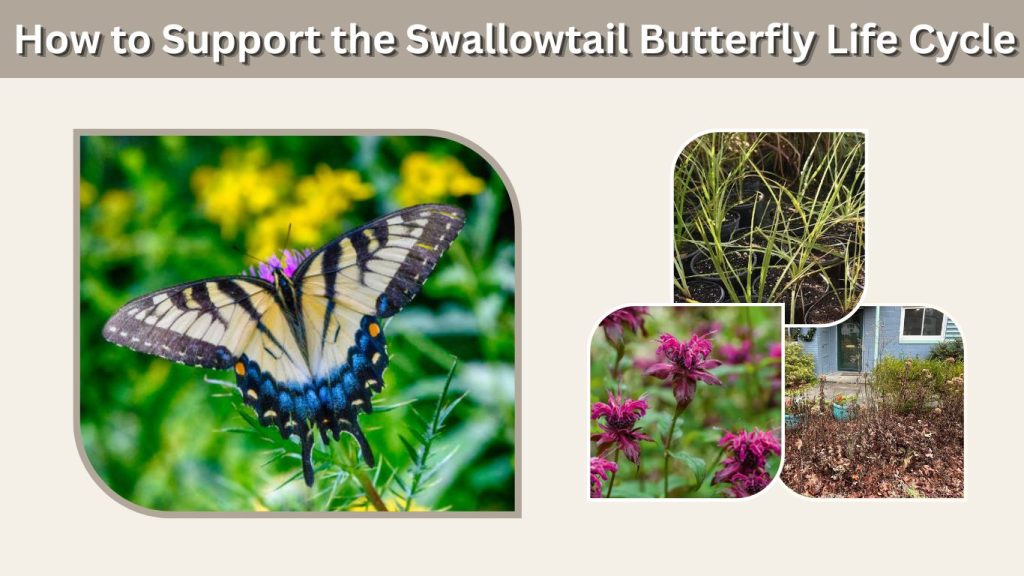
A butterfly-friendly garden should support every stage of the life cycle, not just the adult butterfly. Many people plant nectar flowers but forget host plants. Nectar feeds adults, while host plants feed caterpillars.
To support swallowtails, try these steps:
- Plant host plants for local swallowtail species
- Add nectar-rich flowers that bloom at different times
- Avoid spraying pesticides on caterpillar food plants
- Leave some natural stems, leaves, and sheltered spaces
- Learn to recognize caterpillars before removing them
It is also helpful to plant in layers. Flowers provide nectar at adult height, while herbs, shrubs, and trees provide places for eggs and caterpillars. A mixed garden gives swallowtails more chances to complete their full life cycle.
Common Problems During the Life Cycle
Not every egg becomes an adult butterfly. Swallowtails face many natural challenges. Eggs may dry out, caterpillars may be eaten, and chrysalises may be disturbed before adults emerge.
Common threats include:
- Wasps, spiders, birds, and ants
- Pesticides and herbicides
- Lack of host plants
- Extreme heat, cold, or heavy rain
- Over-cleaned gardens with no shelter
- Removing caterpillars by mistake
Some leaf damage is normal when caterpillars are present. In most home gardens, a few swallowtail caterpillars do not seriously harm healthy plants. If you grow herbs like parsley or dill, planting extra can help both your kitchen and the butterflies.
Why the Swallowtail Life Cycle Matters
The life cycle of a swallowtail butterfly shows the connection between insects, plants, seasons, and habitats. A butterfly is not only an adult flying from flower to flower. It is also an egg hidden on a leaf, a caterpillar feeding on a host plant, and a chrysalis waiting in a quiet place.
Swallowtails also play a role in garden ecosystems. Adults visit flowers for nectar and may help with pollination. Caterpillars become food for birds and other wildlife. Their presence can show that a garden has enough plant diversity to support life at multiple levels.
For students, the swallowtail butterfly life cycle is a clear example of metamorphosis. For gardeners, it is a reminder that caterpillars are not always pests. Many are simply the young stage of beautiful butterflies.
FAQs
What is the life cycle of a swallowtail butterfly?
The life cycle of a swallowtail butterfly has four stages: egg, caterpillar, chrysalis, and adult butterfly. The female lays eggs on a host plant. The caterpillar hatches and feeds, then forms a chrysalis. Inside the chrysalis, it transforms into an adult butterfly that can mate and lay eggs.
How long does the swallowtail butterfly life cycle take?
The swallowtail butterfly life cycle often takes several weeks, but the exact time depends on the species, temperature, and season. In warm weather, development may move quickly. In cooler conditions, the chrysalis stage can last much longer. Some swallowtails overwinter as chrysalises and emerge in spring.
What do swallowtail caterpillars eat?
Swallowtail caterpillars eat specific host plants. Black swallowtail caterpillars often feed on parsley, dill, fennel, carrot, and related plants. Giant swallowtail caterpillars use citrus-family plants. Zebra swallowtail caterpillars rely on pawpaw leaves. The right host plant is essential because caterpillars cannot survive on nectar flowers.
Where do swallowtail butterflies lay their eggs?
Female swallowtail butterflies lay eggs on plants that their caterpillars can eat after hatching. These are called host plants. The eggs are often placed on leaves, stems, or tender plant parts. Different swallowtail species choose different plants, so identifying local species helps gardeners know what to grow.
Do swallowtail butterflies survive winter?
Some swallowtail butterflies survive winter in the chrysalis stage. Instead of emerging quickly, the developing butterfly pauses until conditions improve. This is common in colder climates. Leaving some stems, leaf litter, and sheltered garden areas through winter can help protect hidden chrysalises until spring.