
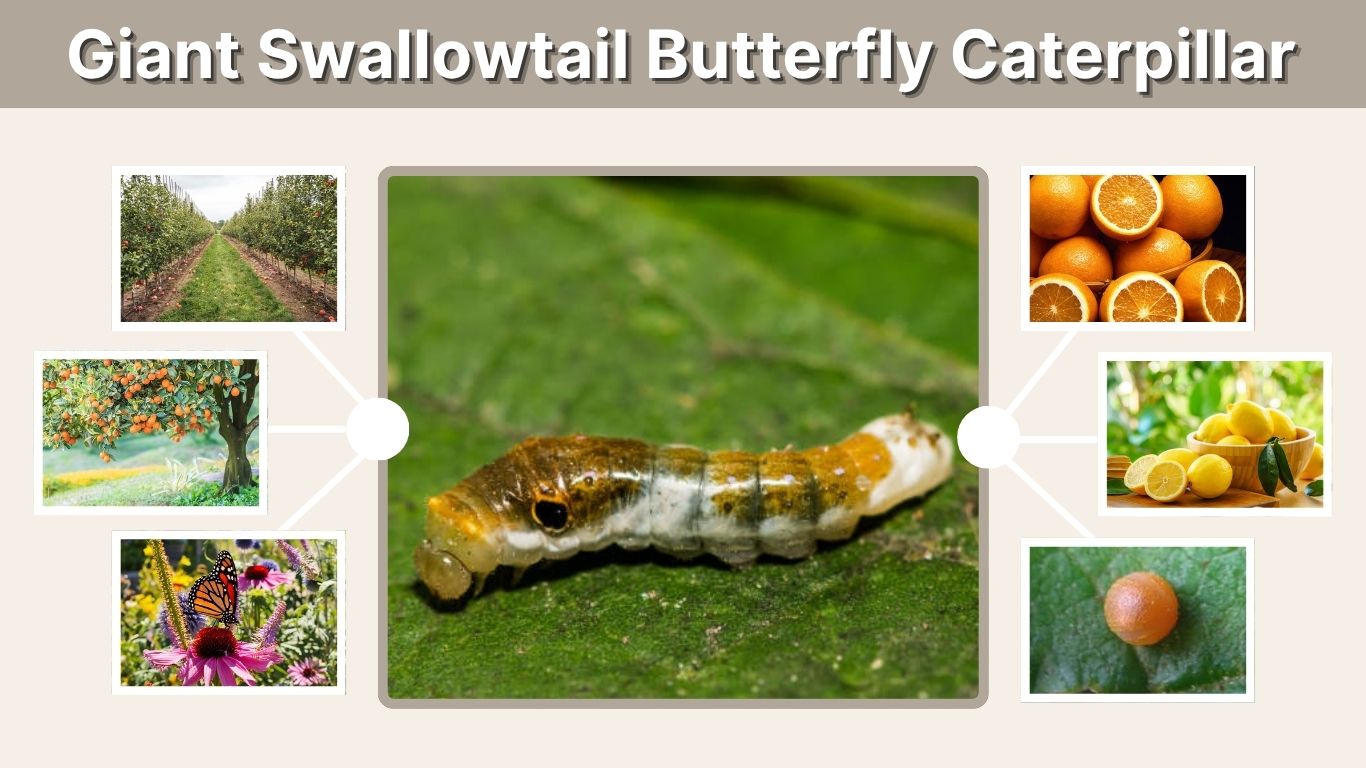
The giant swallowtail butterfly caterpillar is one of the strangest-looking caterpillars many gardeners ever find. Instead of looking bright and beautiful like the adult butterfly, the caterpillar often looks like a bird dropping on a leaf. This odd appearance is not a mistake. It is a clever form of camouflage that helps protect the caterpillar from predators while it feeds and grows.
Also known as the “orangedog,” the caterpillar of the giant swallowtail butterfly is commonly found on citrus and related plants. If you grow orange, lemon, lime, grapefruit, rue, or other plants in the citrus family, you may eventually notice this unusual larva resting on a leaf or stem. Learning how to identify it helps you decide whether to leave it alone, protect it, or manage it carefully on young plants.
What Is a Giant Swallowtail Butterfly Caterpillar?
A giant swallowtail butterfly caterpillar is the larval stage of the giant swallowtail butterfly. The adult butterfly is large, dark, and striking, with yellow markings across its wings. Before reaching that stage, it begins life as an egg, hatches into a caterpillar, feeds on host plants, forms a chrysalis, and finally emerges as a butterfly.
The caterpillar stage is the main feeding stage. During this time, the larva eats leaves from suitable host plants and grows through several stages called instars. Its appearance changes as it grows, but it usually keeps the same general camouflage strategy: looking like something birds do not want to eat.
Why It Is Called an Orangedog
The nickname “orangedog” comes from its close connection with citrus plants, especially orange trees. In citrus-growing regions, the caterpillars may be seen as minor pests because they chew leaves. A few caterpillars may not cause serious damage to a mature tree, but several larvae can remove a noticeable amount of foliage from small or young citrus plants.
Even so, many butterfly gardeners welcome them because they become giant swallowtail butterflies. Whether you see them as pests or future pollinators depends on your garden goals and the size of the plant they are feeding on.
What Does a Giant Swallowtail Caterpillar Look Like?
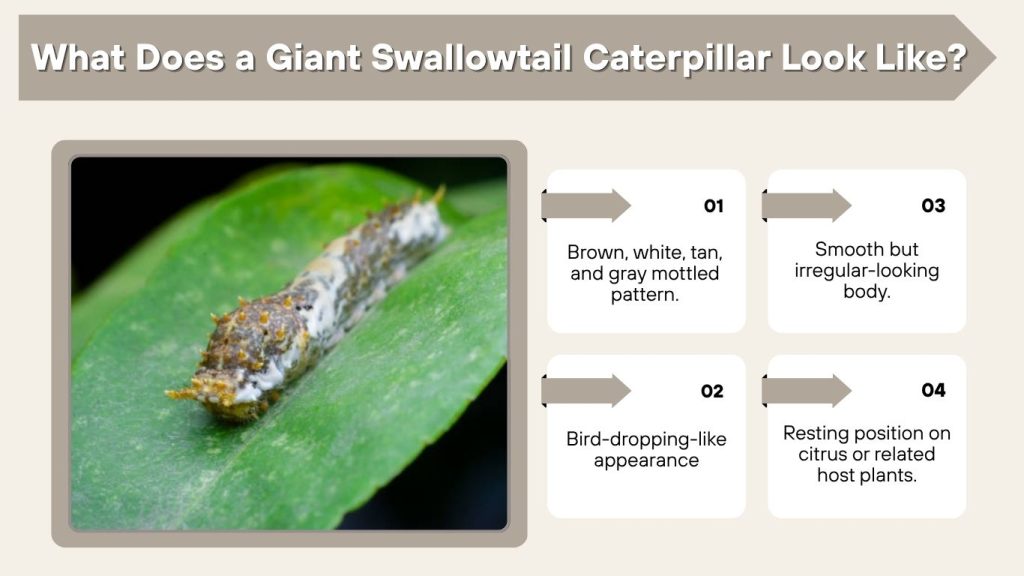
The giant swallowtail caterpillar has one of the most unusual appearances among common garden caterpillars. It is usually mottled brown, tan, gray, cream, and white. Its body may look shiny, lumpy, or irregular, which helps it resemble bird droppings.
This camouflage is so convincing that many people do not recognize it as a caterpillar at first. It may look like a smear of waste on a citrus leaf, especially when it remains still.
Main Identification Features
You can identify a giant swallowtail caterpillar by looking for these features:
- Brown, white, tan, and gray mottled pattern
- Bird-dropping-like appearance
- Smooth but irregular-looking body
- Resting position on citrus or related host plants
- Hidden orange defensive organ when disturbed
- Later transformation into a brown or greenish chrysalis
The host plant is one of the strongest identification clues. If you find a bird-dropping-like caterpillar on citrus, rue, prickly ash, or hop tree, there is a good chance it is a giant swallowtail caterpillar.
Why Does the Caterpillar Have Strange Camouflage?
The strange camouflage of the giant swallowtail caterpillar helps it avoid predators. Birds, wasps, spiders, and other hunters may search leaves for soft caterpillars. A larva that looks like bird droppings is less likely to attract attention.
This is an example of protective mimicry. Instead of hiding completely, the caterpillar hides in plain sight by looking like something unappealing. Its color pattern, body shape, and still behavior all support the disguise.
How the Camouflage Changes With Growth
Young giant swallowtail caterpillars may look especially like fresh bird droppings. As they grow, the pattern may become larger and more noticeable, but the general disguise remains. Older caterpillars still keep mottled brown and white markings that help them blend into leaves and stems.
The caterpillar does not need to look beautiful at this stage. Its goal is survival. The adult butterfly may be bold and attractive, but the caterpillar relies on deception.
What Do Giant Swallowtail Caterpillars Eat?
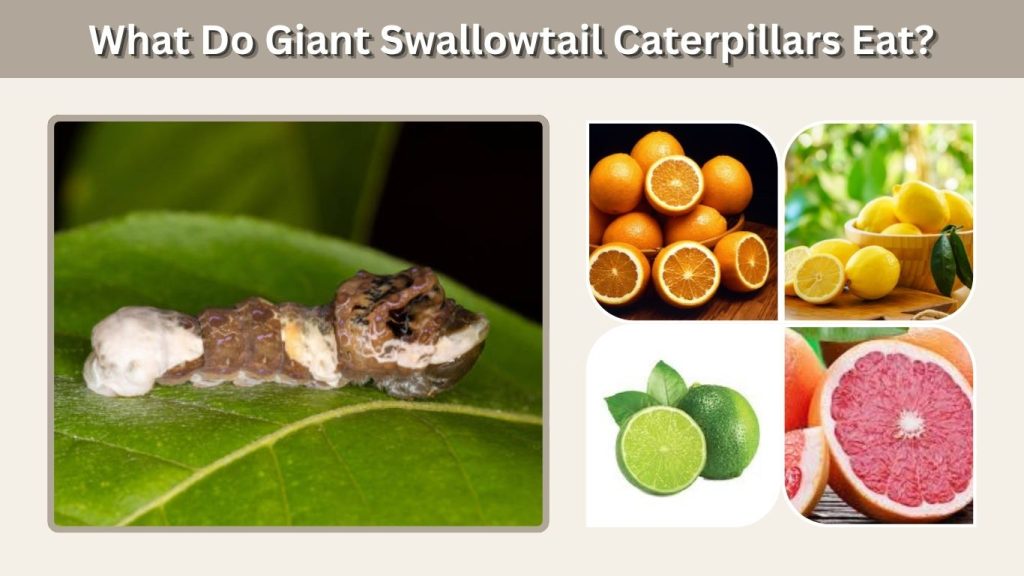
Giant swallowtail caterpillars feed mainly on plants in the citrus family, also known as Rutaceae. This makes them different from black swallowtail caterpillars, which often feed on parsley, dill, fennel, and other carrot-family plants.
Common giant swallowtail caterpillar food plants include:
- Orange
- Lemon
- Lime
- Grapefruit
- Rue
- Prickly ash
- Hop tree
- Other citrus-family plants
If you find a caterpillar on one of these plants, do not move it to parsley, milkweed, or random garden leaves. It needs the correct host plant to survive.
Can They Damage Citrus Trees?
Yes, giant swallowtail caterpillars can chew citrus leaves. On mature trees, a small number of caterpillars usually cause limited damage. On young citrus trees, however, even a few caterpillars may remove enough leaves to matter.
If the tree is healthy and established, you may choose to leave the caterpillar alone. If the plant is small, newly planted, or already stressed, you can move the caterpillar to another suitable host plant nearby, such as a larger citrus plant or rue, if available.
Is the Giant Swallowtail Caterpillar Poisonous?
Many people ask whether the giant swallowtail butterfly caterpillar is poisonous because it looks strange and can display an alarming orange organ when disturbed. For humans, it is generally not considered dangerous. It does not sting like a wasp, and the orange structure is not a stinger.
However, it is still best not to handle it unnecessarily. Caterpillars are soft-bodied and can be injured easily. Some people may also have skin sensitivity to insects or host plant chemicals, so gentle observation is better than repeated touching.
What Is the Orange Forked Organ?
When threatened, a giant swallowtail caterpillar may extend a forked orange organ called an osmeterium. It appears suddenly from behind the head and may release a strong odor. This defense can startle predators and make the caterpillar less appealing.
The osmeterium is one reason people sometimes think the caterpillar is dangerous. In reality, it is mainly a defensive smell organ, not a weapon for biting or stinging humans.
Giant Swallowtail Caterpillar Life Cycle
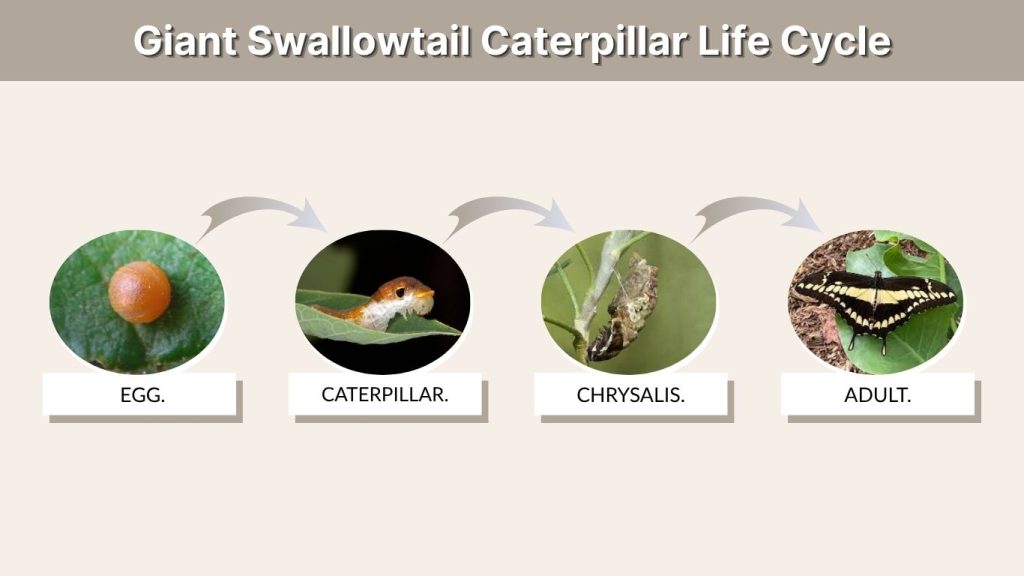
The giant swallowtail butterfly goes through complete metamorphosis. This means it has four main life stages: egg, caterpillar, chrysalis, and adult butterfly.
Egg Stage
The female giant swallowtail lays eggs on suitable host plants. These eggs are usually placed where the newly hatched caterpillar can begin feeding right away. Because the tiny larva cannot travel far to find food, the female butterfly must choose the host plant carefully.
Eggs are often small and round. Depending on age and lighting, they may appear yellowish, orange, or cream-colored.
Caterpillar Stage
After hatching, the caterpillar begins feeding. It grows through several instars, shedding its skin as it becomes larger. During this stage, the caterpillar’s main tasks are eating, avoiding predators, and storing energy for transformation.
The bird-dropping camouflage is most important during this vulnerable period. The caterpillar may remain still during the day and feed more actively at certain times, depending on conditions.
Chrysalis Stage
When fully grown, the caterpillar stops feeding and searches for a safe place to pupate. It attaches itself to a stem, twig, fence, wall, or another firm surface. Like many swallowtails, it uses silk to anchor itself and forms a chrysalis.
The chrysalis may look like a small piece of bark, twig, or dried plant material. This gives it another layer of camouflage while the transformation takes place inside.
Adult Butterfly Stage
After development is complete, the adult giant swallowtail emerges from the chrysalis. Its wings are soft at first, so it must hang quietly while they expand and dry. Once ready, the butterfly flies away to search for nectar, mates, and host plants for the next generation.
The adult butterfly looks very different from the caterpillar. It is large, elegant, and marked with bold yellow and dark patterns.
Giant Swallowtail Caterpillar vs Black Swallowtail Caterpillar
Giant swallowtail and black swallowtail caterpillars are both swallowtails, but they look and feed very differently.
A giant swallowtail caterpillar often looks like bird droppings and feeds on citrus-family plants. A black swallowtail caterpillar usually becomes green with black bands and yellow or orange spots, and it feeds on carrot-family plants such as parsley, dill, fennel, and Queen Anne’s lace.
The easiest difference is the host plant. A caterpillar on citrus is more likely to be a giant swallowtail. A striped green caterpillar on parsley or dill is more likely to be a black swallowtail.
Where Can You Find Giant Swallowtail Caterpillars?
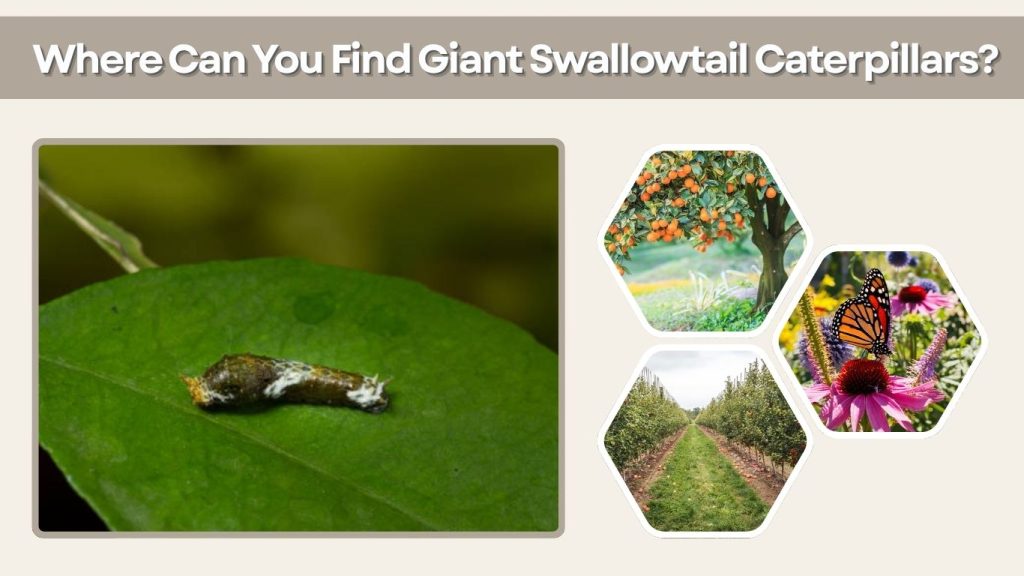
Giant swallowtail caterpillars are often found in areas where their host plants grow. In home landscapes, this usually means citrus trees or ornamental rue. In wild habitats, they may use native Rutaceae plants such as prickly ash or hop tree.
You may find them in:
- Citrus gardens
- Orchards
- Butterfly gardens
- Woodland edges
- Native plant areas
- Warm regions with host plants
Their range depends on climate and host plant availability. In warmer areas, they may be more common and have multiple generations during the year.
Should You Remove Giant Swallowtail Caterpillars?
Whether you remove them depends on the situation. If the caterpillar is feeding on a large, healthy citrus tree, leaving it alone is usually a good choice for butterfly conservation. If it is on a small citrus seedling or young potted plant, it may cause more damage.
A balanced approach works best. Instead of killing the caterpillar, move it to a larger suitable host plant if one is available. This protects your small plant while still giving the caterpillar a chance to become a butterfly.
When to Leave It Alone
Leave the caterpillar alone if:
- The host plant is mature and healthy
- Leaf damage is minor
- You want to support butterflies
- The caterpillar is close to pupating
- There are only one or two larvae present
When to Move It Carefully
Move it only if:
- The plant is very small
- The plant is newly planted or stressed
- Several caterpillars are causing heavy defoliation
- The plant is going to be sprayed or pruned
- The caterpillar is in danger from human activity
Always move it to the same type of host plant or another known giant swallowtail host. Do not move it to unrelated leaves.
How to Care for a Giant Swallowtail Caterpillar
If you want to raise a giant swallowtail caterpillar for observation, keep its needs simple and natural. The most important requirement is fresh host plant leaves.
Use a ventilated enclosure, not a sealed jar. Add fresh citrus, rue, or the same host plant it was found on. Remove old leaves and droppings daily to reduce mold. Provide small sticks or stems so the caterpillar has a place to pupate.
Avoid handling the caterpillar often. It may display its osmeterium when stressed, and repeated disturbance can weaken it.
Basic Care Tips
- Feed only correct host plants.
- Keep leaves fresh and clean.
- Provide good airflow.
- Remove droppings daily.
- Keep the enclosure out of direct hot sun.
- Do not disturb the chrysalis.
- Release the adult butterfly in safe weather.
When the butterfly emerges, wait until its wings are fully expanded and dry. Release it during daylight in mild weather near flowers or host plants.
Why Images Help With Identification
Images are especially useful for identifying a giant swallowtail butterfly caterpillar because its camouflage can be confusing. Someone searching for giant swallowtail butterfly caterpillar images is often trying to confirm whether the odd brown-and-white shape on a citrus leaf is actually alive.
When comparing images, pay attention to the host plant, body pattern, and overall shape. Do not rely on color alone because lighting, age, and growth stage can change how the caterpillar appears.
The best identification match is a mottled, bird-dropping-like caterpillar resting on a citrus-family plant.
FAQs
What does a giant swallowtail butterfly caterpillar look like?
A giant swallowtail butterfly caterpillar usually looks like bird droppings. It has mottled brown, white, gray, and tan markings that help it hide from predators. Its strange appearance is a natural camouflage strategy, especially when it rests quietly on citrus or related host plants.
What does the caterpillar of the giant swallowtail butterfly eat?
The caterpillar of the giant swallowtail butterfly eats plants in the citrus family. Common host plants include orange, lemon, lime, grapefruit, rue, prickly ash, and hop tree. It should not be moved to unrelated plants because it needs the right host leaves to survive.
Is a giant swallowtail butterfly caterpillar poisonous?
A giant swallowtail butterfly caterpillar is not considered dangerous to humans and does not sting. When disturbed, it may show an orange forked organ called an osmeterium, which can release a strong smell. This is a defense against predators, not a stinger.
Why does the giant swallowtail caterpillar look like bird poop?
The caterpillar looks like bird poop because that disguise helps protect it from predators. Birds and other hunters are less likely to eat something that appears to be waste. This strange camouflage allows the caterpillar to hide in plain sight while feeding on leaves.
Should I remove giant swallowtail caterpillars from citrus trees?
You do not need to remove them from large, healthy citrus trees if damage is minor. On small or young citrus plants, they may eat too many leaves. In that case, gently move them to another suitable host plant instead of killing them, if possible.