
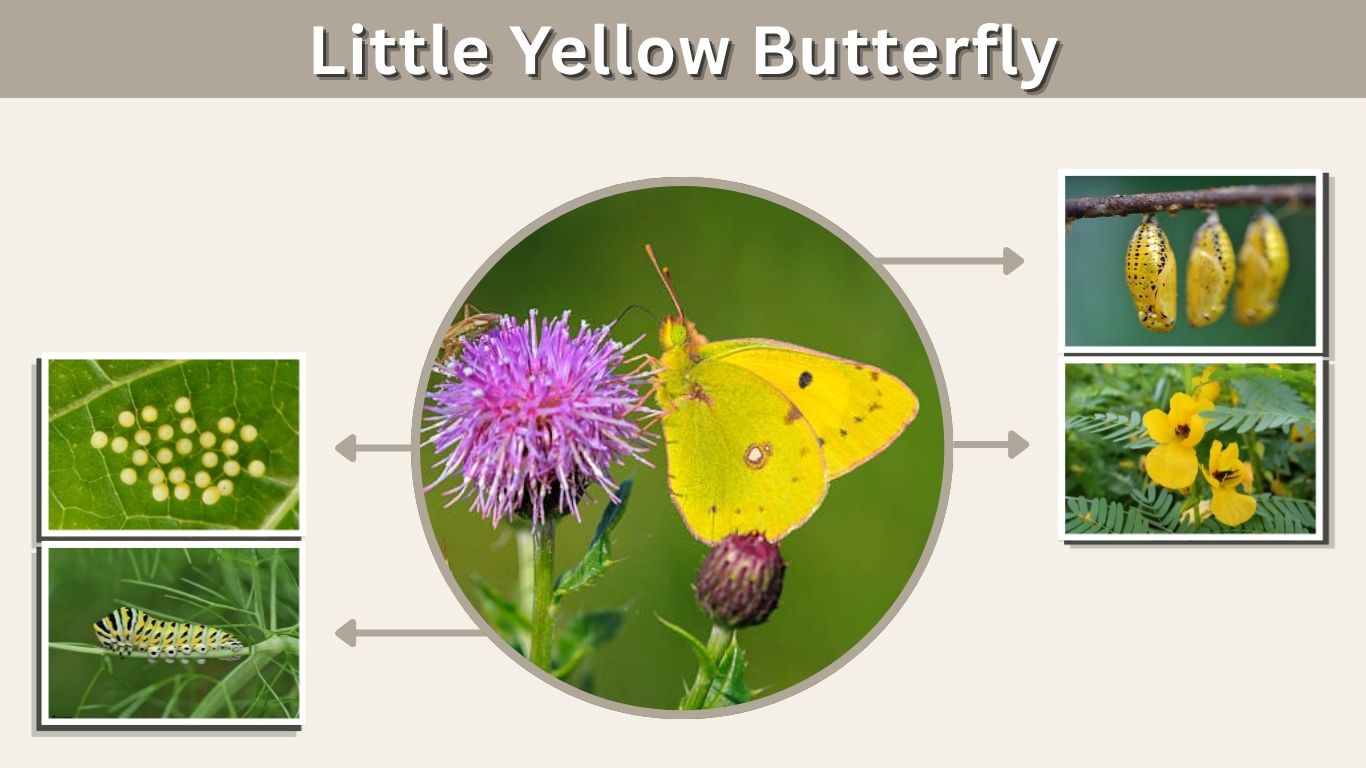
A little yellow butterfly fluttering low across a lawn, field, or garden can be easy to overlook, but its bright color makes it surprisingly distinctive. In North America, the name Little Yellow commonly refers to Pyrisitia lisa, a small butterfly in the sulphur and yellow family. It is known for its yellow wings, dark wing edges, and delicate flight close to vegetation. However, several other butterflies can also appear small and yellow, so looking closely at wing markings, size, habitat, and behavior is important for proper identification.
What Is a Little Yellow Butterfly?
The Little Yellow butterfly, scientifically known as Pyrisitia lisa, belongs to the family Pieridae, which includes whites, sulphurs, and yellows. It is also called the Little Sulphur or Little Sulfur butterfly.
These butterflies favor sunny, open environments and are often seen flying close to the ground. They may visit gardens, roadsides, fields, and other places where nectar flowers and suitable caterpillar host plants grow.
| Feature | Little Yellow Butterfly |
| Common name | Little Yellow |
| Scientific name | Pyrisitia lisa |
| Other names | Little Sulphur, Little Sulfur |
| Family | Pieridae |
| Wingspan | About 32–44 mm |
| Main color | Bright yellow |
| Habitat | Fields and other open areas |
| Caterpillar food | Several legumes, including partridge pea |
| Adult food | Flower nectar |
How to Identify a Little Yellow Butterfly
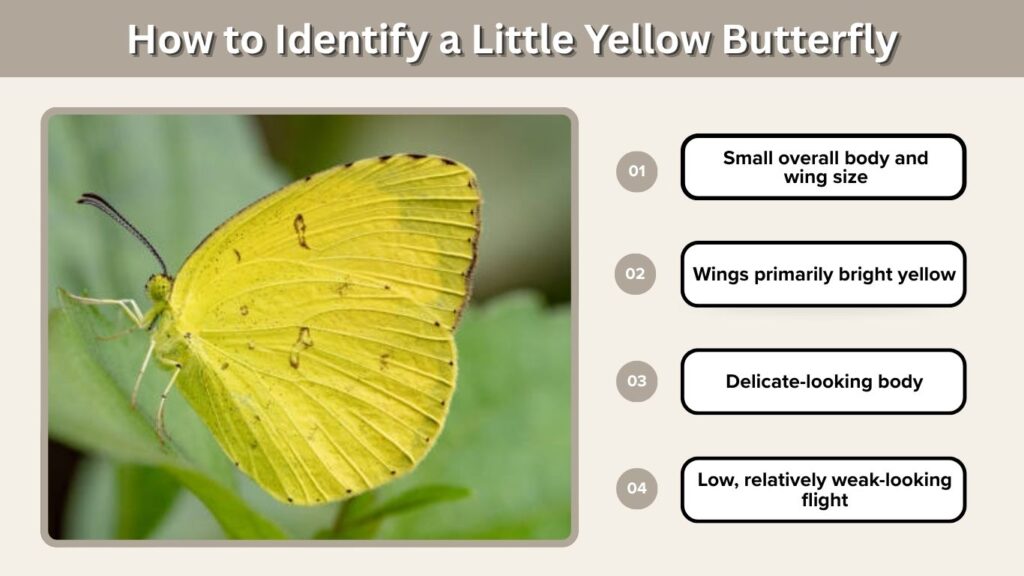
Because many sulphur butterflies share yellow coloration, color alone is not enough for identification. Size and wing markings provide much better clues.
Identification Features
Look for these characteristics:
- Small overall body and wing size
- Wings primarily bright yellow
- Broad dark or blackish outer margin on the upper forewing
- Two small dark spots near the base of the underside of the hindwing
- Delicate-looking body
- Low, relatively weak-looking flight
- Frequent activity around open fields and low-growing vegetation
The two dark basal spots on the underside of the hindwing are particularly useful when distinguishing the Little Yellow from similar species such as the Mimosa Yellow.
How Big Is a Little Yellow Butterfly?
The Little Yellow has a wingspan of approximately 32 to 44 mm, or roughly 1.25 to 1.75 inches. This compact size helps separate it from larger sulphur butterflies that may share the same habitat.
When several yellow butterflies are feeding together, the Little Yellow can look noticeably smaller than larger sulphurs.
Little White and Yellow Butterflies
Not every Little Yellow appears equally bright. Females can vary somewhat in coloration, and a pale or whitish female form is documented. This can sometimes create the appearance of a small white-and-yellow butterfly.
Because other Pieridae butterflies can also be pale, the dark wing markings remain important for identification.
Little Yellow Butterfly Caterpillar
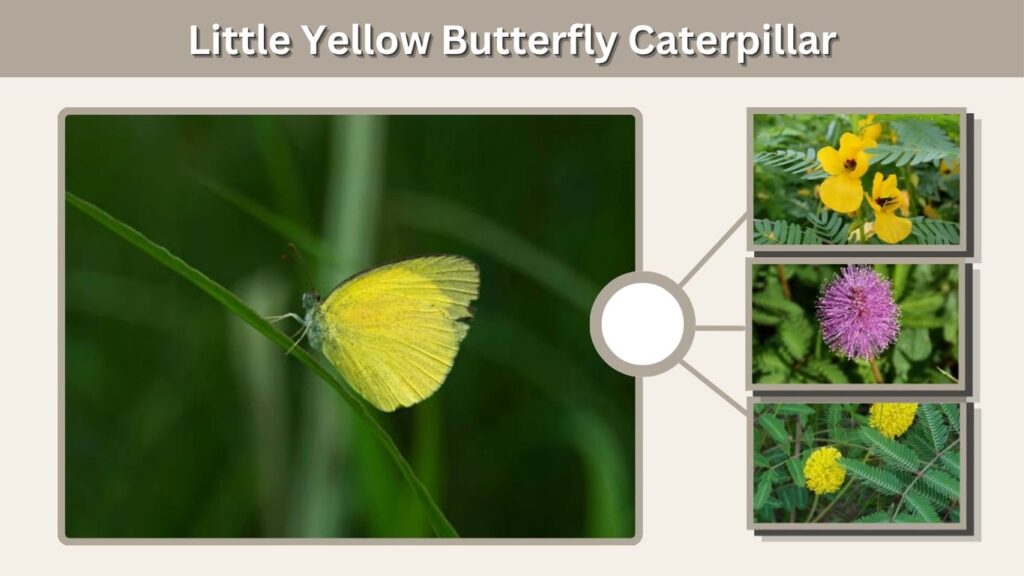
Before becoming an adult butterfly, the Little Yellow spends part of its life as a caterpillar feeding on selected host plants.
Its caterpillars are associated primarily with plants in the legume family.
What Do Little Yellow Caterpillars Eat?
Host plants can include:
- Common partridge pea
- Common sensitive plant
- Powder puff mimosa
- Yellow puff
- Other suitable leguminous plants
Partridge pea can be especially valuable in butterfly-friendly landscapes because it provides food for Little Yellow caterpillars as well as some other sulphur species.
The caterpillars are well camouflaged against green vegetation, making them considerably harder to notice than the bright adults.
Little Yellow Butterfly Life Cycle
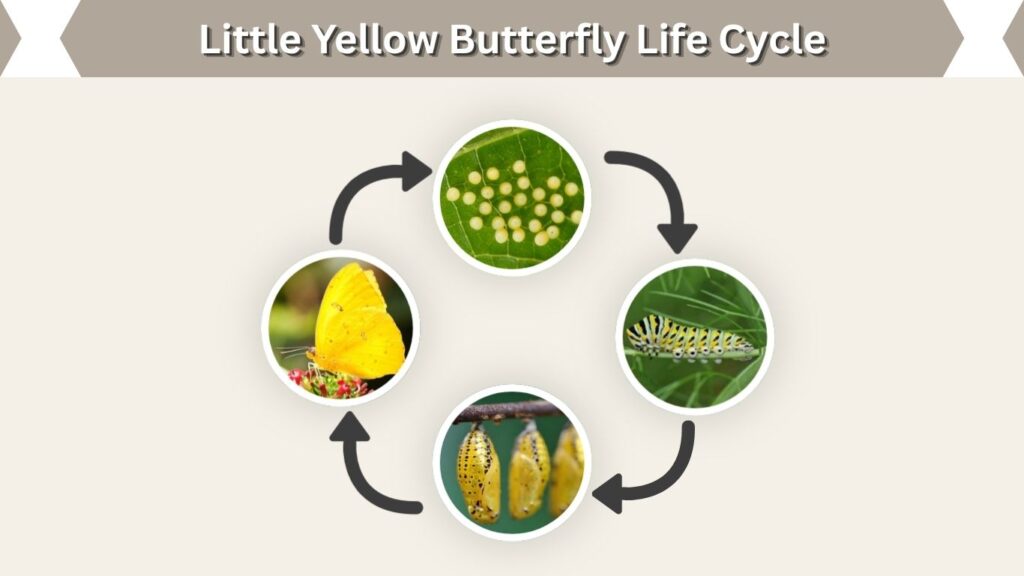
Like other butterflies, the Little Yellow undergoes complete metamorphosis, moving through four major stages: egg, larva, pupa, and adult.
Egg
A female selects an appropriate host plant and deposits eggs where newly hatched larvae can quickly reach food.
Caterpillar
The larva feeds on its host plant and grows through successive developmental stages. Its green coloration helps it blend into leaves and stems.
Chrysalis
After completing its larval growth, the caterpillar forms a chrysalis. The pupa is attached to vegetation and secured with silk before the adult develops inside.
Adult Butterfly
The fully formed butterfly eventually emerges and begins searching for nectar, mates, and suitable habitat. In subtropical regions Little Yellows may be observed through much of the year, while populations in more temperate areas are generally associated with the warmer seasons.
Where Do Little Yellow Butterflies Live?
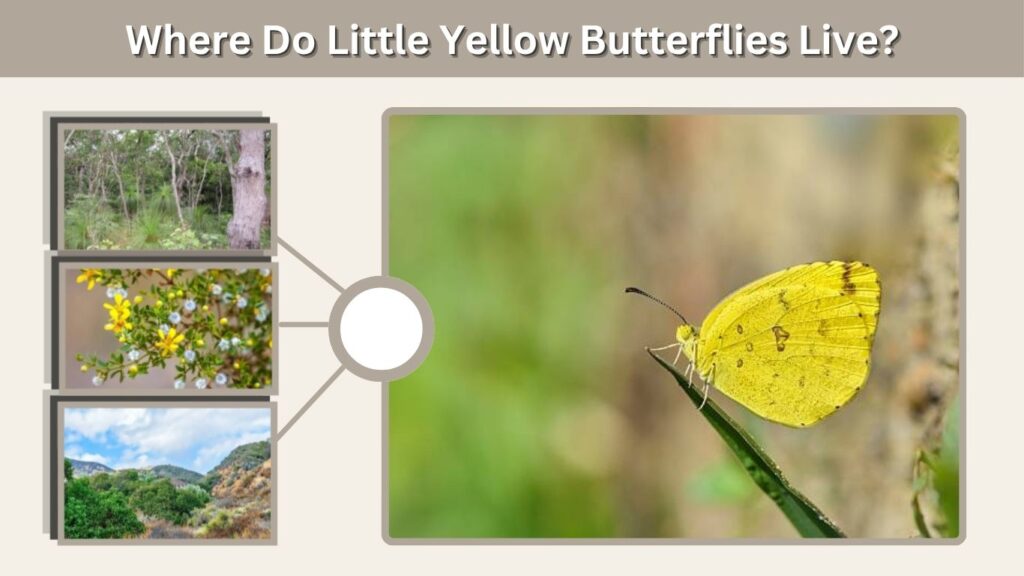
Little Yellows are associated primarily with open, sunny environments, including old fields and similar disturbed or grassy habitats. Their range extends from Central America into the southern United States, while seasonal movement can carry them farther north.
Little Yellow Butterflies in Florida and Texas
Warm southern areas provide particularly suitable conditions for Little Yellows. These regions offer long growing seasons and an abundance of host and nectar plants.
Because populations can persist farther south, butterflies moving northward during warm weather may originate from these southern populations.
Little Yellow Butterflies in Northern States
Little Yellow butterflies can also be reported farther north, but their occurrence can be more seasonal and variable. In temperate areas, adults are mainly associated with late spring through fall rather than year-round activity.
If you see a tiny yellow butterfly in places such as Illinois, Indiana, Wisconsin, or other northern states, identification should still be based on markings rather than color alone.
What About Arizona and the Western U.S.?
A small yellow butterfly in Arizona or farther west is not automatically Pyrisitia lisa. Several yellow and sulphur species occur across North America, so photographs of both the upper and lower wing surfaces can help distinguish them.
What Do Little Yellow Butterflies Eat?
Adult Little Yellows feed primarily on flower nectar.
They often visit small flowering plants in sunny locations rather than remaining high in trees. Late-season flowering plants such as asters and goldenrods can provide valuable nectar where the butterflies occur.
Caterpillars have completely different dietary needs and rely on specific host plants rather than nectar.
Little Yellow Butterfly vs. Sleepy Orange
One species that may initially cause confusion is the Sleepy Orange.
The Little Yellow is generally smaller and more distinctly yellow, while the Sleepy Orange is larger and has considerably stronger orange coloration. The Little Yellow also has characteristic dark markings that aid identification.
Seeing the butterfly while its wings are closed can be particularly useful because the underside of the hindwing may reveal the Little Yellow’s small basal spots.
Little Yellow Butterfly vs. Mimosa Yellow
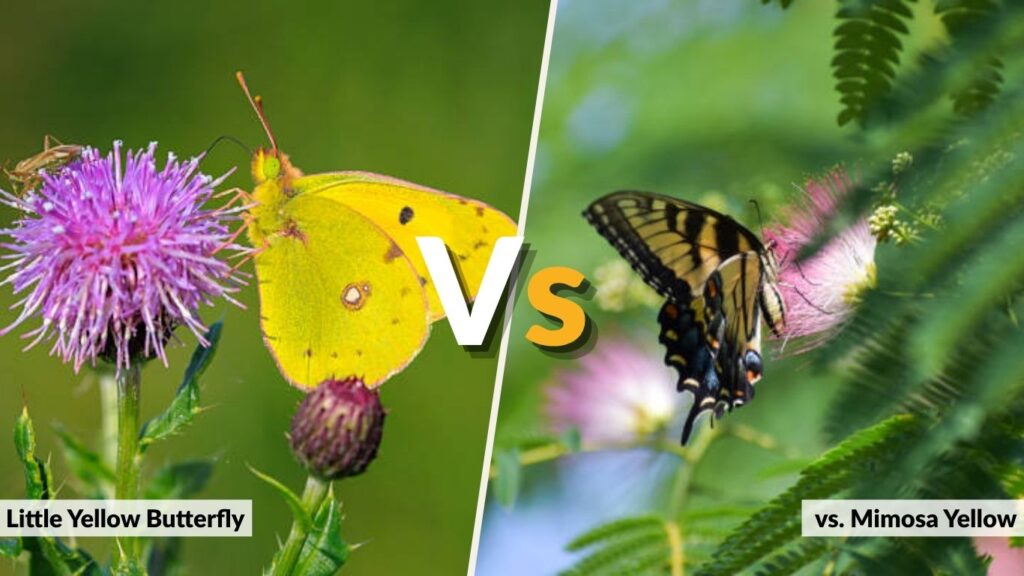
The Mimosa Yellow (Pyrisitia nise) can look quite similar because both are small yellow butterflies belonging to the same general group.
A useful distinction is the pair of dark basal spots found on the underside of the Little Yellow’s hindwing. The Mimosa Yellow lacks this same two-spot pattern.
Range can provide another clue, but wing markings are generally more useful than relying on location alone.
Are Little Yellow Butterflies Good for Gardens?
Little Yellow butterflies can welcome garden visitors. Adults use flowers for nectar, while their caterpillars depend on suitable host plants to complete their development.
A butterfly-friendly garden therefore needs more than colorful nectar flowers. Including both nectar plants and caterpillar host plants creates habitat that supports the entire life cycle.
Partridge pea is one particularly useful plant where it is appropriate to grow, since it serves as a host for Little Yellow caterpillars.
Little Yellow Butterfly Meaning
Yellow butterflies are sometimes culturally associated with ideas such as happiness, hope, optimism, transformation, or new beginnings because of their bright coloration and the butterfly’s dramatic life cycle.
However, these symbolic interpretations are cultural or personal rather than biological characteristics of Pyrisitia lisa. Seeing a little yellow butterfly does not have one scientifically defined spiritual meaning.
Interesting Little Yellow Butterfly Facts
The Little Yellow may be tiny, but several traits make it interesting:
- Its scientific name is Pyrisitia lisa.
- It is also called the Little Sulphur.
- Its wingspan is only about 32–44 mm.
- Adults are mostly bright yellow.
- Two basal hindwing spots are useful identification clues.
- Caterpillars depend on leguminous host plants.
- Adults drink nectar from flowers.
- It prefers sunny, open habitats.
- Populations can spread northward seasonally.
- Some females can have a much paler appearance.
FAQs
What are the little yellow butterflies called?
Many small yellow butterflies belong to the sulphur group, but the species specifically known as the Little Yellow is Pyrisitia lisa. It is also commonly called the Little Sulphur or Little Sulfur butterfly.
What is the scientific name of the Little Yellow butterfly?
The Little Yellow butterfly is commonly classified as Pyrisitia lisa. Older references may also use the name Eurema lisa, which is why both names can sometimes appear when researching this butterfly.
Does a Little Yellow butterfly have black-edged wings?
Yes. The upper forewing normally shows a noticeable dark outer margin. The underside of the hindwing also has small dark basal spots that can be extremely helpful when confirming identification.
What does a Little Yellow butterfly caterpillar eat?
The caterpillar feeds on selected legumes. Important host plants include common partridge pea, sensitive plant, powder puff mimosa, and related plants. Adult butterflies switch to a completely different diet and primarily drink flower nectar.
Is a Little Yellow butterfly rare?
Its abundance depends strongly on location and season. It is associated more consistently with warmer southern areas, while butterflies seen farther north may result from seasonal expansion. In some places they can be numerous during favorable periods and uncommon during others.