
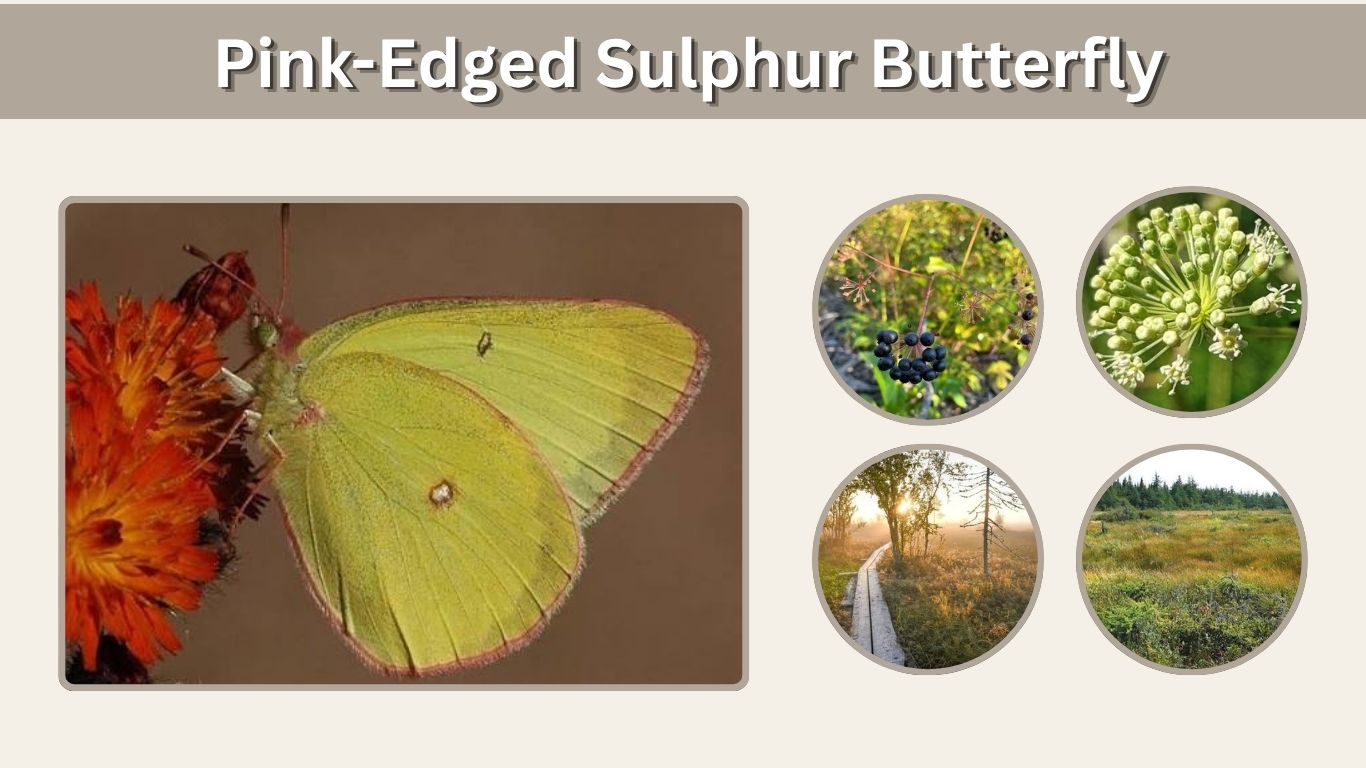
The Pink-edged Sulphur (Colias interior) is a delicate yellow butterfly named for the distinctive pinkish edging along its wings. It occurs mainly across northern parts of North America, where it favors bogs, woodland openings, scrublands, and other places where blueberries grow. Although it can resemble the more widespread Clouded Sulphur, its cleaner yellow underwings, single silver hindwing spot, and association with blueberry habitat provide useful identification clues. Pink-edged Sulphurs have one main generation each year, with adults typically flying during the summer months.
What Is a Pink-Edged Sulphur?
The Pink-edged Sulphur is a butterfly belonging to the family Pieridae, which includes whites, yellows, and sulphurs.
Its scientific name is Colias interior.
| Feature | Pink-Edged Sulphur |
| Scientific name | Colias interior |
| Family | Pieridae |
| Subfamily | Coliadinae |
| Wingspan | About 1.5–2.6 inches |
| Main color | Yellow |
| Wing edge | Pink to reddish-pink |
| Caterpillar host | Blueberries (Vaccinium) |
| Flight season | June–August |
| Generations | Usually one per year |
Butterflies and Moths of North America gives a wingspan of approximately 3.9 — 6.6 cm (1.5 — 2.6 inches).
Pink-Edged Sulphur Identification
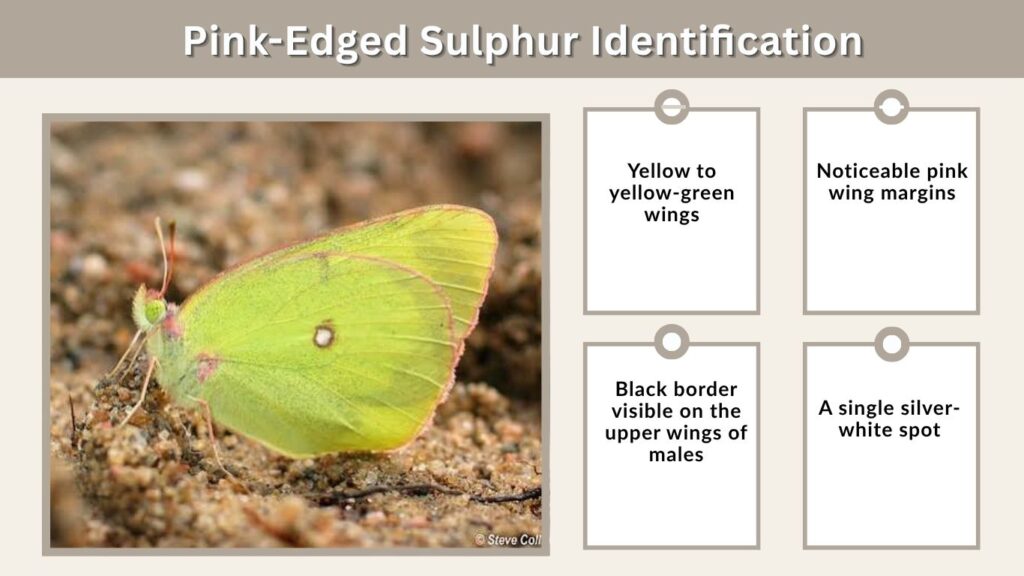
The butterfly is most easily recognized when viewed with its wings closed, which is also how sulphur butterflies commonly rest.
Main Identification Features
Look for:
- Yellow to yellow-green wings
- Noticeable pink wing margins
- A single silver-white spot on the underside of each hindwing
- Pink or reddish ring around the hindwing spot
- Relatively clean underside without numerous dark spots
- Black border visible on the upper wings of males
- Small to medium butterfly size
Both sexes usually show obvious pink edging, although the strength of the color varies among individuals.
The pink border alone should not be considered definitive because other Colias species can occasionally develop pinkish wing fringes.
Male Pink-Edged Sulphur
Males are generally bright yellow.
When the wings are opened, males typically show a relatively strong black outer border on the upper surface.
Males spend much of their active time flying through suitable habitat searching for females. Their flight is often described as slower and more deliberate than that of some other sulphurs.
Female Pink-Edged Sulphur
Females are usually yellow but may occasionally occur in a pale or nearly white form.
Their upper-wing black border is generally:
- Reduced
- Broken
- Less sharply defined than in males
- Sometimes concentrated mostly near the forewing tip
This reduced dark border can help distinguish females from males when the upper wings are visible.
Where Do Pink-Edged Sulphurs Live?
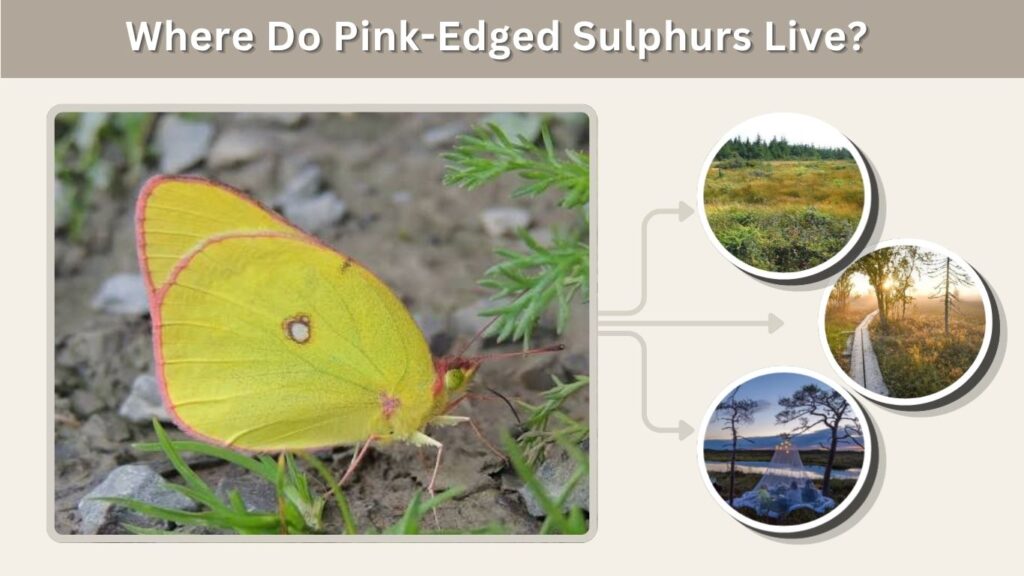
The Pink-edged Sulphur is primarily a northern North American butterfly.
Its range extends from British Columbia and eastern Oregon eastward across Canada and the Great Lakes region to northern New England.
It is particularly associated with places where wild blueberries and other heath-family plants grow.
Pink-Edged Sulphur Habitat
Typical habitats include:
- Woodland openings
- Bogs
- Peatlands
- Scrublands
- Forest edges
- Burned forest openings
- Logged areas
- Blueberry barrens
The species may benefit temporarily from disturbances such as fire or logging when those disturbances create sunny openings where blueberries flourish.
What Do Pink-Edged Sulphur Caterpillars Eat?
The caterpillars feed primarily on blueberries in the genus Vaccinium.
These plants belong to the heath family, Ericaceae.
Females therefore concentrate their egg-laying activity around areas containing suitable blueberry plants.
Caterpillar Host Plants
Important hosts include various:
- Wild blueberries
- Bilberries
- Other Vaccinium species
This feeding preference is especially useful for identification because many similar sulphurs rely instead on plants in the pea family.
What Do Adult Pink-Edged Sulphurs Eat?
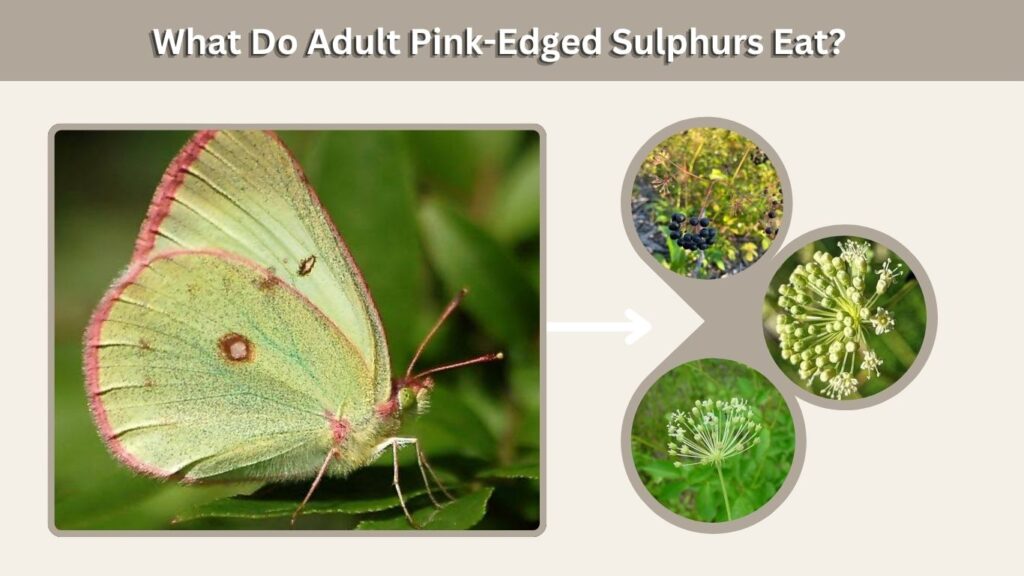
Adults drink flower nectar.
Recorded nectar sources include:
- Bristly sarsaparilla
- Orange hawkweed
- Other summer wildflowers
Adults may move through sunny woodland openings searching for nectar while males simultaneously patrol for females.
Like other butterflies, they use a long coiled proboscis to draw liquid nectar from flowers.
Pink-Edged Sulphur Life Cycle
The Pink-edged Sulphur undergoes complete metamorphosis:
Egg → Caterpillar → Chrysalis → Adult
Egg
Females lay eggs on blueberry leaves during midsummer.
The eggs hatch into small caterpillars that begin feeding on the host plant.
Caterpillar
Young caterpillars feed for a period before entering dormancy.
An unusual feature of the species is that the young caterpillar is the overwintering stage.
Overwintering
The immature caterpillar survives winter and resumes feeding when temperatures rise and blueberry growth returns in spring.
Most larval feeding therefore takes place during the following spring.
Chrysalis and Adult
After completing its growth, the caterpillar forms a chrysalis.
The adult butterfly later emerges and begins the next breeding season.
When Can You See Pink-Edged Sulphur Butterflies?
The species normally has one main flight each year, generally from June through August.
Peak timing varies with:
- Latitude
- Elevation
- Spring temperatures
- Local weather
- Host-plant development
In colder northern locations, the flight window may be relatively short.
For example, in New York’s Adirondack region, adults are particularly associated with June and July.
Pink-Edged Sulphur vs. Clouded Sulphur
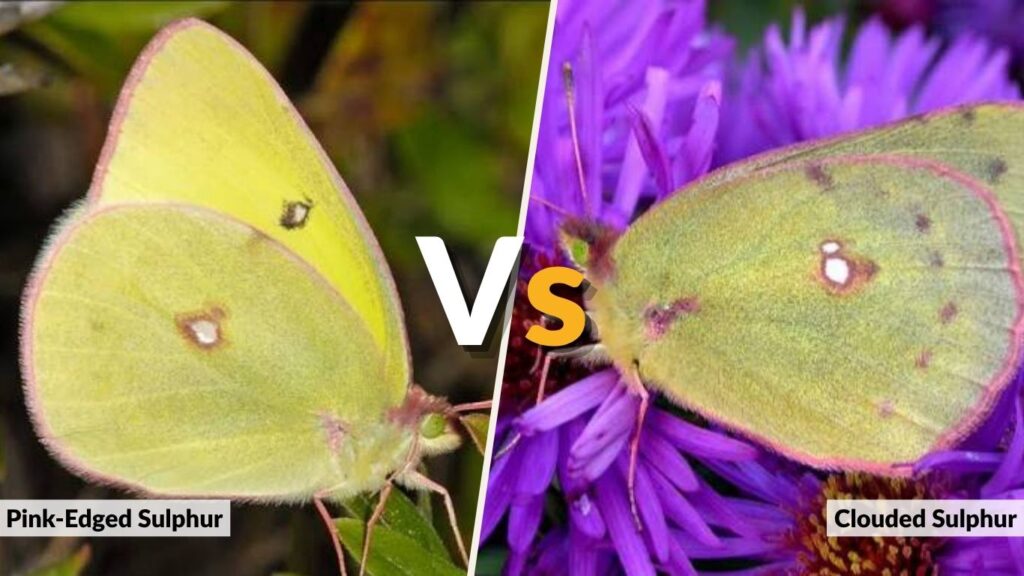
The Clouded Sulphur (Colias philodice) is one of the most likely look-alikes.
Both can be yellow with pinkish wing margins.
| Feature | Pink-Edged Sulphur | Clouded Sulphur |
| Scientific name | C. interior | C. philodice |
| Hindwing spot | Usually single | Usually appears double-ringed |
| Underwing dark spots | Usually absent | Often present |
| Host plants | Blueberries | Clover, alfalfa and other legumes |
| Habitat | Bogs, scrub, forest openings | Fields, lawns, roadsides, meadows |
| Generations | Usually one | Several possible |
The underside of the Pink-edged Sulphur generally looks cleaner, with a single silver hindwing spot surrounded by pink and without the row of small submarginal spots commonly seen on Clouded Sulphurs.
Don’t Rely Only on the Pink Border
Despite its name, pink edging is not unique to Colias interior.
Clouded Sulphurs and some other species can also have pinkish fringes. Examining the hindwing spots and overall underside pattern is therefore more reliable.
Pink-Edged Sulphur vs. Orange Sulphur
The Orange Sulphur (Colias eurytheme) usually has considerably more orange on the upper wings.
Orange Sulphurs also typically show a silver hindwing spot surrounded by two concentric dark rings, while the Pink-edged Sulphur usually has one simpler silver spot surrounded by pink.
Orange Sulphurs are also strongly associated with alfalfa, clover, and other legumes rather than blueberry habitats.
How Does the Pink-Edged Sulphur Fly?
Males typically patrol suitable habitats while searching for females.
Adults often fly low over blueberry patches and open vegetation, periodically stopping to nectar.
When resting, they normally keep their wings closed vertically above the body, meaning observers often see the yellow-green underside rather than the black-bordered upper surface.
This resting posture makes good underwing identification especially important.
Is the Pink-Edged Sulphur Rare?
The butterfly may appear uncommon in locations without its preferred blueberry-rich habitat.
It has a more restricted ecological niche than highly adaptable species such as Clouded and Orange Sulphurs.
Its tendency to produce only one adult generation annually also means there is a relatively limited period in which adults can be observed.
A lack of sightings therefore does not necessarily indicate that the butterfly is extremely rare throughout its range.
Are Pink-Edged Sulphur Butterflies Dangerous?
No.
Pink-edged Sulphurs are harmless to people and pets.
They:
- Do not sting
- Do not bite people
- Are not venomous
- Are not poisonous to touch
- Do not damage homes
Their caterpillars feed on blueberry leaves, but they generally occur naturally as part of northern woodland and bog ecosystems.
Interesting Pink-Edged Sulphur Facts
- Its scientific name is Colias interior.
- It belongs to the Pieridae family.
- Its wingspan can reach roughly 2.6 inches.
- Both sexes may have pink wing margins.
- Males are usually bright yellow.
- Females can occasionally be nearly white.
- Caterpillars specialize in blueberry plants.
- Young caterpillars survive through winter.
- Adults usually appear only once each year.
- The species prefers northern habitats.
- Adults usually rest with their wings closed.
- A single pink-ringed silver hindwing spot is an important identification clue.
FAQs
1. What is a Pink-edged Sulphur butterfly?
The Pink-edged Sulphur (Colias interior) is a yellow butterfly native to northern North America. It is named for the pinkish outer edges of its wings and is strongly associated with blueberry-rich woodland openings, bogs, and scrub habitats.
2. How do you identify a Pink-edged Sulphur?
Look for yellow wings with pink edges and a single silver-white spot surrounded by pink on the underside of the hindwing. The underside generally lacks the numerous dark submarginal markings found on some similar sulphurs.
3. What do Pink-edged Sulphur caterpillars eat?
Their caterpillars primarily eat leaves of blueberry and related plants in the genus Vaccinium. This host preference separates them from many other Colias butterflies whose caterpillars primarily consume plants in the pea family.
4. When do Pink-edged Sulphurs fly?
Adults normally have one annual flight from approximately June through August. The exact timing varies geographically, with peak activity often occurring during June and July in northern portions of the range.
5. What is the difference between a Pink-edged and Clouded Sulphur?
Pink-edged Sulphurs generally have a cleaner yellow underside with a single pink-ringed silver hindwing spot. Clouded Sulphurs often have additional dark submarginal spots and a more complex, usually doubled hindwing spot. Their caterpillar food plants also differ substantially.