
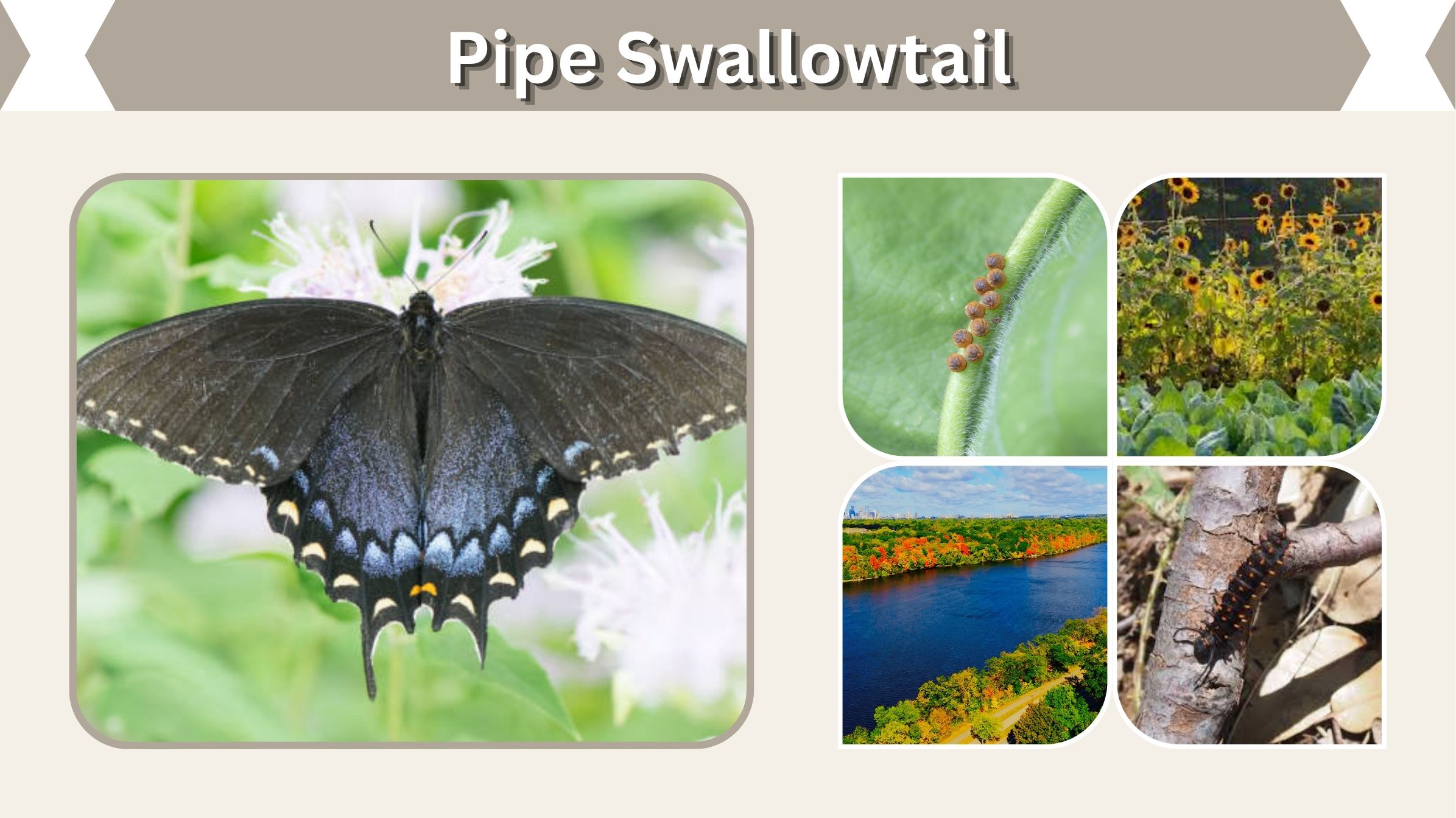
The pipevine swallowtail is a striking black-and-blue butterfly known for its shimmering wings, red-spotted underside, and unusual caterpillars. Many people search for it as “pipe swallowtail” or “pipe vine swallowtail,” but the common name is pipevine swallowtail. This butterfly depends on pipevine plants, also called Dutchman’s pipe, for its caterpillars. Understanding that relationship is the key to identifying, attracting, and protecting this beautiful species.
What Is a Pipevine Swallowtail?
The pipevine swallowtail is a large butterfly with the scientific name Battus philenor. It belongs to the swallowtail family, which includes many butterflies with tail-like extensions on the hindwings.
This species is best known for its dark upper wings and metallic blue or blue-green hindwings. The blue color is especially noticeable on males. Females are usually darker and may look less shiny, though they still have a beautiful blue sheen.
Pipe Swallowtail vs Pipevine Swallowtail
“Pipe swallowtail” is not the preferred common name, but it is a common search variation. The correct name is pipevine swallowtail because the butterfly’s caterpillars feed on pipevine plants.
You may also see it written as:
- Pipe vine swallowtail
- Pipevine swallowtail butterfly
- Blue swallowtail
- Blue pipevine swallowtail
- Dutchman’s pipe swallowtail
All of these usually refer to the same butterfly, Battus philenor.
Basic Identification
Pipevine swallowtails have a dramatic appearance. From above, they look mostly black with iridescent blue or blue-green on the hindwings. From below, the hindwings show a row of bright orange spots set in a bluish field.
Key identification features include:
- Black upper wings
- Iridescent blue or blue-green hindwings
- Long swallowtail extensions
- Orange spots on the underside of the hindwing
- Smooth, gliding flight near flowers and host vines
The wingspan is usually large enough to make the butterfly stand out in gardens, meadows, and woodland edges.
Pipevine Swallowtail Male vs Female
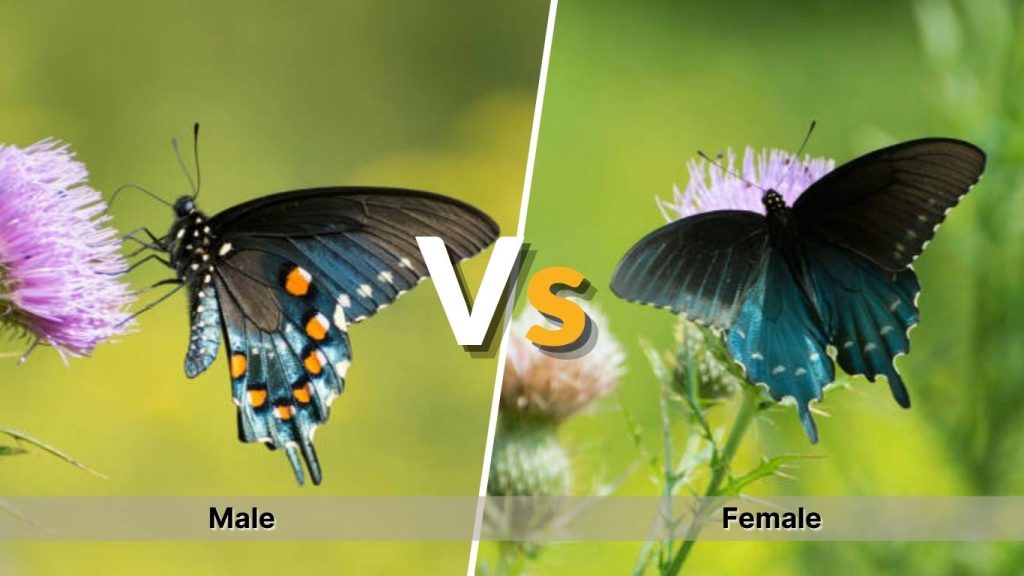
Male and female pipevine swallowtails look similar at first, but they have visible differences.
Male Pipevine Swallowtail
Male pipevine swallowtails usually have stronger blue iridescence on the upper side of the hindwings. In sunlight, the blue can look bright, glossy, and almost metallic. Males often patrol suitable habitats while searching for females.
Female Pipevine Swallowtail
Females are often darker and less vividly blue than males. They may show more spotting and a softer blue wash. Females are important to watch because they search carefully for pipevine leaves where they can lay eggs.
Females may lay clusters of eggs on the underside of pipevine leaves. Once the caterpillars hatch, they begin feeding on the host plant.
Pipevine Swallowtail Caterpillar
The pipevine swallowtail caterpillar is one of the most unusual-looking swallowtail caterpillars. It is often dark red, brown, or black with orange or reddish bumps and fleshy projections.
Young caterpillars may feed together in small groups. As they grow larger, they often become more solitary.
What Does the Caterpillar Look Like?
The caterpillar can vary in color, but it is usually dark with bright warning markings. Full-grown larvae may look velvety black or reddish with orange tubercles. Long fleshy projections give them a spiny appearance, although they are not dangerous to people.
Common caterpillar features include:
- Dark brown, black, or reddish body
- Orange or red bumps
- Long fleshy filaments
- Velvety texture
- Group feeding when young
- Solitary feeding when older
These colors are warning signals. They tell predators that the caterpillar may taste bad or be toxic.
Is the Pipevine Swallowtail Caterpillar Poisonous?
Pipevine swallowtail caterpillars are not harmful to touch in the same way as stinging caterpillars, but handling wildlife is still not recommended. Their real defense comes from their host plant.
Pipevine plants contain aristolochic acids and related compounds. The caterpillars can tolerate these chemicals and store them in their bodies. This makes the caterpillars and adult butterflies distasteful or toxic to many predators.
This defense is so effective that several other butterflies mimic the pipevine swallowtail’s dark appearance.
Why Do Pipevine Swallowtails Choose Pipevine?
Pipevine swallowtails choose pipevine because their caterpillars are specialized to feed on plants in the Aristolochia group. Adult butterflies can drink nectar from many flowers, but their caterpillars need the right host plants to survive.
This relationship benefits the butterfly in two major ways. First, pipevine leaves provide food for the larvae. Second, the plant’s chemicals help protect the caterpillars and adults from predators.
A Specialized Host Plant Relationship
The pipevine swallowtail is a host-plant specialist. That means females must locate the correct plant before laying eggs. A garden full of flowers may attract adult butterflies, but without pipevine, females cannot raise caterpillars there.
This is why planting host plants is more important than planting only nectar flowers if your goal is to support the full butterfly life cycle.
Pipevine Swallowtail Host Plants
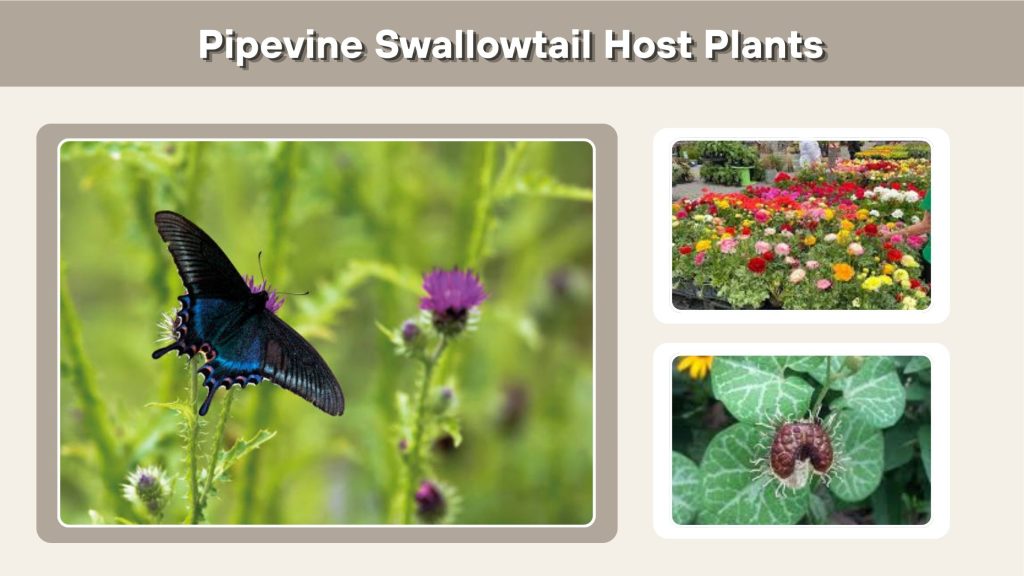
Pipevine swallowtail caterpillars feed on pipevine or Dutchman’s pipe plants. These plants belong to the genus Aristolochia or closely related updated classifications.
However, not all Dutchman’s pipe plants are equally safe. Some native species are good host plants, while some non-native tropical species can be harmful or deadly to the caterpillars.
| Host Plant Topic | What to Know |
| Butterfly species | Pipevine swallowtail, Battus philenor |
| Main host plant group | Pipevine/Dutchman’s pipe plants |
| Plant genus commonly used | Aristolochia |
| Native host examples | Woolly Dutchman’s pipe, Virginia snakeroot, California pipevine |
| Risky plant examples | Some tropical or non-native Dutchman’s pipe species |
| Adult food | Nectar from many flowers |
| Main garden goal | Plant safe native host vines and nectar flowers |
Native Pipevine Plants
Native pipevine species vary by region. Some common examples include woolly Dutchman’s pipe, Virginia snakeroot, California pipevine, and other native Aristolochia species.
A local native plant nursery or extension office can help you choose the best species for your area. This matters because a pipevine that works well in one region may not be the best choice in another.
Dutchman’s Pipe as a Host Plant
Dutchman’s pipe is a common name for several pipevine plants. The name comes from the pipe-like shape of the flowers. Many gardeners grow these vines for their large leaves, fast growth, and value as a butterfly host plant.
A native Dutchman’s pipe can be very helpful for pipevine swallowtails. It gives females a place to lay eggs and gives caterpillars the food they need.
Can Non-Native Dutchman’s Pipe Harm Swallowtails?
Yes, some non-native Dutchman’s pipe species can harm or kill pipevine swallowtail caterpillars. This is especially important in Florida and other warm regions where tropical ornamental pipevines are sold.
Some adult females may lay eggs on non-native pipevine plants even when those plants are not suitable for larval survival. The eggs may hatch, but the caterpillars can die after feeding.
Florida and Tropical Dutchman’s Pipe Concerns
In Florida, native pipevine species include plants such as Virginia snakeroot, woolly Dutchman’s pipe, and Marsh’s Dutchman’s pipe. However, non-native ornamental species such as elegant Dutchman’s pipe, also called calico flower, may be dangerous to pipevine swallowtail larvae.
This is why gardeners should avoid buying a plant only because it is labeled “Dutchman’s pipe.” The exact species matters.
How to Choose a Safer Pipevine
Before planting a pipevine for butterflies, check the scientific name. Choose native species recommended for your region.
Helpful steps include:
- Buy from reputable native plant nurseries.
- Ask for the scientific name, not just the common name.
- Avoid tropical ornamental pipevines unless verified safe.
- Choose regionally native host plants when possible.
- Watch for eggs and caterpillars after planting.
- Avoid pesticides on or near host vines.
Planting the wrong pipevine can turn a butterfly garden into an ecological trap, so it is worth checking carefully.
Pipevine Swallowtail Life Cycle
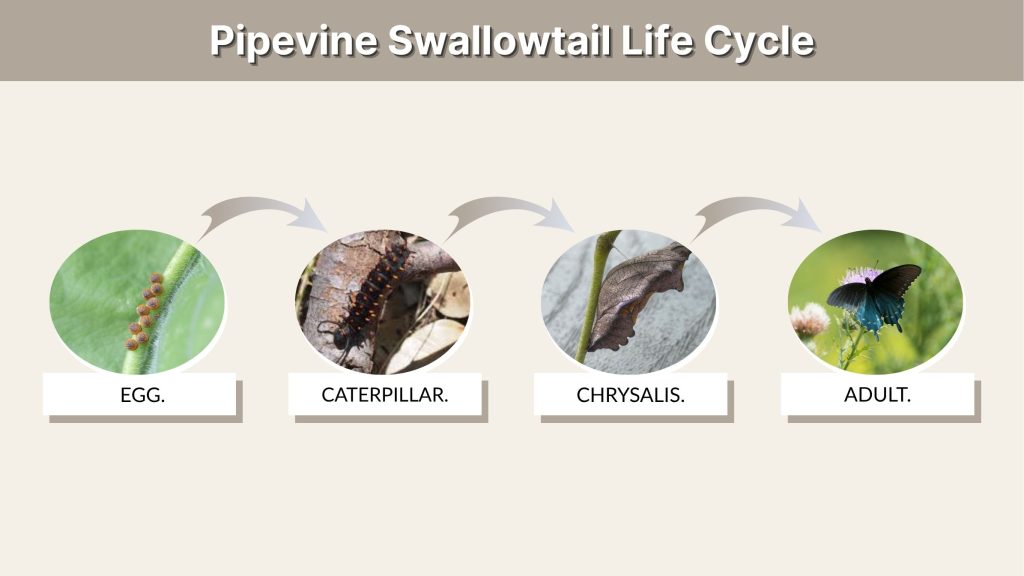
The pipevine swallowtail has four life stages: egg, caterpillar, chrysalis, and adult. This complete metamorphosis is one reason butterflies are such powerful symbols of transformation.
Egg Stage
Female pipevine swallowtails lay eggs on pipevine leaves, often on the underside. Eggs may be placed in clusters rather than singly. The location helps protect them and puts the newly hatched caterpillars close to food.
Caterpillar Stage
After hatching, the caterpillars begin feeding on pipevine leaves. Young caterpillars may feed together in groups. As they grow, they molt several times and become larger, darker, and more noticeable.
Because they absorb chemicals from the host plant, their warning colors become part of their defense system.
Chrysalis Stage
When the caterpillar finishes growing, it forms a chrysalis. The chrysalis may be attached to a stem, wall, branch, or other stable surface. In many regions, the pipevine swallowtail can overwinter in the chrysalis stage.
Adult Stage
The adult butterfly emerges, expands its wings, and begins feeding on nectar. Males search for females, and females search for host plants. The cycle begins again when eggs are laid on pipevine leaves.
What Do Adult Pipevine Swallowtails Eat?
Adult pipevine swallowtails drink nectar from many flowers. They are not limited to pipevine as adults. Pipevine is essential for caterpillars, but nectar plants fuel the adult butterfly.
Nectar Flowers They May Visit
Pipevine swallowtails may visit many garden and wildflowers, including:
- Milkweed
- Lantana
- Verbena
- Zinnia
- Phlox
- Thistle
- Joe-Pye weed
- Ironweed
- Bee balm
- Native asters
- Coneflower
A good butterfly garden should include flowers that bloom across different seasons. This gives adults a steady nectar supply when they are active.
Where Do Pipevine Swallowtail Butterflies Live?
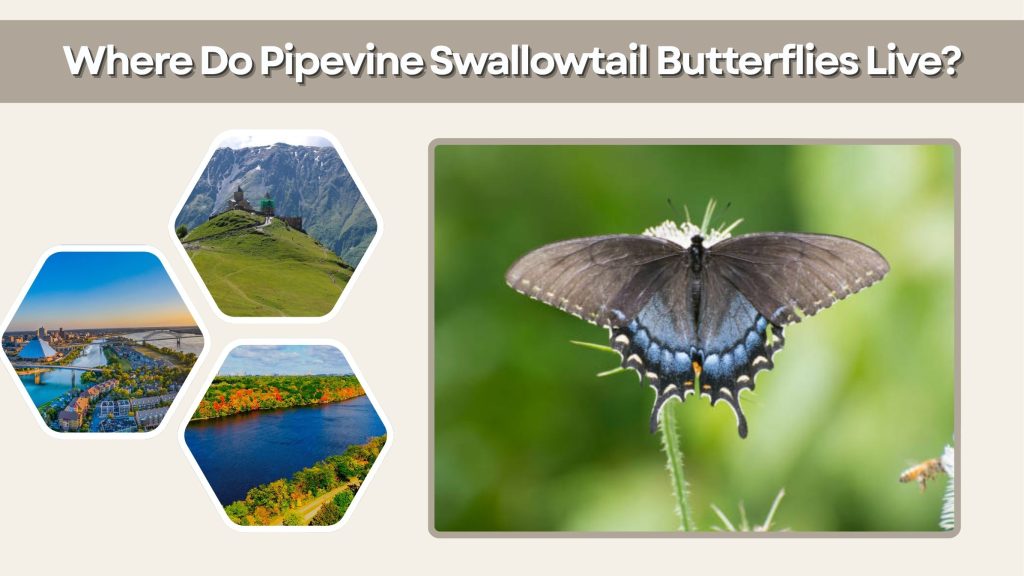
Pipevine swallowtails are found across parts of the United States, Mexico, and Central America. In the U.S., they are seen in the eastern and southwestern regions, with local populations depending heavily on available host plants.
They can live in open woods, woodland edges, gardens, meadows, stream corridors, and areas where pipevine grows.
What States Do Pipevine Swallowtails Live In?
Pipevine swallowtails occur in many eastern states and parts of the Southwest and California. They may be seen in states such as Florida, Georgia, Alabama, Mississippi, Texas, Arizona, California, the Carolinas, Tennessee, Kentucky, Missouri, Arkansas, Ohio, and others.
Their presence is often local. Even within a state, they are more likely to appear where suitable pipevine host plants grow.
Pipevine Swallowtail Mimicry
The pipevine swallowtail plays an important role in butterfly mimicry. Because it is distasteful to many predators, other butterflies have evolved to look similar.
Butterflies That Resemble Pipevine Swallowtails
Several dark swallowtails and other butterflies may mimic or resemble the pipevine swallowtail, including:
- Spicebush swallowtail
- Black swallowtail females
- Dark female eastern tiger swallowtail
- Red-spotted purple
- Diana fritillary females in some areas
This mimicry can confuse predators. If a bird has learned to avoid pipevine swallowtails, it may also avoid similar-looking butterflies.
Are Pipevine Swallowtails Good for Gardens?
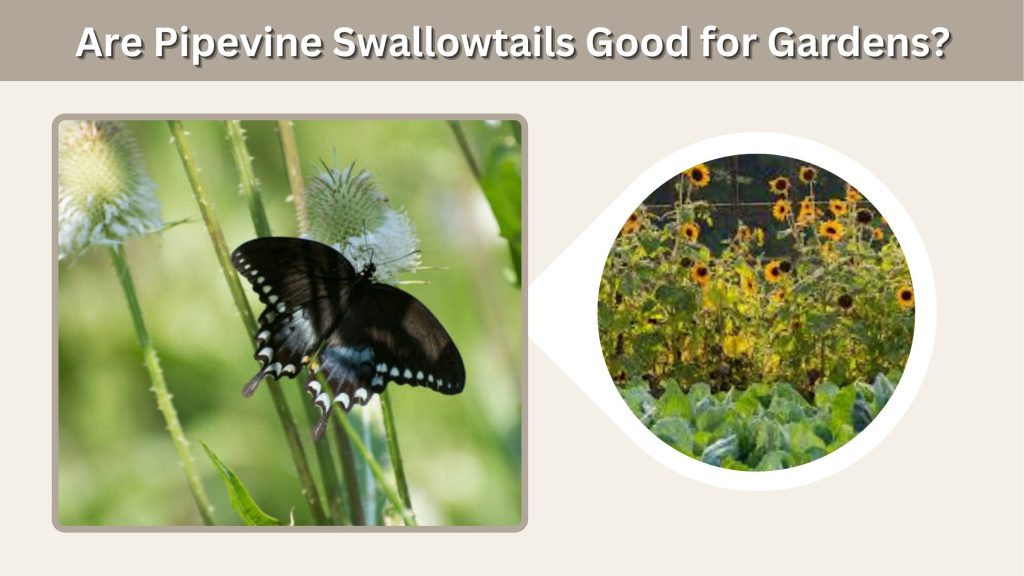
Pipevine swallowtails are excellent for wildlife gardens. They are native pollinators, beautiful to watch, and part of a healthy food web. However, the best way to support them is to plant the right host plant.
A garden with nectar flowers may attract adults for a short visit. A garden with safe native pipevine can support eggs, caterpillars, chrysalises, and adults.
Garden Tips for Supporting Them
To help pipevine swallowtails, focus on habitat rather than decoration alone.
Useful steps include:
- Plant native pipevine suited to your region.
- Add nectar flowers for adults.
- Avoid pesticides and herbicides.
- Leave some sheltered areas for chrysalises.
- Do not remove caterpillars from host vines.
- Learn the difference between safe and harmful Dutchman’s pipe species.
Even a small wildlife garden can make a difference if it includes the right plants.
Pipevine Swallowtail Meaning and Symbolism
Like many butterflies, the pipevine swallowtail is often associated with transformation, renewal, beauty, and resilience. Its dark wings and blue shimmer give it a mysterious appearance, while its life cycle reflects growth and change.
The caterpillar’s ability to use toxic host plants for protection can also symbolize adaptation and survival. In garden symbolism, the pipevine swallowtail may represent the hidden connections between plants, insects, and the larger ecosystem.
FAQs
Is pipe swallowtail the same as pipevine swallowtail?
Yes, in most searches, “pipe swallowtail” usually means pipevine swallowtail. The correct common name is pipevine swallowtail because its caterpillars depend on pipevine plants. The scientific name is Battus philenor. It is also sometimes called a blue swallowtail because of its iridescent blue hindwings.
What does a pipevine swallowtail caterpillar eat?
A pipevine swallowtail caterpillar eats pipevine or Dutchman’s pipe plants. These plants are usually in the Aristolochia group. The caterpillars cannot survive on random garden leaves. They need suitable pipevine host plants, and native species are usually the safest choice for butterfly gardens.
Is Dutchman’s pipe harmful to swallowtails?
Some Dutchman’s pipe plants are helpful host plants, but some non-native tropical species can be harmful or deadly to pipevine swallowtail caterpillars. This is especially important in Florida and warm regions. Always check the plant’s scientific name and choose native pipevine species recommended for your area.
Why do pipevine swallowtails choose pipevine?
Pipevine swallowtails choose pipevine because their caterpillars are specialized to eat it. The plant provides food and chemical protection. Caterpillars absorb defensive compounds from pipevine, making them distasteful to many predators. This close relationship is why host plants are essential for supporting the butterfly.
Where does the pipevine swallowtail butterfly live?
The pipevine swallowtail lives in parts of the eastern and southwestern United States, Mexico, and Central America. In the U.S., it appears in many states where suitable pipevine grows. Its habitat includes open woodlands, gardens, forest edges, stream corridors, and meadows with host plants nearby.