
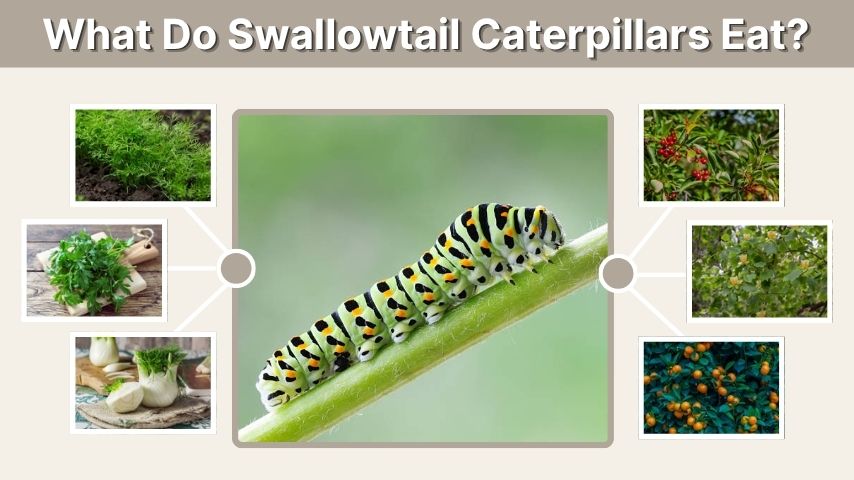
Swallowtail caterpillars eat the leaves of specific host plants, not just any green plant in the garden. The exact food depends on the swallowtail species. Black swallowtail caterpillars often eat dill, parsley, fennel, carrot tops, and other carrot-family plants, while tiger swallowtail caterpillars feed on certain trees. Giant, spicebush, pipevine, and zebra swallowtails each have their own preferred plants too.
The Simple Answer: Swallowtail Caterpillars Eat Host Plants
Swallowtail caterpillars eat leaves from plants their species can digest. These plants are called host plants. Adult butterflies may visit many flowers for nectar, but caterpillars are much more selective. A female swallowtail usually lays eggs on the right host plant because the tiny caterpillars need suitable leaves as soon as they hatch.
This is why a caterpillar on dill is not the same as a caterpillar on a tulip tree or citrus plant. They may all become swallowtail butterflies, but they do not all eat the same food.
Common swallowtail caterpillar foods include:
- Dill, parsley, fennel, carrot tops, and Queen Anne’s lace
- Citrus leaves, rue, prickly ash, and hop tree
- Wild cherry, tulip tree, ash, birch, willow, and cottonwood
- Spicebush, sassafras, sweet bay, and tulip tree
- Pipevine plants
- Pawpaw leaves
The most important thing is to identify the caterpillar or the plant it is feeding on. Once you know the species, you can give it the correct leaves.
What Do Black Swallowtail Caterpillars Eat?
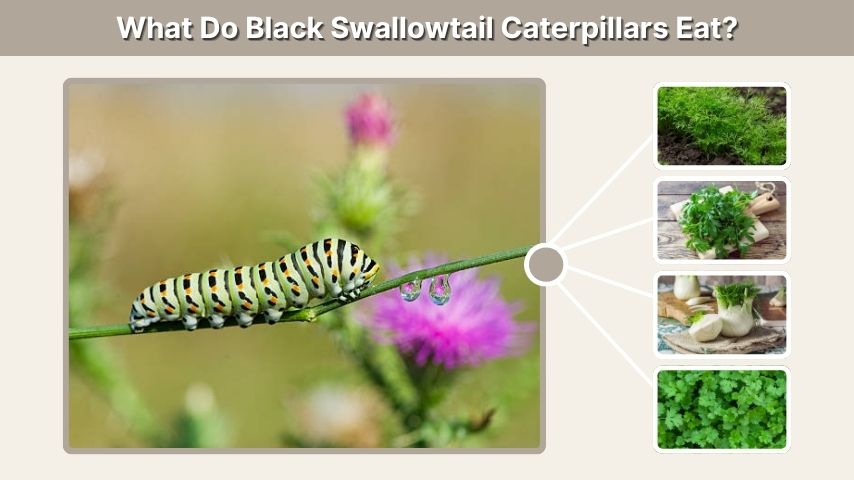
Black swallowtail caterpillars are among the most common swallowtail caterpillars found in herb gardens. They are often called parsley worms because they feed heavily on parsley and related plants.
Black swallowtail caterpillars eat plants in the carrot family, also known as the Apiaceae family. Their favorite garden foods include dill, parsley, fennel, carrot tops, celery leaves, cilantro, and sometimes Queen Anne’s lace.
Best Plants for Black Swallowtail Caterpillars
If you want to support black swallowtails, plant more than one host plant. These caterpillars can eat quickly, especially when they are large. A single parsley plant may not be enough if several caterpillars hatch at once.
Good plants for black swallowtail caterpillars include:
- Dill
- Parsley
- Fennel
- Carrot greens
- Celery leaves
- Cilantro
- Queen Anne’s lace
- Golden Alexander
- Rue, in some gardens
Dill and fennel are especially useful because they grow tall, produce plenty of soft leaves, and attract egg-laying females. Parsley is also a favorite, but gardeners often notice damage more quickly because parsley plants are smaller.
Do Black Swallowtail Caterpillars Eat Herbs?
Yes, black swallowtail caterpillars eat several common herbs. Dill, parsley, fennel, and cilantro are the main herbs they use. If you grow these herbs and notice green, black, and yellow striped caterpillars, they are likely black swallowtail larvae.
The best approach is to plant extra herbs. Keep some for your kitchen and some for the caterpillars. Avoid spraying insecticides on these plants, even organic sprays, because caterpillars are highly sensitive to many pest-control products.
Swallowtail Caterpillar Food by Species
Different swallowtail species need different plants. This table gives a quick guide to the most searched types.
| Swallowtail Caterpillar | What It Eats |
| Black swallowtail | Dill, parsley, fennel, carrot tops, celery, cilantro, Queen Anne’s lace |
| Eastern tiger swallowtail | Wild cherry, tulip tree, sweetbay magnolia, ash, birch, willow, cottonwood |
| Giant swallowtail | Citrus, wild lime, prickly ash, hop tree, Hercules’ club, rue |
| Spicebush swallowtail | Spicebush, sassafras, sweet bay, tulip tree |
| Pipevine swallowtail | Native pipevine and Dutchman’s pipe species |
| Zebra swallowtail | Pawpaw leaves |
| Western tiger swallowtail | Cottonwood, aspen, willow, wild cherry, ash |
| Two-tailed swallowtail | Ash, chokecherry, hop tree |
Use this table as a starting point, but choose plants that are native or suitable for your region whenever possible.
What Do Tiger Swallowtail Caterpillars Eat?
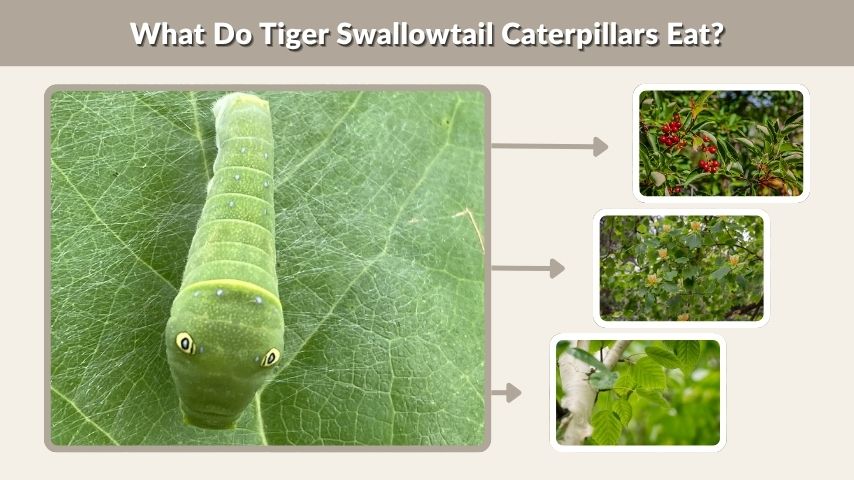
Tiger swallowtail caterpillars usually eat tree leaves, not herbs. This is one of the biggest differences between black swallowtails and tiger swallowtails. If you are looking for caterpillars on dill or parsley, you are probably not looking at a tiger swallowtail.
Eastern Tiger Swallowtail Caterpillar Diet
Eastern tiger swallowtail caterpillars eat leaves from several broadleaf trees. Common host plants include wild cherry, tulip tree, sweetbay magnolia, ash, birch, cottonwood, willow, and basswood. They often rest on leaves and may use silk to make a small resting pad.
Because these caterpillars live in trees, many people never notice them. The adult butterfly is large and easy to see, but the caterpillars may be high above eye level.
Western and Canadian Tiger Swallowtail Foods
Western tiger swallowtail caterpillars feed on trees such as cottonwood, aspen, willow, wild cherry, and ash. Canadian tiger swallowtail caterpillars often use birch, aspen, and black cherry.
These species show why the phrase “yellow swallowtail caterpillar” can be confusing. Many tiger swallowtail butterflies are yellow as adults, but their caterpillars depend on species-specific tree hosts.
What Do Giant Swallowtail Caterpillars Eat?
Giant swallowtail caterpillars eat plants in the citrus family. They are especially known for feeding on citrus trees, which is why they are sometimes called “orangedogs.” You may find them on orange, lemon, lime, grapefruit, or other citrus plants.
They also feed on native citrus-family plants such as wild lime, prickly ash, hop tree, and Hercules’ club. Some gardeners also see them on rue.
Young giant swallowtail caterpillars look like bird droppings. This odd appearance helps protect them from predators. Although they can chew noticeable holes in citrus leaves, a healthy mature tree can usually tolerate a few caterpillars. Small citrus trees, however, may need protection if many larvae appear at once.
What Do Spicebush, Pipevine, and Zebra Swallowtails Eat?
Several swallowtails are named after their host plants, which makes their diet easier to remember. These species are often found in native plant gardens, woodland edges, and natural areas.
Spicebush Swallowtail Caterpillars
Spicebush swallowtail caterpillars eat spicebush, sassafras, sweet bay, and sometimes tulip tree. They are famous for folding leaves into shelters. Inside those leaf shelters, the caterpillars rest when they are not feeding.
Their large false eyespots make them look more threatening than they really are. Despite their dramatic appearance, they are harmless to people and plants usually recover well from minor feeding.
Pipevine Swallowtail Caterpillars
Pipevine swallowtail caterpillars eat pipevine plants, especially native pipevines in the Aristolochia group. This is a case where plant choice matters a lot. Some ornamental pipevines may not be suitable for local caterpillars, so native species are usually the safest choice for a butterfly garden.
Pipevine swallowtails depend strongly on the right host plant. Nectar flowers may bring adult butterflies into the yard, but pipevine plants are what allow them to reproduce.
Zebra Swallowtail Caterpillars
Zebra swallowtail caterpillars eat pawpaw leaves. The pawpaw tree is their key host plant. If you want zebra swallowtails, planting pawpaw is far more useful than planting general butterfly flowers alone.
Pawpaw trees also provide a native landscape benefit in many eastern areas. They can support zebra swallowtails while adding interesting foliage and fruit to the garden.
What Plants Do Swallowtail Caterpillars Eat in Gardens?
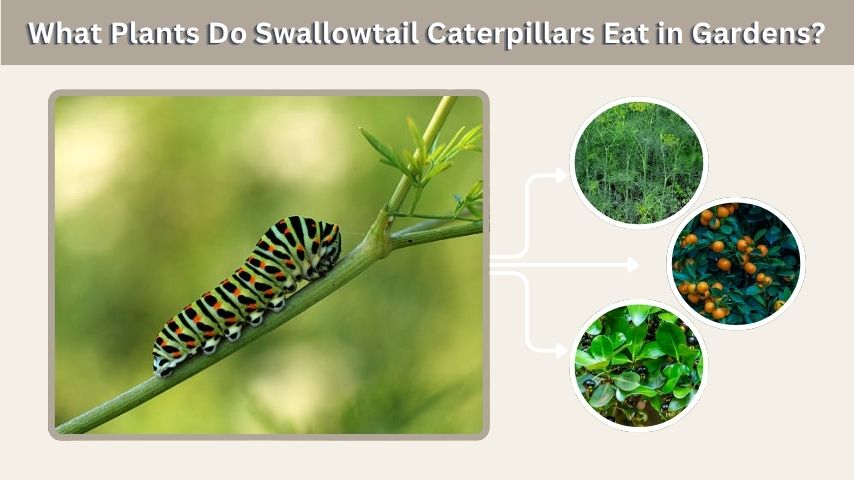
For home gardens, the most useful swallowtail plants depend on your space. Small gardens can support herb-feeding swallowtails, while larger yards can include shrubs and trees for other species.
Good garden choices include:
- Dill, parsley, fennel, and carrots for black swallowtails
- Citrus or rue for giant swallowtails in suitable climates
- Spicebush or sassafras for spicebush swallowtails
- Pawpaw for zebra swallowtails
- Native cherry, birch, willow, or tulip tree for tiger swallowtails
- Native pipevine for pipevine swallowtails
If you want more caterpillars, plant host plants in clusters. A single plant may help, but several plants make it easier for female butterflies to find a good egg-laying spot. It also gives the caterpillars enough food to finish growing.
Can Swallowtail Caterpillars Eat Anything Besides Dill?
Black swallowtail caterpillars can eat much more than dill. Dill is popular because it is common in herb gardens, but parsley, fennel, carrot tops, cilantro, celery leaves, Queen Anne’s lace, and golden Alexander are also useful host plants.
However, you should not move a caterpillar to a random plant. A black swallowtail caterpillar placed on lettuce, basil, tomato, or milkweed will not thrive. Caterpillars are adapted to certain plant chemicals, and the wrong food can cause them to stop eating.
If a caterpillar has already been feeding on dill, it can usually be moved to another suitable black swallowtail host, such as fennel or parsley. Make the switch carefully and provide fresh, unsprayed leaves.
How to Feed Swallowtail Caterpillars Safely
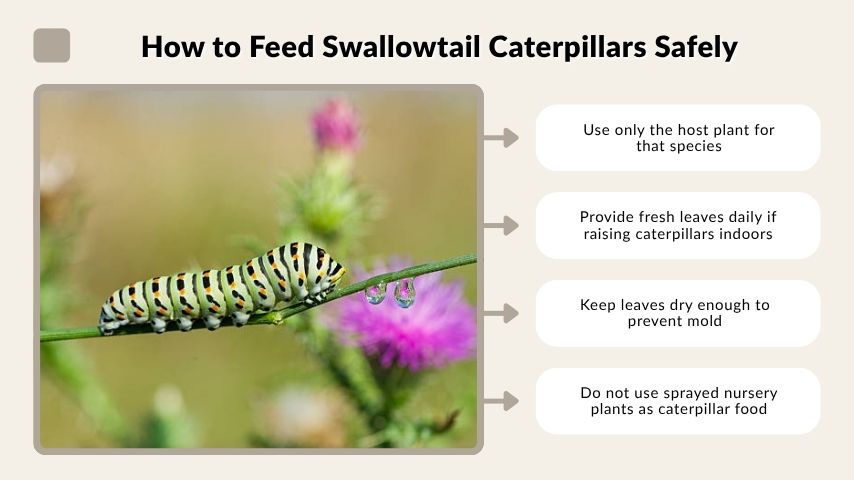
If you are raising swallowtail caterpillars or protecting them in the garden, food quality matters. Give them fresh leaves from the correct host plant and avoid leaves that may contain pesticide residue.
Follow these simple tips:
- Use only the host plant for that species
- Provide fresh leaves daily if raising caterpillars indoors
- Keep leaves dry enough to prevent mold
- Do not use sprayed nursery plants as caterpillar food
- Plant extra herbs or host trees before caterpillars arrive
- Avoid moving caterpillars unless necessary
Caterpillars eat more as they grow. A tiny young caterpillar may barely mark a leaf, while a final-stage caterpillar can strip a small stem quickly. This is normal and means the caterpillar is preparing for the chrysalis stage.
Should You Remove Swallowtail Caterpillars from Plants?
In most cases, you should not remove swallowtail caterpillars unless the plant is too small to handle the feeding. Swallowtail caterpillars become beautiful butterflies and are part of a healthy garden ecosystem.
If they are eating herbs you planned to harvest, move some caterpillars to extra host plants of the same type. For example, a black swallowtail caterpillar on parsley can often be moved to dill or fennel. Do not move it to a plant meant for a different species.
For small citrus trees, watch giant swallowtail caterpillars closely. A few caterpillars are usually manageable, but many can defoliate a young tree. You can protect the tree by relocating some larvae to another suitable citrus-family host.
FAQs
What do swallowtail caterpillars eat most often?
Swallowtail caterpillars most often eat the leaves of their host plants. The exact plant depends on the species. Black swallowtails eat dill, parsley, fennel, and carrot-family plants. Tiger swallowtails eat tree leaves. Giant swallowtails eat citrus-family plants. Zebra swallowtails eat pawpaw, and pipevine swallowtails eat pipevine.
What do black swallowtail caterpillars eat besides dill?
Black swallowtail caterpillars eat parsley, fennel, carrot tops, celery leaves, cilantro, Queen Anne’s lace, and golden Alexander besides dill. They need plants in the carrot family or closely accepted host plants. Do not feed them random garden leaves, because they may refuse the food or fail to develop properly.
Do swallowtail caterpillars eat milkweed?
Most swallowtail caterpillars do not eat milkweed. Milkweed is best known as the host plant for monarch caterpillars. Swallowtails use different host plants depending on species, such as dill, parsley, citrus, pawpaw, pipevine, spicebush, wild cherry, tulip tree, willow, and other suitable plants.
What do eastern tiger swallowtail caterpillars eat?
Eastern tiger swallowtail caterpillars eat leaves from trees such as wild cherry, tulip tree, sweetbay magnolia, ash, birch, cottonwood, willow, basswood, and related broadleaf trees. They are not herb-garden caterpillars like black swallowtails, so you are more likely to find them on trees than on dill or parsley.
Can I move swallowtail caterpillars to another plant?
You can move swallowtail caterpillars only to a correct host plant for the same species. A black swallowtail on dill can usually move to parsley or fennel, but not to lettuce or basil. A tiger swallowtail needs suitable tree leaves, while a giant swallowtail needs citrus-family plants.