
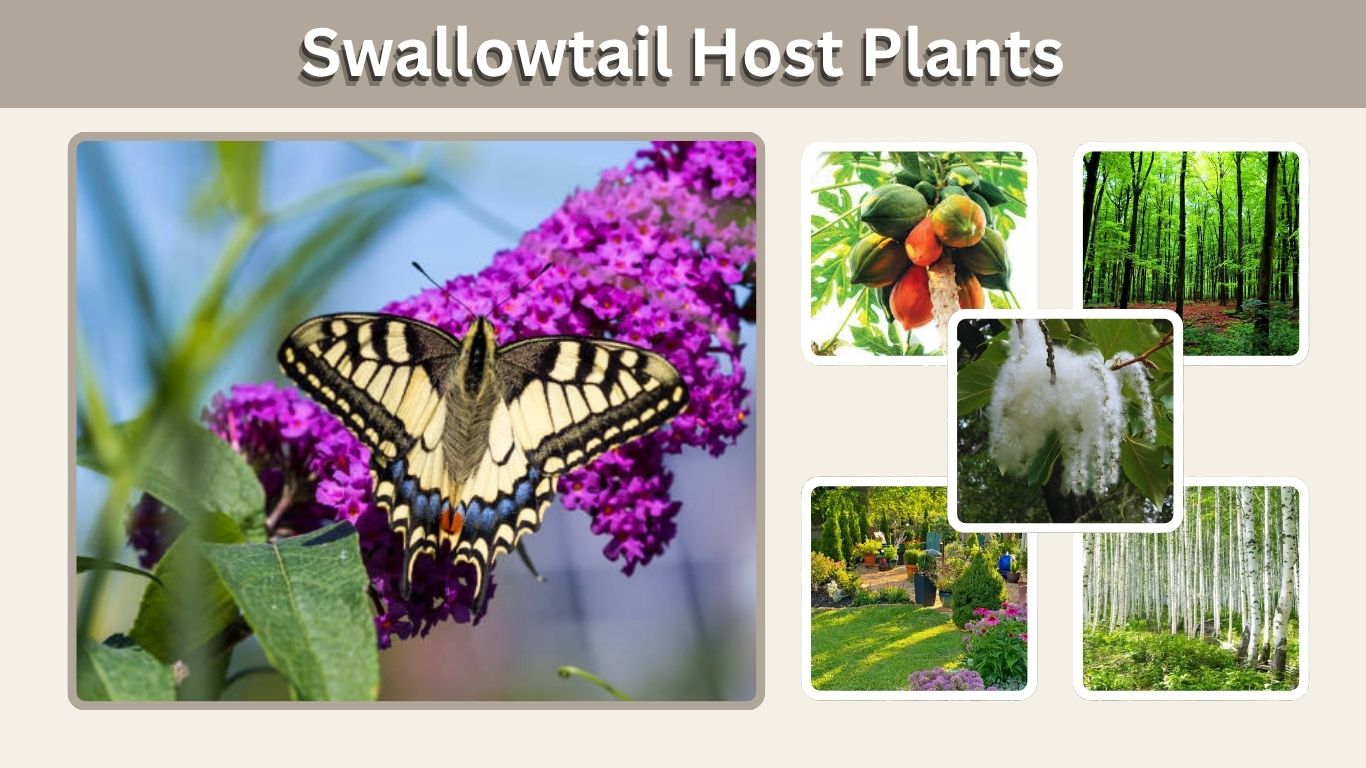
Swallowtail host plants are the specific plants where swallowtail butterflies lay eggs and their caterpillars feed. While adult swallowtails visit many flowers for nectar, their caterpillars are much more selective. A black swallowtail caterpillar may eat dill or parsley, while a tiger swallowtail caterpillar needs tree leaves. Knowing the right host plant helps gardeners support butterflies from egg to adult.
What Are Swallowtail Host Plants?
Swallowtail host plants are the food plants used by swallowtail caterpillars. These plants are essential because caterpillars cannot usually survive on random leaves. Female butterflies search for the correct plant before laying eggs, so the newly hatched caterpillars can begin eating right away.
This is different from nectar plants. Nectar plants feed adult butterflies. Host plants feed caterpillars. A garden with only flowers may attract adult butterflies for a short visit, but it may not support their full life cycle.
For example, zinnias, milkweed flowers, coneflowers, and lantana may attract adult swallowtails. However, black swallowtail caterpillars need plants such as parsley, dill, fennel, carrot greens, and Queen Anne’s lace. Giant swallowtail caterpillars need citrus-family plants. Zebra swallowtail caterpillars need pawpaw.
If your goal is to bring more swallowtails into your garden, plant both nectar flowers and the correct host plants.
Why Host Plants Matter for Swallowtails
Swallowtail caterpillars are specialized feeders. Their bodies are adapted to certain plant chemicals, which is why each species has a limited diet. The wrong plant may not provide the nutrition or chemical signals the caterpillar needs.
Host plants matter because they:
- Give caterpillars the right food
- Encourage female butterflies to lay eggs
- Support the full butterfly life cycle
- Help native butterfly populations
- Create a more balanced pollinator garden
A caterpillar feeding on dill should not be moved to lettuce or basil. A caterpillar on citrus should not be moved to parsley. Even if the leaves look soft and green, they may be completely unsuitable for that species.
Swallowtail Host Plants by Species
Different swallowtail species use different host plants. Some feed on herbs, some on shrubs, and others on trees. This quick table can help you match the caterpillar to the correct plant.
| Swallowtail Species | Common Host Plants |
| Black swallowtail | Dill, parsley, fennel, carrot tops, celery, cilantro, Queen Anne’s lace |
| Giant swallowtail | Citrus, rue, prickly ash, hop tree, Hercules’ club |
| Eastern tiger swallowtail | Wild cherry, tulip tree, sweetbay magnolia, ash, birch, cottonwood, willow |
| Western tiger swallowtail | Cottonwood, willow, aspen, ash, wild cherry |
| Spicebush swallowtail | Spicebush, sassafras, sweet bay, red bay |
| Pipevine swallowtail | Native pipevine and Dutchman’s pipe species |
| Zebra swallowtail | Pawpaw |
| Anise swallowtail | Fennel, anise, parsley, carrot-family plants, rue |
This table is a useful starting point, but local species and native plant availability can vary by region. When possible, choose native host plants that naturally grow in your area.
Black Swallowtail Host Plants
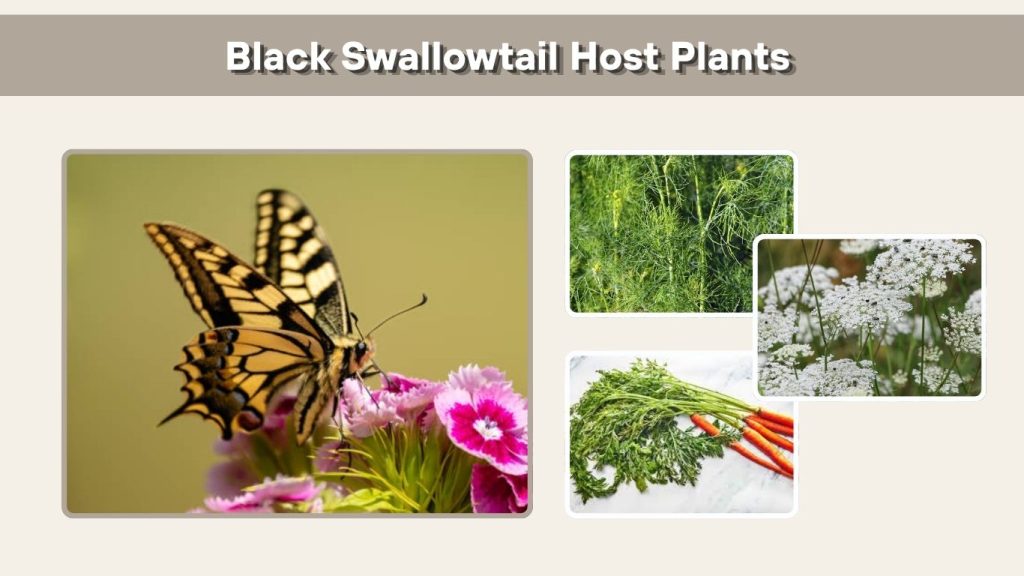
Black swallowtail host plants are some of the easiest to grow in home gardens. These caterpillars commonly feed on plants in the carrot family. Gardeners often find them on dill, parsley, fennel, carrot tops, celery leaves, and Queen Anne’s lace.
Common black swallowtail host plants include:
- Dill
- Parsley
- Fennel
- Carrot greens
- Celery leaves
- Cilantro
- Queen Anne’s lace
- Golden Alexander
- Rue
Black swallowtail caterpillars are often called parsley worms because they are frequently found on parsley. They also love dill and fennel, especially when the plants are tall and leafy.
If you want to support black swallowtails, plant more than one host plant. A few caterpillars can eat a small parsley plant quickly. Growing extra dill or fennel gives them enough food and keeps your herb garden from being completely stripped.
It is also important to avoid pesticide-treated herbs. Caterpillars eat the leaves directly, so chemical residues can harm or kill them. If you buy parsley or dill from a nursery, make sure it has not been treated with systemic insecticides.
Giant Swallowtail Host Plants
Giant swallowtail host plants usually belong to the citrus family. These caterpillars are sometimes called “orangedogs” because they often feed on orange, lemon, lime, and other citrus trees.
Common giant swallowtail host plants include:
- Orange
- Lemon
- Lime
- Grapefruit
- Prickly ash
- Hop tree
- Hercules’ club
- Rue
Giant swallowtail caterpillars look very different from black swallowtail caterpillars. Young larvae often resemble bird droppings, which helps protect them from predators. Even though they may look unusual, they are simply feeding and growing.
If you grow citrus in containers, watch young trees carefully. A mature citrus tree can usually handle a few caterpillars, but a small potted tree may lose too many leaves if several larvae are feeding at once. Instead of killing them, you can move some caterpillars to another safe citrus-family host plant.
Tiger Swallowtail Host Plants
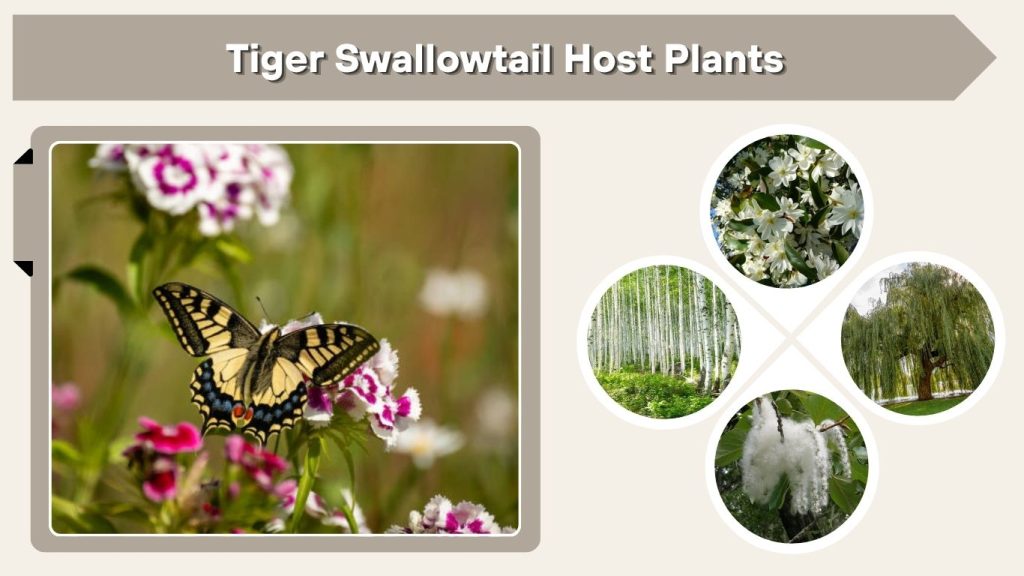
Tiger swallowtails are large, beautiful butterflies, but their caterpillars are not usually found on garden herbs. Tiger swallowtail caterpillars feed mostly on trees.
Eastern tiger swallowtail host plants include wild cherry, tulip tree, sweetbay magnolia, ash, birch, willow, cottonwood, and basswood. These trees provide leaves for the caterpillars and habitat for the adult butterflies.
Western tiger swallowtail host plants include cottonwood, willow, aspen, ash, alder, and wild cherry. Canadian tiger swallowtails also use trees such as birch, aspen, and cherry.
Because tiger swallowtail caterpillars feed in trees, many gardeners never notice them. The adult butterfly may be easy to see visiting flowers, but the caterpillar may be hidden high in the canopy. Planting native trees is one of the best ways to support tiger swallowtails over the long term.
Pipevine Swallowtail Host Plants
Pipevine swallowtail host plants are plants in the Aristolochia group, commonly called pipevines or Dutchman’s pipe. These plants are essential for pipevine swallowtail caterpillars.
The best choice is usually a native pipevine suited to your region. Native options are more likely to support local caterpillars safely. Some non-native ornamental pipevines may not be appropriate for all swallowtail populations, so gardeners should choose carefully.
Pipevine swallowtail caterpillars may feed in groups and can eat heavily. However, healthy pipevine plants often recover after caterpillar feeding. If you want pipevine swallowtails, planting the right vine is more important than planting general butterfly flowers alone.
Adult pipevine swallowtails will visit nectar flowers, but they need pipevine host plants to reproduce.
Spicebush Swallowtail Host Plants
Spicebush swallowtail caterpillars feed on plants in the laurel family. Their most important host plants include spicebush, sassafras, sweet bay, red bay, and swamp bay.
These caterpillars are known for making leaf shelters. They fold or roll leaves and rest inside when they are not feeding. Their false eyespots make them look like small snakes, which may help scare away predators.
Good spicebush swallowtail host plants include:
- Spicebush
- Sassafras
- Sweet bay
- Red bay
- Swamp bay
Spicebush is one of the best choices for native gardens in suitable regions. It works well as a shrub in woodland edges, naturalized areas, and wildlife-friendly landscapes.
Zebra Swallowtail Host Plant
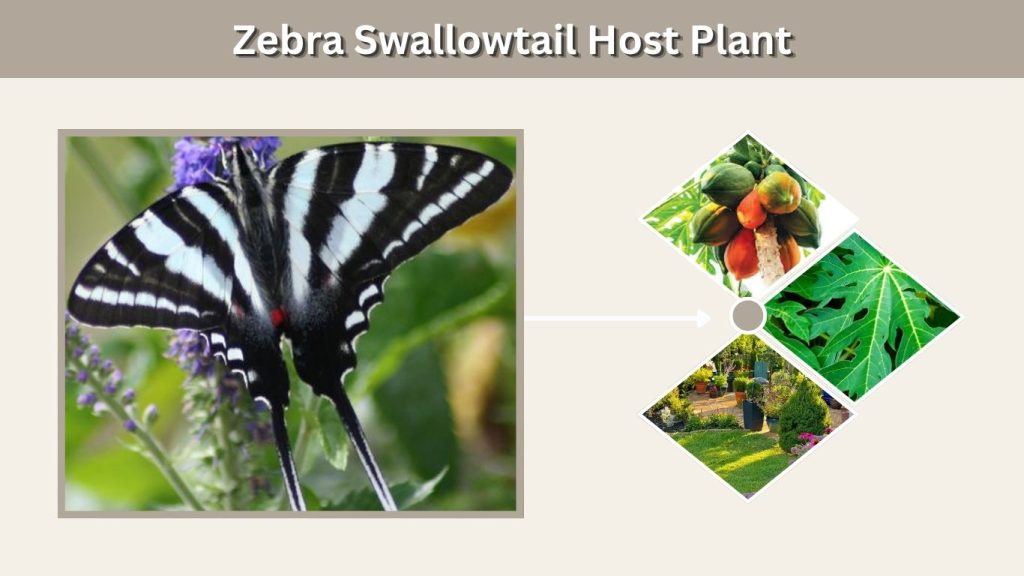
The zebra swallowtail host plant is pawpaw. This species is closely tied to pawpaw trees, and its caterpillars feed on pawpaw leaves.
If you want zebra swallowtails in your yard, planting pawpaw is the key step. Nectar flowers may attract the adults, but pawpaw gives the caterpillars the food they need.
Pawpaw trees can be a good choice for native plant gardens in areas where they grow well. They prefer rich soil and often do best with some protection when young. Once established, they can support zebra swallowtails and add unique value to a wildlife garden.
Anise Swallowtail Host Plants
Anise swallowtail caterpillars use plants similar to black swallowtails. They commonly feed on fennel, anise, parsley, carrot-family plants, and sometimes rue.
This species is common in parts of the western United States. In gardens, fennel is one of the most useful host plants. Like black swallowtail caterpillars, anise swallowtail caterpillars should not be moved to random plants. They need suitable host leaves to continue growing.
If you grow fennel and notice striped caterpillars, look closely before removing them. They may become anise swallowtails or black swallowtails, depending on your region.
Best Host Plants for a Swallowtail Garden
The best swallowtail host plants depend on your location and the species you want to attract. A small herb garden can support black swallowtails or anise swallowtails. A larger yard can support tiger swallowtails, spicebush swallowtails, pipevine swallowtails, and zebra swallowtails with shrubs, vines, and trees.
For a strong swallowtail garden, consider planting:
- Dill, parsley, and fennel for black swallowtails
- Citrus or rue for giant swallowtails
- Native cherry, willow, or tulip tree for tiger swallowtails
- Spicebush or sassafras for spicebush swallowtails
- Native pipevine for pipevine swallowtails
- Pawpaw for zebra swallowtails
Plant host plants in groups when possible. A single plant may attract eggs, but it may not provide enough food for several hungry caterpillars. Grouped plants also make it easier for female butterflies to find them.
Are Swallowtail Caterpillars Harmful to Plants?
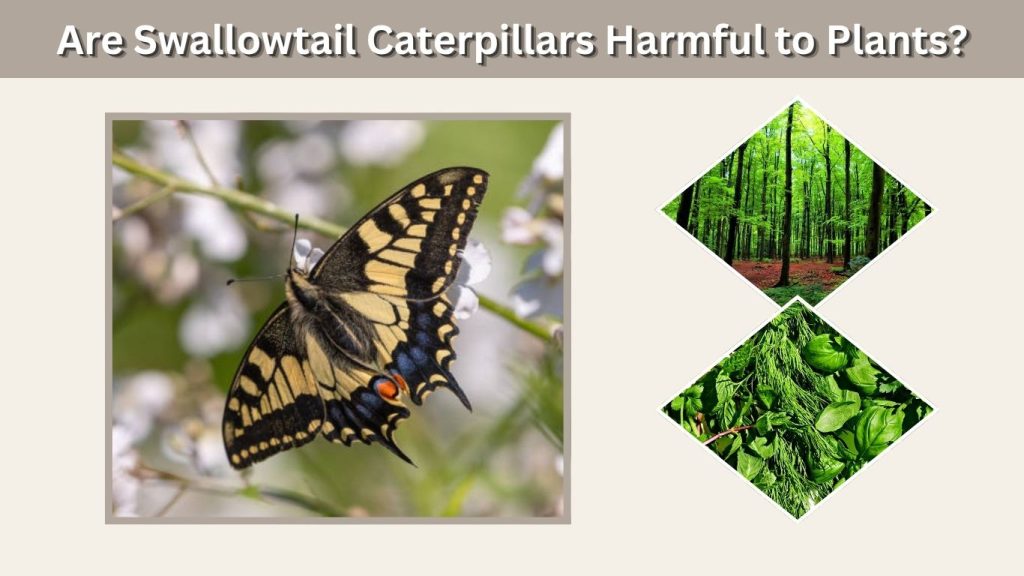
Swallowtail caterpillars chew leaves, but they are usually not seriously harmful to healthy established plants. Most mature herbs, shrubs, vines, and trees can recover from moderate feeding.
The main concern is with small or young plants. A few large caterpillars can strip a small parsley plant or young citrus tree quickly. If this happens, move some caterpillars to another correct host plant instead of removing them from the garden completely.
For example, black swallowtail caterpillars can usually move from parsley to dill or fennel. Giant swallowtail caterpillars can move from one citrus-family plant to another. The key is to stay within the right host plant group.
Host Plants vs Nectar Plants
Many gardeners mix up host plants and nectar plants. Both are important, but they serve different purposes.
Host plants feed caterpillars. Nectar plants feed adult butterflies.
A complete swallowtail garden should include both. Host plants allow butterflies to reproduce, while nectar flowers give adults energy. Good nectar plants include zinnias, coneflowers, milkweed flowers, bee balm, lantana, phlox, verbena, and native wildflowers.
If you only plant nectar flowers, adult swallowtails may visit but leave without laying eggs. If you plant host plants too, your garden can support the whole life cycle.
Tips for Growing Swallowtail Host Plants
Swallowtail host plants are easy to include in many garden styles. Herbs can grow in pots, shrubs can fit along borders, and trees can become long-term habitat.
Use these tips for better results:
- Grow extra host plants so caterpillars have enough leaves
- Avoid pesticides on caterpillar food plants
- Choose native plants when possible
- Let some herbs flower and reseed
- Plant both host plants and nectar flowers
- Match the plant to the swallowtail species in your region
Do not worry if caterpillars chew visible holes in leaves. That is the purpose of a host plant. A few eaten leaves are a sign that your garden is supporting butterfly life.
FAQs
What is a swallowtail host plant?
A swallowtail host plant is a plant that swallowtail caterpillars eat. Female butterflies lay eggs on these plants so the young caterpillars have food after hatching. Different swallowtail species need different host plants, such as dill for black swallowtails, citrus for giant swallowtails, and pawpaw for zebra swallowtails.
What are black swallowtail host plants?
Black swallowtail host plants include dill, parsley, fennel, carrot tops, celery leaves, cilantro, Queen Anne’s lace, golden Alexander, and sometimes rue. These caterpillars usually feed on plants in the carrot family. Gardeners often find them on herb plants during warm months.
What is the host plant for a giant swallowtail?
Giant swallowtail caterpillars feed on citrus-family plants. Common host plants include orange, lemon, lime, grapefruit, prickly ash, hop tree, Hercules’ club, and rue. They may look like bird droppings when young, but this is normal camouflage and helps protect them from predators.
What host plants do tiger swallowtails use?
Tiger swallowtail caterpillars usually feed on tree leaves. Eastern tiger swallowtails use wild cherry, tulip tree, sweetbay magnolia, ash, birch, willow, cottonwood, and basswood. Western tiger swallowtails use trees such as cottonwood, willow, aspen, ash, and wild cherry.
Do swallowtails need nectar plants too?
Yes, adult swallowtail butterflies need nectar plants for energy, while caterpillars need host plants for food. A good butterfly garden includes both. Plant host plants for egg-laying and caterpillar growth, then add nectar flowers such as zinnias, coneflowers, bee balm, lantana, and native wildflowers.