
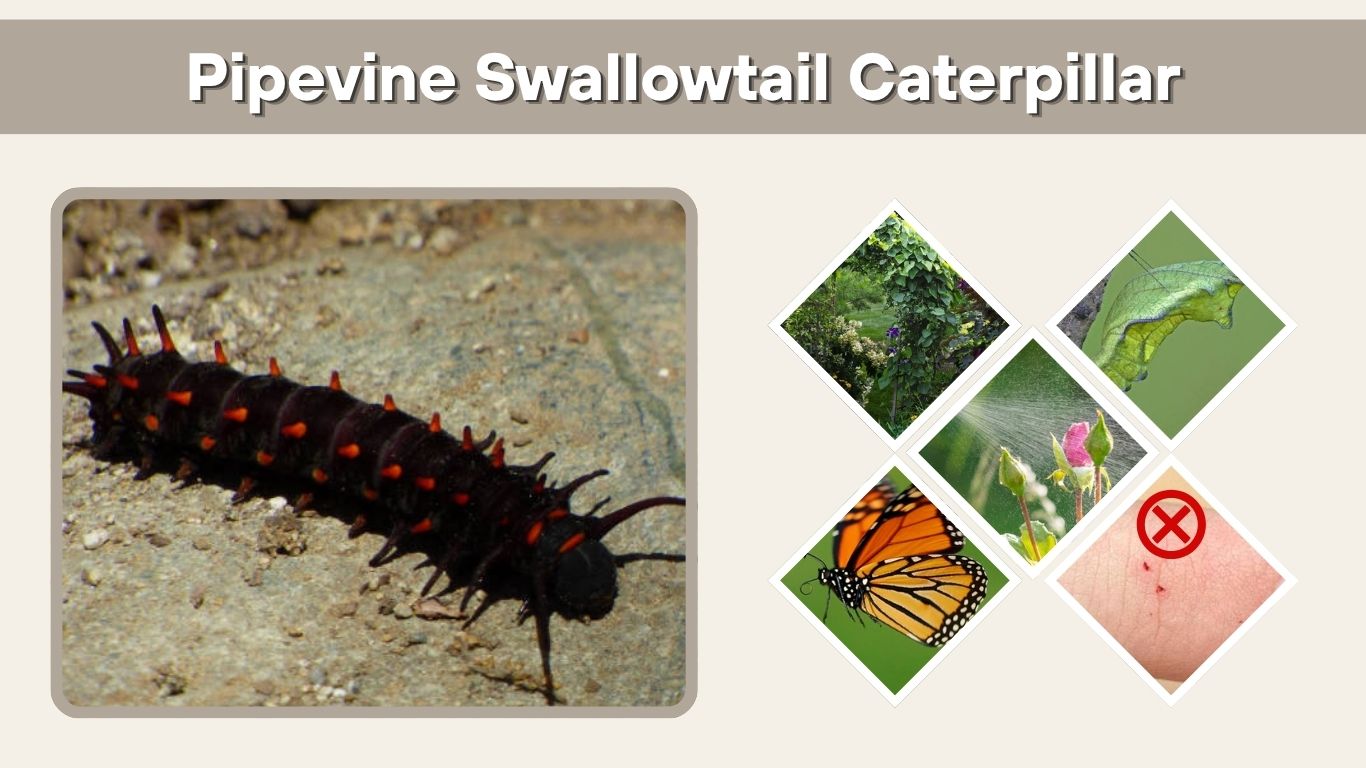
The pipevine swallowtail caterpillar is a bold, dark, spiny-looking larva that grows into one of the most beautiful swallowtail butterflies in North America. It is best known for feeding on pipevine plants, storing plant toxins in its body, and using warning colors to avoid predators. Although it may look dangerous, this caterpillar does not sting and is an important part of a healthy butterfly garden.
What Is a Pipevine Swallowtail Caterpillar?
The pipevine swallowtail caterpillar is the larval stage of the pipevine swallowtail butterfly, scientifically known as Battus philenor. Like other butterflies, it passes through four main life stages: egg, caterpillar, chrysalis, and adult butterfly. The caterpillar stage is the feeding and growing stage.
Young caterpillars hatch from eggs laid on pipevine leaves. After hatching, they begin eating the host plant almost immediately. As they grow, they shed their skin several times. These growth stages are called instars. Each instar allows the caterpillar to become larger before it finally forms a chrysalis.
This caterpillar is strongly connected to pipevine plants. Without the correct host plant, it cannot survive. That is why gardeners who want to attract pipevine swallowtails need to grow suitable pipevine species instead of only planting nectar flowers.
Pipevine Swallowtail Caterpillar Identification
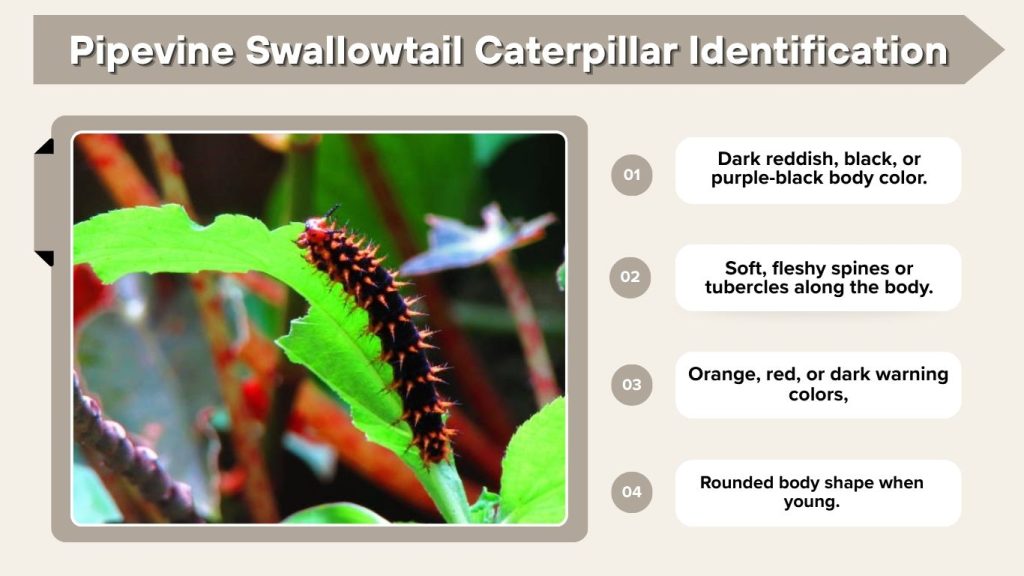
Pipevine swallowtail caterpillars have a dramatic appearance. Their bodies are usually dark red, reddish brown, black, or deep purple-black. Many individuals have fleshy, spine-like projections along the body. These projections may look sharp, but they are not stingers.
Identification features include:
- Dark reddish, black, or purple-black body color
- Soft, fleshy spines or tubercles along the body
- Orange, red, or dark warning colors
- Rounded body shape when young
- Longer, thicker body in later growth stages
- Often found in groups on pipevine leaves
- No true stinger or venom-injecting spine
Some caterpillars look more red or orange, especially in warmer regions or certain stages. Others appear darker and almost black. The color can vary, but the host plant and body shape help separate them from many other caterpillars.
Because of their strange spines and strong color, many people mistake them for dangerous insects. In reality, the color is mainly a warning to predators that the caterpillar is not good to eat.
What Do Pipevine Swallowtail Caterpillars Eat?
Pipevine swallowtail caterpillars eat pipevine plants, especially plants in the genus Aristolochia. These plants are also called Dutchman’s pipe or birthwort. The caterpillar is a specialist feeder, which means it depends on a limited group of host plants rather than eating many kinds of leaves.
Common host plants include native pipevine species such as Virginia snakeroot, woolly Dutchman’s pipe, California pipevine, and other regionally suitable Aristolochia plants. In gardens, the best plant depends on the local climate and native range.
Adult butterflies drink nectar from flowers, but the caterpillars need pipevine leaves. This difference is important. A yard full of flowers may attract adult butterflies, but it will not support caterpillars unless the correct host plant is available.
| Life Stage | Food Source | Garden Need |
| Egg | No feeding | Pipevine leaves for egg laying |
| Caterpillar | Pipevine leaves | Native or safe pipevine host plant |
| Chrysalis | Does not feed | Protected stem, wall, branch, or shelter |
| Adult Butterfly | Flower nectar | Nectar-rich flowers near host plants |
Caterpillars may feed together when young and spread out more as they grow. A healthy pipevine can support several caterpillars, but small plants can be eaten quickly. If you want to raise them naturally, grow more than one host plant.
Are Pipevine Swallowtail Caterpillars Poisonous?
Pipevine swallowtail caterpillars are toxic to many predators because they absorb chemicals from pipevine plants. The host plants contain aristolochic acids, and the caterpillars store these compounds in their bodies. This makes them unpleasant or dangerous for birds, lizards, and other animals to eat.
However, “poisonous” does not mean they sting. Pipevine swallowtail caterpillars do not inject venom like bees, wasps, or scorpions. Their defense comes from being toxic when eaten, not from attacking.
For humans, touching one usually does not cause serious problems. Still, it is better not to handle caterpillars unless necessary. Some people may have sensitive skin, and handling can stress or injure the caterpillar. If you touch one, wash your hands afterward and avoid touching your eyes or mouth.
Pets should not be allowed to eat them. Because the caterpillars carry plant toxins, dogs, cats, chickens, and other animals should be kept away from them.
Do Pipevine Swallowtail Caterpillars Sting?
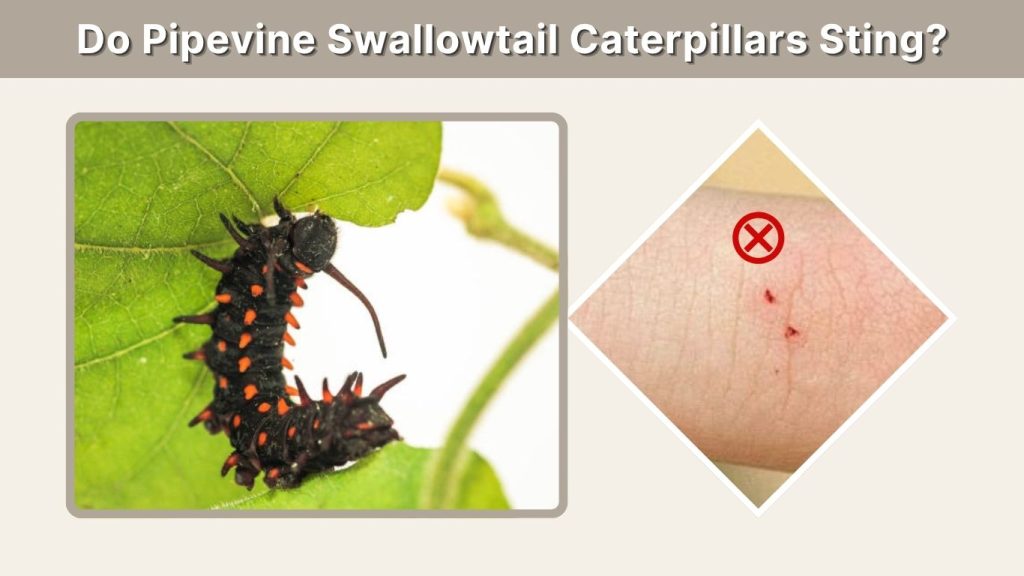
Pipevine swallowtail caterpillars do not sting. Their spines are soft, fleshy body parts, not venomous stingers. They may look intimidating, but they are not built to pierce skin or inject venom.
The warning appearance is part of their survival strategy. Bright or unusual colors often tell predators that an animal may taste bad or be unsafe to eat. In the pipevine swallowtail caterpillar, this warning is connected to the toxins gained from its host plant.
Even though they do not sting, avoid rough handling. Caterpillars have soft bodies and can be injured easily. If you need to move one, place a leaf or small stem in front of it and let it crawl on naturally.
Pipevine Swallowtail Caterpillar Life Cycle
The pipevine swallowtail life cycle begins when an adult female lays eggs on pipevine leaves or stems. Eggs are often laid in small clusters, especially on healthy host plants in sunny areas. After the eggs hatch, tiny caterpillars begin feeding.
The caterpillar stage is focused on eating and growing. During this time, the larva passes through several instars. It may start small and darker, then become larger with more visible spines and stronger warning colors.
After it finishes growing, the caterpillar leaves the feeding area and searches for a safe place to pupate. It attaches itself with silk and forms a chrysalis. The chrysalis may be brown, greenish, or tan, depending on the surroundings.
Inside the chrysalis, the caterpillar transforms into an adult butterfly. When development is complete, the adult emerges, expands its wings, and begins searching for nectar and mates.
Pipevine Swallowtail Chrysalis
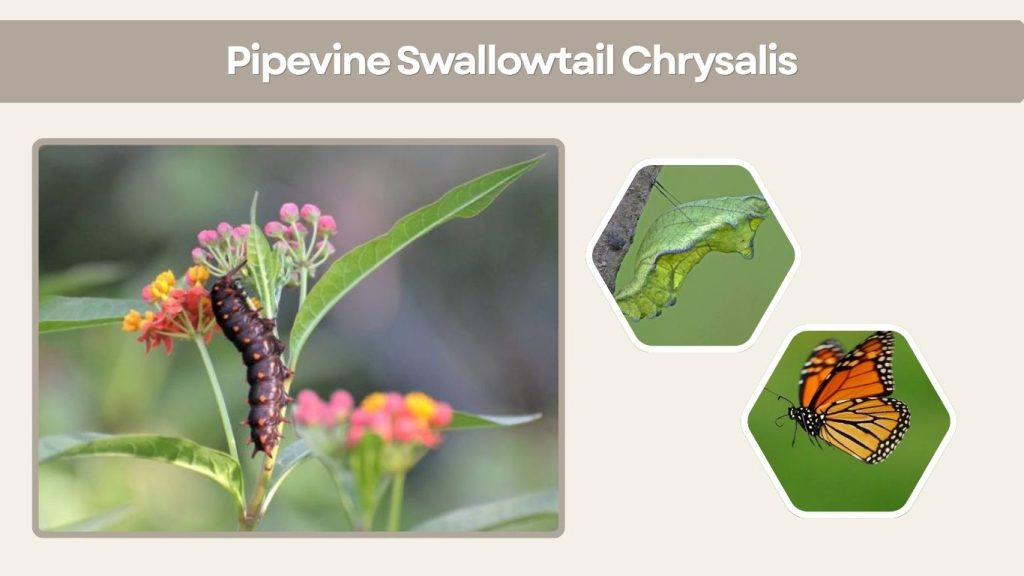
The chrysalis is the resting transformation stage between caterpillar and butterfly. It does not eat during this time. Instead, major body changes happen inside the protective outer case.
A pipevine swallowtail chrysalis may be attached to a stem, fence, wall, branch, or other firm surface. It is usually held in place by silk. The color can help it blend into the background, making it less noticeable to predators.
Gardeners should avoid cleaning too aggressively around host plants during butterfly season. Caterpillars may leave the pipevine before forming a chrysalis, so the chrysalis may not always be on the host plant itself. It can appear nearby on garden structures, shrubs, or dry stems.
If you find a chrysalis, leave it undisturbed. Moving it incorrectly can damage the developing butterfly.
California, Texas, and Florida Caterpillars
Pipevine swallowtail caterpillars can appear in different parts of the United States where suitable host plants grow. Regional host plant choice is very important because not every pipevine is safe or useful for every local population.
In California, pipevine swallowtails are closely connected with California pipevine. This plant supports the caterpillars and is one of the best choices for gardens in suitable western areas.
In Texas, gardeners may use regionally appropriate native pipevines. Pipevine swallowtails are often seen where host vines grow along edges, gardens, and natural areas.
In Florida, host plant choice should be made carefully. Some ornamental tropical pipevines may attract egg-laying females but may not be suitable for healthy caterpillar survival. Native or locally recommended pipevine species are safer choices.
How to Care for Pipevine Swallowtail Caterpillars
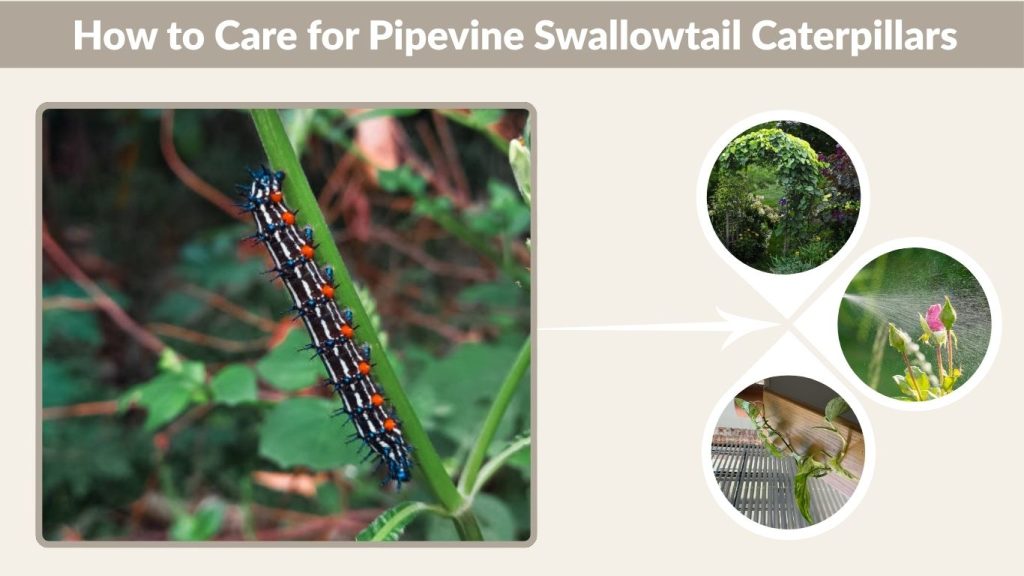
The best way to care for pipevine swallowtail caterpillars is to grow healthy host plants and avoid chemicals. Caterpillars are sensitive to pesticides, even products used for common garden pests.
Good care steps include:
- Grow native or regionally safe pipevine host plants.
- Avoid spraying pesticides on or near host plants.
- Plant more than one vine if possible.
- Keep host plants watered during dry weather.
- Check leaves before pruning.
- Allow caterpillars to feed without disturbance.
- Keep pets away from caterpillars and host plants.
- Leave nearby stems or shelter for chrysalis formation.
If a plant becomes crowded with caterpillars, do not move them to random leaves. They need pipevine. Moving them to the wrong plant can cause starvation. If you must move them, place them on another safe pipevine plant.
Common Problems and Predators
Even toxic caterpillars face dangers. Eggs and young larvae can be eaten by ants, spiders, wasps, and other insects. Parasitoid wasps and flies may also attack caterpillars. Birds may avoid older larvae, but young caterpillars are still vulnerable.
Weather can also affect survival. Heavy rain, extreme heat, drought, and lack of fresh leaves can reduce the number that reach adulthood. Small or unhealthy host plants may not provide enough food for a full group of caterpillars.
Gardeners sometimes create problems by removing chewed leaves too early. Chewed pipevine leaves are a normal sign that caterpillars are feeding. If the plant is healthy, it can usually recover.
The most important thing is to avoid insecticides. Even organic sprays can harm caterpillars if applied directly or left on leaves they eat.
Best Garden Setup for Pipevine Swallowtails
A pipevine swallowtail garden should include both host plants and nectar flowers. Pipevine supports eggs and caterpillars, while nectar plants support adult butterflies.
Choose a sunny to partly sunny location where the vine can climb. Pipevines often need a trellis, fence, arbor, or other support. Give the plant room to grow and avoid placing it where frequent pruning will remove eggs or caterpillars.
Add nectar flowers nearby. Good options include native milkweed, lantana, bee balm, zinnia, ironweed, Joe-Pye weed, buttonbush, phlox, and other nectar-rich flowers. Native flowering plants are especially helpful because they support more pollinators.
A strong garden has three things: food for caterpillars, nectar for adults, and safe shelter for transformation. When all three are present, pipevine swallowtails are more likely to complete their life cycle successfully.
FAQs
What does a pipevine swallowtail caterpillar eat?
A pipevine swallowtail caterpillar eats pipevine leaves, especially plants in the genus Aristolochia. These plants are also called Dutchman’s pipe or birthwort. The caterpillar is a specialist feeder, so it cannot survive on random garden leaves, vegetables, or most other butterfly plants.
Are pipevine swallowtail caterpillars poisonous?
Yes, they are toxic to many predators because they store chemicals from pipevine plants in their bodies. This makes them unsafe or unpleasant for animals to eat. However, they do not sting or inject venom. Their defense is mainly chemical protection from their diet.
Do pipevine swallowtail caterpillars sting humans?
No, pipevine swallowtail caterpillars do not sting humans. Their spine-like body parts are soft projections, not venomous stingers. It is still best to avoid unnecessary handling because caterpillars are delicate and some people may have mild skin sensitivity.
What is the best host plant for pipevine swallowtail caterpillars?
The best host plant is a native or regionally suitable pipevine. California pipevine is important in parts of California, while other native Aristolochia species may be better in different regions. Avoid unsuitable tropical pipevines unless local experts confirm they are safe for caterpillars.
How long does the pipevine swallowtail caterpillar stage last?
The caterpillar stage usually lasts a few weeks, depending on temperature, food quality, and local conditions. During this time, the caterpillar eats heavily and molts several times. After it finishes growing, it leaves the host plant area and forms a chrysalis before becoming an adult butterfly.