
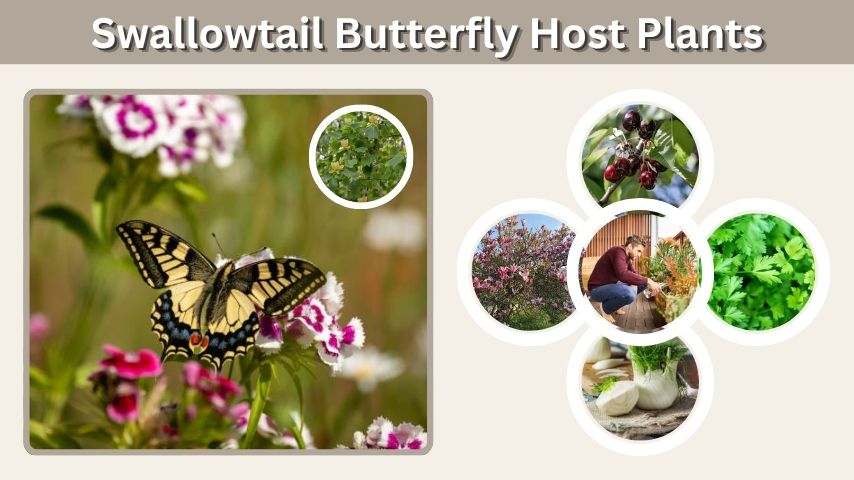
Swallowtail butterfly host plants are the plants female swallowtails use for laying eggs and the plants their caterpillars eat after hatching. While adult butterflies visit many flowers for nectar, their caterpillars are much more selective. Choosing the right host plants can turn a garden into a breeding space for black, tiger, giant, zebra, pipevine, and spicebush swallowtails.
What Are Swallowtail Host Plants?
Swallowtail host plants are not just decorative plants for attracting butterflies. They are the food source for swallowtail caterpillars and the place where females search for safe egg-laying sites. Without these plants, adult butterflies may visit flowers but will not complete their life cycle in your garden.
A host plant is different from a nectar plant. Nectar plants feed adult butterflies, while host plants feed the caterpillars. For example, a black swallowtail may sip nectar from zinnias or coneflowers, but its caterpillars need plants such as dill, fennel, parsley, carrot tops, or Queen Anne’s lace.
This is why a butterfly garden should include both plant types. Nectar flowers bring adults into the area, but host plants encourage them to stay, lay eggs, and produce the next generation.
Best Host Plants for Swallowtail Butterflies
Different swallowtail species use different host plants. Some prefer herbs, some rely on shrubs, and others need specific native trees. The best choice depends on which swallowtail species live in your region.
| Swallowtail Species | Common Host Plants | Best Garden Choice |
| Black Swallowtail | Dill, fennel, parsley, carrot, celery, Queen Anne’s lace | Dill and fennel |
| Giant Swallowtail | Citrus, rue, hoptree, prickly ash | Citrus or rue |
| Eastern Tiger Swallowtail | Tulip tree, wild cherry, ash, birch, magnolia | Tulip tree |
| Zebra Swallowtail | Pawpaw | Pawpaw tree |
| Pipevine Swallowtail | Pipevine species | Native pipevine |
| Spicebush Swallowtail | Spicebush, sassafras | Spicebush shrub |
| Anise Swallowtail | Fennel, anise, parsley, citrus relatives | Fennel |
For small gardens, herbs are often the easiest starting point. Dill, parsley, and fennel grow well in containers and are useful for both gardeners and caterpillars. For larger yards, native trees and shrubs such as pawpaw, spicebush, tulip tree, and wild cherry can support more butterfly activity over time.
Black Swallowtail Host Plants
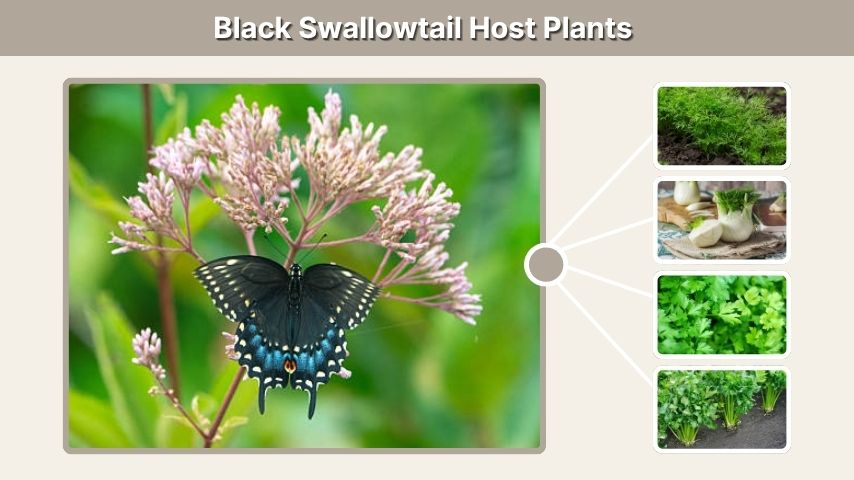
Black swallowtails are among the easiest swallowtails to attract because many of their host plants are common herbs and vegetables. Their caterpillars usually feed on plants in the carrot family, making herb gardens a perfect place to support them.
Good black swallowtail host plants include:
- Dill
- Fennel
- Parsley
- Carrot tops
- Celery
- Cilantro
- Queen Anne’s lace
- Golden Alexander
- Rue
Dill and fennel are two of the best options because they grow quickly and provide soft leaves for young caterpillars. Parsley is also popular, but caterpillars can eat it heavily, so planting extra is a smart idea.
Black swallowtail caterpillars may look alarming when they appear on herbs, but they usually do not cause serious long-term damage. If you want both herbs and butterflies, plant a separate patch for caterpillars. This allows you to harvest from one area while leaving another area for the butterflies.
Giant Swallowtail Host Plants
Giant swallowtails are large, striking butterflies, and their caterpillars are often called “orange dogs” because they commonly feed on citrus plants. Their larvae can look like bird droppings, which helps protect them from predators.
Common giant swallowtail host plants include citrus trees, rue, hoptree, and prickly ash. In warmer areas, orange, lemon, lime, and grapefruit trees can support them. In cooler regions or smaller spaces, rue or hoptree may be easier to manage.
Gardeners should remember that young citrus trees may not handle heavy caterpillar feeding well. A few caterpillars are usually fine, but a small potted citrus plant can lose many leaves quickly. If you want to raise giant swallowtails, grow more than one host plant or use a larger, healthy plant.
Rue is another useful option, but some people experience skin irritation from handling it. Wear gloves when pruning or moving rue, especially on sunny days.
Tiger Swallowtail Host Plants
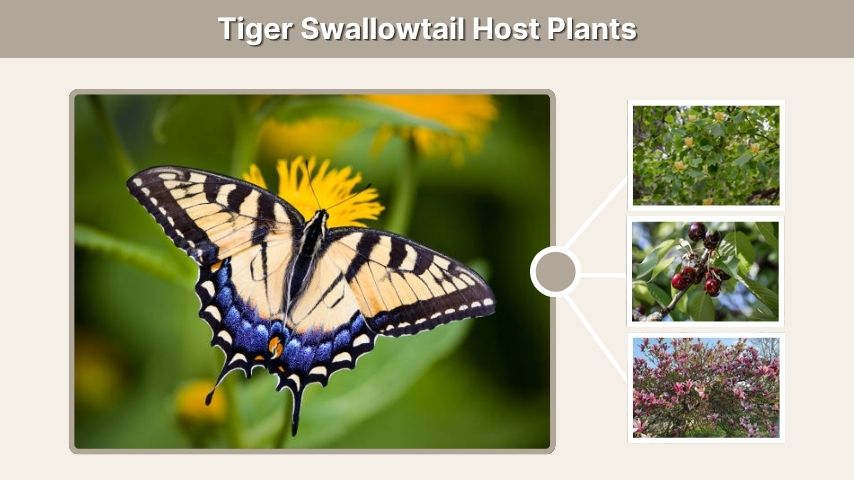
Tiger swallowtails are often seen gliding around woodland edges, open yards, and flowering trees. Their caterpillars usually feed on trees rather than small herbs, so they are better supported by landscapes with native trees and shrubs.
Eastern tiger swallowtail host plants include:
- Tulip tree
- Wild cherry
- Sweetbay magnolia
- Ash
- Birch
- Cottonwood
- Willow
- Basswood
Western tiger swallowtails use several trees as well, including cottonwood, willow, alder, and sycamore. Because these butterflies depend on trees, a garden does not need to be filled with herbs to support them. A single healthy native tree can provide food for many caterpillars over the years.
If you have space, tulip tree and wild cherry are excellent choices for eastern tiger swallowtails. They also provide shade, wildlife value, and spring flowers.
Zebra, Pipevine, and Spicebush Swallowtail Host Plants
Some swallowtails are strongly tied to one main plant group. These species are important for gardeners because planting the correct host can make a big difference.
Zebra swallowtail caterpillars feed on pawpaw leaves. If you want zebra swallowtails, pawpaw is the key plant to grow. Pawpaw trees prefer rich, well-drained soil and can grow in partial shade when young. They are especially useful in native plant gardens.
Pipevine swallowtails need pipevine plants. Native pipevine species are the safest choice because some ornamental tropical pipevines may not support healthy caterpillar development. Always choose pipevine species that are suitable for your region.
Spicebush swallowtails use spicebush and sassafras. Spicebush is a strong choice for woodland edges, shaded gardens, and native shrub borders. It also provides early spring flowers and berries for wildlife.
These host plants are more specific than dill or parsley, but they can create a more natural butterfly habitat. They also help support local ecosystems because many are native plants.
How to Build a Swallowtail-Friendly Garden
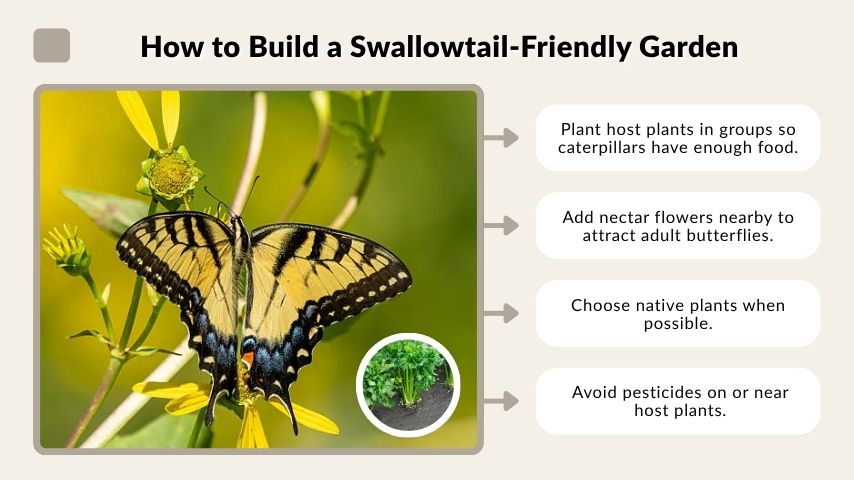
A good swallowtail garden should support the full butterfly life cycle. That means it needs egg-laying plants, caterpillar food, adult nectar, shelter, and safe areas where caterpillars can pupate.
Follow these steps:
- Plant host plants in groups so caterpillars have enough food.
- Add nectar flowers nearby to attract adult butterflies.
- Choose native plants when possible.
- Avoid pesticides on or near host plants.
- Grow extra herbs if you want to harvest some for cooking.
- Keep some leaf litter, stems, or quiet corners for pupation.
- Use containers if you have a balcony or small garden.
Do not remove caterpillars unless you are sure they are pests. Many swallowtail caterpillars look unusual, but they are part of the butterfly life cycle. Black swallowtail caterpillars are green, black, and yellow in later stages. Giant swallowtail caterpillars can resemble bird droppings. Spicebush swallowtail caterpillars may look like tiny snakes because of their large eye-like markings.
Caring for Host Plants Without Harming Caterpillars
Swallowtail caterpillars are sensitive to many garden chemicals. Even products used for common pests can harm butterfly larvae if sprayed on host plants.
Use gentle care methods:
- Hand-pick unwanted pests instead of spraying.
- Rinse aphids off plants with water.
- Plant more host plants than you think you need.
- Move potted herbs away from treated areas.
- Check leaves before pruning or harvesting.
- Let some herbs flower for adult pollinators.
- Keep host plants healthy with regular watering.
If caterpillars eat a large amount of dill or parsley, it usually means the plant is doing its job. Instead of removing the caterpillars, add more plants nearby. Fast-growing herbs can recover, and fresh plantings help later caterpillars survive.
Common Mistakes to Avoid
Many butterfly gardens fail because they focus only on flowers. Nectar flowers are beautiful and useful, but they do not replace host plants. Adult butterflies may visit a flower bed for food and then leave if there is nowhere to lay eggs.
Avoid these mistakes:
- Planting only nectar flowers
- Removing caterpillars from herbs
- Spraying host plants with insecticide
- Growing only one small host plant
- Using non-native plants that do not support local species
- Cutting host plants too often
- Forgetting tree and shrub hosts
Another mistake is expecting every swallowtail species to use the same plant. Black swallowtails may use dill, but zebra swallowtails need pawpaw. Spicebush swallowtails need spicebush or sassafras. Giant swallowtails often need citrus-family plants. Matching the butterfly to the correct host plant is the most important step.
Best Small-Space Host Plants
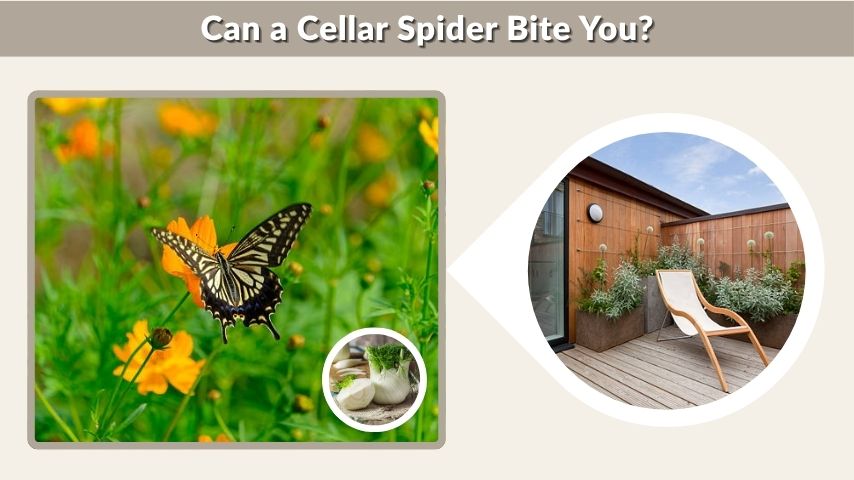
You do not need a large yard to grow swallowtail host plants. A balcony, patio, or small raised bed can support black swallowtails and sometimes anise swallowtails.
Good container choices include dill, parsley, fennel, rue, and small citrus plants. Use deep pots, good drainage, and full sun for most herbs. Water regularly because container plants dry out faster than garden beds.
For best results, grow several pots instead of one. Caterpillars can eat quickly, especially in later stages. If one plant becomes bare, nearby plants give them more food. Place nectar flowers close to the host plants so adult butterflies can feed and search for egg-laying sites in the same area.
FAQs
What is the best host plant for black swallowtail butterflies?
Dill, fennel, and parsley are some of the best host plants for black swallowtail butterflies. These plants are easy to grow in gardens and containers. Fennel is especially useful because it produces plenty of soft leaves, while dill grows quickly and attracts both caterpillars and beneficial insects.
What plants do swallowtail caterpillars eat?
Swallowtail caterpillars eat different plants depending on the species. Black swallowtails eat dill, fennel, parsley, and related plants. Giant swallowtails often eat citrus-family plants. Zebra swallowtails need pawpaw, while spicebush swallowtails use spicebush and sassafras. The right plant depends on the swallowtail species.
Are swallowtail caterpillars harmful to plants?
Swallowtail caterpillars can chew leaves, but they usually do not seriously harm healthy, established plants. Small herbs may look bare if several caterpillars feed at once. The best solution is to plant extra host plants rather than remove the caterpillars from the garden.
Can I grow swallowtail host plants in pots?
Yes, many swallowtail host plants grow well in pots. Dill, parsley, fennel, rue, and small citrus plants are good container choices. Use pots with drainage holes, place them in a sunny area, and water regularly. Growing several pots gives caterpillars more food.
Do swallowtail butterflies need nectar plants too?
Yes, adult swallowtail butterflies need nectar plants for energy. Host plants feed the caterpillars, while nectar flowers feed the adults. A strong butterfly garden should include both. Zinnias, coneflowers, milkweed, lantana, bee balm, and native wildflowers can help attract adult swallowtails.